Best Gifts for Baseball Players (2026): Stocking Stuffers to the Splurge, for Kids, Catchers, Pitchers and Coaches
Baseball players are easy to shop for and hard to shop well for: the wrong bat, the wrong glove size, or a novelty mug that never leaves the shelf. This guide sorts twelve real, currently sold gifts by budget (under $25, under $50, under $100, and the splurge) and by recipient (kids, catchers, pitchers, the travel-ball parent), plus the one gift that costs nothing.
In this guide · 12 sections
- Helmet headset
- At a glance
- What is the best gift for a baseball player?
- Baseball stocking stuffers under $25: what actually gets used?
- What are the best baseball gifts under $50?
- What are the best baseball gifts under $100?
- What is the best splurge gift for a baseball player?
- What do you get a catcher?
- What do you get a pitcher?
- What do you get the travel-ball parent or the coach?
- The $0 gift: MAVTRAX plus a ~$13 helmet headset
- FAQ
Quick picks
Our top recommendations — full reviews below.

The one gift every hitter uses for a decade
~$100 price and availability on Amazon
View on Amazon →Key takeaways
- The best all-around gift for a baseball player is a Tanner Tee (~$100). Every hitter from 8U to the pros uses a tee, the Tanner lasts a decade, and almost nobody buys one for themselves.
- Do not gift a bat or a glove unless you know the exact size and league stamp. They are the two most returned baseball gifts.
- Under $25, gift what gets used weekly: batting gloves, a bat donut, Big League Chew, a throat guard for the catcher.
- The $50 to $100 tier is training gear: a SWINGRAIL, a 7x7 hitting net, or the Tanner Tee turn a driveway into a practice space.
- The splurge is a Pocket Radar Smart Coach (~$399) for a pitcher or a Blue Flame pitching machine (~$139) for a hitter. Pick by position.
- The $0 gift for a coach or catcher's family is the free MAVTRAX pitch-calling app plus a ~$13 helmet headset, the setup teams use instead of a $999 electronic kit.
The best gift for a baseball player is something they will use every week of the season and would not have bought for themselves: a Tanner Tee if you can spend $100, a 7x7 hitting net or SWINGRAIL around $50, and batting gloves, a bat donut, or Big League Chew as stocking stuffers. The gifts that miss are the personal-fit items (bats, gloves, cleats) bought without the exact size and league stamp, and the novelty stuff that says "baseball" on it but never touches a field.
We are the team behind the MAVTRAX pitch-calling app, so we spend our weekends at tournaments watching what actually comes out of the bag. This guide is built the way a coach would shop: twelve real, name-brand products resolved on Amazon this week, sorted first by budget, then by who is opening the box. Prices are approximate at the time of writing. If you know the recipient's position, jump to the catcher, pitcher, or travel-ball parent sections. If you are buying for a kid, the age table below keeps you out of the return line.
At a glance
*Prices at time of writing — they move; check the listing.
Tanner Tee The Original Batting Tee
~$100
If you buy one gift on this page, buy the Tanner. It is the tee high-school, college, and pro hitters use, and the tee almost no youth family owns, because $100 feels like a lot next to the $25 plastic one at the sporting-goods store. That gap is why it is the best gift: the player gets something they truly want, will use several times a week, and would have talked themselves out of buying.
The hand-rolled rubber ball rest earns the price. A hard plastic cup deflects the bat on a low miss and teaches a hitter to steer around the tee; the Tanner's flexible rest gets out of the way so a swing feels like live contact. It adjusts from the knees to the letters, so it fits a 9-year-old and a 19-year-old. Full comparison in the best batting tees guide.
- Used from 8U to pro
- Flexible rest does not deflect the bat
- Lasts a decade
- Fits a kid and a teen
- Feels expensive next to a plastic tee
- Base is not weighted (a bucket of balls fixes that)
- Needs a net or open space

Big League Chew Variety Pack (5 Flavors)
~$12
Shredded bubble gum in a foil pouch has been a dugout ritual since 1980, and a five-flavor variety pack is the most reliable stocking stuffer in youth baseball. About $12, fits in a stocking with room to spare, and it is the only gift here that a 9-year-old and a 16-year-old react to identically.
Most pouches get shared across the whole dugout, so one pack is a team gift as much as a player gift. Pair it with the bat donut or batting gloves below for a complete under-$30 stocking.
- The classic dugout gift
- Fits any stocking
- Five flavors for a picky kid
- Gone in a week
- Check the league's dugout rules on gum

GoSports Bat Weights (2-Pack, 16 oz and 12 oz)
~$12
A bat donut is the one piece of gear a young hitter sees big-leaguers use on TV and does not own. This two-pack gives a 16-ounce and a 12-ounce weight for about $12, covering a youth bat and an adult bat, or a light warm-up and a heavy one.
Coaching honesty: the research on donuts is mixed, and many coaches prefer dry swings on deck. But as a ritual it is beloved, and at this price it is a stocking stuffer, not a training program. For real bat-speed work, see the training aids guide.
- Two weights for two bats
- Under $15 for the pair
- Feels like big-league gear to a kid
- Evidence on swing benefit is mixed
- Check barrel diameter on a 2 1/4 inch youth bat

Franklin Sports Youth MLB Digitek Batting Gloves
~$17
Batting gloves are the one fit item on this page safe to gift without a measurement, because youth sizes run small, medium, and large and a slightly-off glove still works. The Digitek is the value pick in our batting gloves roundup: MLB-licensed, synthetic palm, about $17, in enough colors to match any team.
A youth hitter goes through two or three pairs a season, so a fresh pair is welcome even when they own some. Sizing shortcut: a typical 7-to-9-year-old wears youth small, 10-to-12 youth medium, and a bigger 12-to-13-year-old youth large or adult small.
- Safe to gift without a fitting
- A new pair is always welcome
- Team colors
- Under $20
- Synthetic palm wears faster than leather
- Youth sizing runs small; size up if unsure
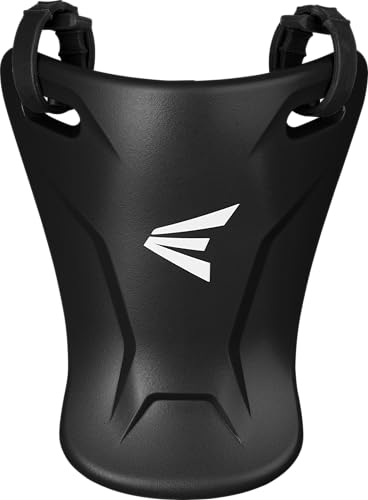
Easton Catcher's Throat Guard 3.0
~$15
A dangling throat guard clips to the bottom of a catcher's mask and covers the gap a foul tip finds between mask and chest protector. Many youth leagues require one, and most catching coaches want one on every mask regardless. Easton's 3.0 straps to a hockey-style or traditional mask for about $15, the rare stocking stuffer that is also safety equipment.
Catchers replace throat guards constantly: straps fray, guards crack, or it stays on the old mask when a new one arrives. A spare is never wasted. Full picture in the catcher safety gear guide.
- Often required by league rule
- Fits hockey-style and traditional masks
- Under $15
- Strap attachment differs by mask brand
- Only useful for a catcher

GoSports 2.8 Inch Weighted Training Baseballs
~$20
This set is regulation-size (2.8 inch) balls in graduated weights, built for tee work and soft toss where the extra mass forces a hitter to drive through the ball instead of flicking at it. Hit one off the Tanner Tee and the feedback is instant: a lazy swing barely moves it.
The gift-giver caveat: weighted balls for throwing are an advanced tool that pitching coaches reserve for supervised teen programs. For hitting they are safe at any age with a proper bat. Give them for the tee and the net; let the coach decide about the arm. See where they fit in the backyard training setup guide.
- Regulation size, graduated weights
- Instant feedback on tee work
- Around $20
- Throwing programs need coach supervision
- Will scuff a nice bat over time

Rawlings REMIX Youth Backpack Equipment Bag
~$25
Every young player starts out carrying gear in a school backpack with a bat sticking out the top. The REMIX fixes that for about $25: a youth-sized backpack with bat sleeves, a compartment for glove and helmet, and a fence hook for the dugout. It is sized for T-ball through about 10U, exactly the age when a real bag feels like a promotion.
For an older player, skip this for the wheeled and full-size options in the bat backpack guide; a 12U kit with catcher's gear outgrows a youth bag fast. Toss the gum and the batting gloves inside and the gift is done.
- Sized right for T-ball to 10U
- Bat sleeves plus fence hook
- Around $25
- Too small for a 12U kit or catcher's gear
- Thin padding versus a $60 bag

SWINGRAIL Baseball and Softball Hitting Trainer
~$30
Most swing gadgets end up in a closet. The SWINGRAIL is the exception because it fixes the most common youth hitting flaw, casting the hands away from the body, with an elastic band connecting the lead arm to the torso. Cast, and the band pulls; keep the hands inside the ball, and nothing happens. That instant feedback is why it tops our training aids guide.
It works best for a 10-and-up hitter with a coach or parent explaining what "hands inside" means, and tee work with it on is a ten-minute drill a kid can run alone in the garage. One size fits youth and adult, so there is no fit risk.
- Fixes the most common youth flaw
- Instant physical feedback
- One size, no fit risk
- Needs someone to explain the cue
- Less useful under age 9

AIOCDIT Baseball Wall Art Canvas Prints (Framed Set)
~$30
Not every gift goes in the bag. A framed set of baseball canvas prints turns a kid's bedroom into a baseball room for about $30, and a grandparent or aunt can give it without knowing a bat drop from a glove size. This set is a graffiti-style, vintage-toned print series, framed and ready to hang.
Two honest notes: check the listing dimensions against the wall first, since print sets often read smaller in person, and treat this as a second present next to something from the bag. For a personalized option, "custom baseball wall art" on Amazon turns up made-to-order name-and-number prints.
- Works for a giver who knows nothing about gear
- Framed, ready to hang
- Around $30
- Check the print dimensions first
- Decor, not equipment

PowerNet 7x7 Baseball and Softball Practice Net
~$58
The 7x7 hitting net is the most-bought training gear in youth baseball, and PowerNet's bow-frame version is our pick in the hitting nets guide. It unlocks every other training gift here: put the Tanner in front of it, add the weighted balls, strap on the SWINGRAIL, and a player takes a hundred swings in a garage without chasing a ball.
The bow frame pops up in about a minute on fiberglass poles, packs into a carry bag, and, unlike the cheapest steel copies, does not fold under a mishit. It also doubles as a pitching target and throwing backstop.
- Unlocks tee work at home
- Sets up in a minute, packs flat
- Bow frame survives mishits
- Doubles as a pitching target
- Needs about 15 feet of room
- Base can walk on a hard driveway; sandbag it

Louisville Slugger Blue Flame Pitching Machine
~$139
The Blue Flame is the pitching machine every youth league seems to own: manual, spring-loaded, no electricity, no batteries, no feeder to jam. A parent steps on the pedal, the arm throws a real ball, and the hitter gets repeatable pitches. It throws baseballs, softballs, and the lightweight training balls that are safe in a backyard, with adjustable speed from slow lobs into the 40s mph.
It lives in the garage next to the net, one parent can carry it, and it needs no outlet at the park. The tradeoff is that someone has to feed it. Compare the powered options in the pitching machines guide first.
- No power, no batteries, no cord
- Repeatable speed and location
- Throws real balls and training balls
- Needs a feeder; not a solo tool
- Manual speed is less precise than powered
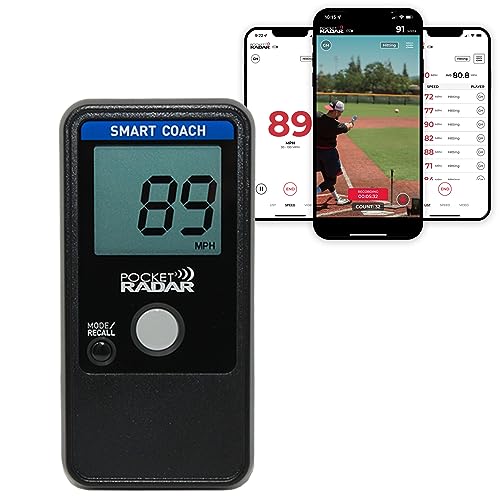
Pocket Radar Smart Coach Radar Gun with App
~$399
If the recipient is a pitcher, the Smart Coach is the splurge that changes how they train: a pocket-sized radar gun that pairs with a phone app, records video of each pitch with the velocity overlaid, and gives a young pitcher real numbers instead of guesses. A pitcher who sees a reading after every throw learns the difference between a 52 and a 56 faster than any cue can teach it.
The cheaper Ball Coach reads the same speeds without the app; our Smart Coach vs Ball Coach comparison walks through it. And radar numbers tempt young pitchers to overthrow, so check expectations against our pitching speed by age chart.
- Real velocity numbers for a pitcher
- App records video with speed overlay
- Pocket-sized, no tripod required
- ~$399 is a serious gift
- Tempts young arms to overthrow; coach the use
- Ball Coach is cheaper if the app is not needed
What is the best gift for a baseball player?
The best gift for a baseball player is the Tanner Tee: a $100 tee that every hitter uses, that lasts ten years, and that almost no family buys for themselves. The rule behind that pick applies to every gift on this page: buy the thing they will use every week and would not buy on their own. In youth baseball that means training gear and consumables, not personal-fit equipment and not novelties.
The gifts that fail are predictable. A bat bought without the exact length, drop, and league stamp is the most returned baseball gift there is; a rec league that requires a USA stamp cannot use a USSSA bat no matter how nice it is. A glove in the wrong size or position pattern sits in the closet, and cleats are the same. If you want to give one of those, give a gift card with a printed page from our bat size guide or glove size chart and let the player pick.
If you only know the kid's age, this table is the shortcut. Every item in it is on this page.
| Age | Stocking stuffer | Main gift |
|---|---|---|
| 5 to 7 (T-ball, coach pitch) | Batting gloves, Big League Chew | REMIX backpack, wall art |
| 8 to 10 | Batting gloves, bat donut | 7x7 net, Blue Flame machine |
| 10 to 12 (travel ball starts) | Bat donut, throat guard, weighted balls | Tanner Tee, SWINGRAIL, net |
| 13 and up | Throat guard, batting gloves | Pocket Radar, Tanner Tee |
For the 5-to-7 tier, skip the weighted balls and the SWINGRAIL; a coach-pitch player is still learning to make contact. For a full head-to-toe list, see the equipment checklist by age.
Baseball stocking stuffers under $25: what actually gets used?
The best baseball stocking stuffers are the consumables a player burns through every season: batting gloves (~$17), a bat donut (~$12), Big League Chew (~$12), and, for a catcher, a throat guard (~$15). The test for this tier: if the player already owns one and would still be glad to get another, it is a good stocking stuffer.
Batting gloves are the anchor, because a youth hitter wears through two or three pairs a season and youth sizing is forgiving. The bat donut pair is the rite-of-passage gift a 10-year-old will use in every on-deck circle. Big League Chew is the one gift opened in the dugout, not the living room.
Two more under-$25 ideas that resolved well but did not make the main list: eye black sticks (GoSports sells a two-pack for about $6, and every 10U player wants to wear it) and a baseball-themed Mad Libs book for around $6, the rare gift that survives a rain delay. Skip novelty socks, "baseball dad" mugs, and rubber bracelets. They say baseball; they do not do baseball.
What are the best baseball gifts under $50?
Under $50, the best baseball gifts are the SWINGRAIL (~$30), a set of weighted training balls (~$20), and, for a younger player, the Rawlings REMIX backpack (~$25). This is where a gift stops being a treat and starts being training gear, so ask whether the player has a place to swing. With a tee or a net, the SWINGRAIL and weighted balls become a real program; without one, the backpack is the safer buy.
The SWINGRAIL is the pick we would make first: it fixes casting with instant feedback, it is one size across youth and adult, and it shows up in more travel-ball cages than any other gadget. Weighted balls are the natural pairing for tee work. The caveat, repeated because it matters: weighted throwing programs belong to a coach, not a stocking. Give them for hitting.
Two more under-$50 gifts from our other guides: the Rawlings pancake training glove (~$36), the flat glove infield coaches use to force two-hand fielding, and a glove break-in kit (~$27 to $40) for a player who just got a new leather glove; our glove break-in guide explains why the mallet matters more than the oil.
What are the best baseball gifts under $100?
Under $100, the best baseball gifts are the Tanner Tee (~$100) and the PowerNet 7x7 hitting net (~$58), and together they are the single best home-training gift in the sport. Every hitting drill a coach assigns for homework runs off a tee into a net, and a family with both in the garage practices far more often than one that has to drive to a cage.
If you can only pick one, pick by what the family already has. No net and no tee: buy the net first, because a cheap plastic tee works in front of it while the Tanner is the next gift. A net already in the garage: the Tanner is the upgrade they notice on the first swing. For a catcher, a different $100 lands better: knee savers from the knee savers guide, or the headset in the $0 gift section paired with the throat guard.
Avoid a mid-priced bat here. A $90 bat is exactly the gift that arrives with the wrong stamp or drop and gets returned. If a bat is the wish-list item, send our youth bat guide with a gift card.
| Family has | Buy first | Buy next |
|---|---|---|
| Nothing yet | PowerNet 7x7 net (~$58) | Tanner Tee (~$100) |
| A net, cheap tee | Tanner Tee (~$100) | SWINGRAIL + weighted balls (~$50) |
| Net and Tanner | Blue Flame machine (~$139) | Pocket Radar (~$399) |
| A catcher | Throat guard + headset (~$28) | Knee savers (~$25 to $35) |
What is the best splurge gift for a baseball player?
The best splurge depends on position: the Pocket Radar Smart Coach (~$399) for a pitcher, the Louisville Slugger Blue Flame pitching machine (~$139) for a hitter. Both are gifts a family talks about buying for a year and never does, and neither carries any fit risk.
The Blue Flame is the hitter's splurge because it is the most practical machine a family can own: no power, no feeder to jam, and it throws the lightweight balls that are safe off a suburban fence. A powered machine with an auto-feeder runs $400 and up and makes sense for a serious 13-and-up hitter; the pitching machines guide covers when to step up.
The Pocket Radar is the pitcher's splurge because velocity is the number every pitcher wants and no family can measure without one. The cheaper Ball Coach (~$299) reads the same speeds without the app; if the family only wants the number, save the $100. Our accuracy explainer covers how pocket units compare to a full-size gun, and the pocket radar guide covers the alternatives.
The splurge to avoid is a $300 composite bat. Even sized right, a composite needs a break-in and a stamp match, and many 8U and 10U leagues restrict them. If a top-shelf bat is the dream, make it a gift card plus the composite break-in guide.
What do you get a catcher?
Get a catcher the gear that wears out or gets forgotten: a throat guard (~$15), knee savers, a mitt-care kit, and the helmet headset that lets a coach call pitches straight into their ear. Catchers are the easiest position to shop for because the gear list is long and the pieces break, while the big items (mask, chest protector, leg guards, mitt) are sized in a way that makes them poor surprise gifts. Shop the accessories.
The throat guard is the stocking stuffer and often a league requirement. Knee savers are the ~$25-to-$35 gift a growing catcher's knees will thank you for; picks are in the knee savers guide. A mitt is a poor gift unless you know the size and pattern, but a break-in kit for the one they own is a good one, since a catcher's mitt takes longer to break in than any other glove; see the glove care kits guide. And a catcher's gear bag is the sleeper gift, because a full set does not fit in a normal bat bag; see the catcher's gear bags guide.
The gift catchers talk about, though, is the headset: a ~$13 Bluetooth clip speaker wired into the ear flap of the helmet so the coach can call every pitch by voice from the dugout, with no signs to steal. It is described in the $0 gift section below, and the install takes about twenty minutes with our step-by-step guide.
What do you get a pitcher?
Get a pitcher a radar gun if the budget allows, a 7x7 net with a strike-zone target if it does not, and never a weighted-ball throwing program unless their coach asked for one. Pitchers are harder to shop for than hitters because pitching development is mostly mechanics and rest, and the wrong gift (a heavy ball, a gimmick trainer) can do harm. Stick to measurement and targets.
The Pocket Radar Smart Coach is the splurge; the Ball Coach at ~$299 reads the same speeds without the app. Below that, a 7x7 net becomes a pitching gift with a strike-zone insert, and the PowerNet on this list doubles as a throwing backstop. Even a bucket of practice baseballs is a good pitcher gift, because a pitcher's family loses balls to the woods faster than any other position; a two-dozen bucket runs about $48 and is in the training aids guide.
Two cautions. Weighted balls for throwing belong to a coach's program; our own rule for 10U is a 6-ounce ball only after mechanics are cleared, and the standard 5-ounce baseball for everyone else. And radar numbers can push a young pitcher to overthrow, so pair the gun with the pitching speed by age chart and the pitch count rules so the family tracks progress against a realistic range.
What do you get the travel-ball parent or the coach?
Get the travel-ball parent the sideline gear that makes a twelve-hour tournament day livable: a weighted pop-up canopy, a folding wagon, a rolling cooler, or a real first-aid kit. The parent who spends every weekend at a complex has a long wish list and rarely spends on it, because every dollar goes to the player. That makes them the best recipient on this page.
The full kit is in the tournament gear guide, but the priority order is shade first (a 10x10 canopy with leg weights), wheels second (a wagon that moves camp in one trip), and ice third (a 50-quart rolling cooler). Under $25, a cooling towel, a wide-brim hat, and a power bank are the sleeper gifts. For the parent who runs the team livestream, the tripod-and-battery setup in the streaming gear guide gets used every game. For a family just entering travel ball, the travel-ball cost guide is the honest page to read first.
For the coach, give something for the dugout, not the mantel: a bucket of practice balls, a fungo bat, a pop-up net for pregame soft toss, or the tools in the coach's tech stack guide. And the best coach gift on this page costs nothing at all.
The $0 gift: MAVTRAX plus a ~$13 helmet headset
The best gift for a coach or a catcher's family costs nothing: MAVTRAX, the 100% free pitch-calling app, plus a ~$13 Bluetooth headset wired into the catcher's helmet. That is the whole setup teams use to call pitches by voice from the dugout, and it replaces the hand signs that get stolen and the $999 electronic starter kit most youth programs cannot justify.
The coach taps the pitch and location on a phone; the catcher hears the call in under a second through a small speaker pod inside the helmet's ear flap. No signs, no missed signals, faster innings, and every pitch is logged. The app is 100% free with no subscription on iPhone, Android, and the web, so the gift is the headset and the twenty-minute install. The ELIKIDSTO IPX7 clip headset is the one we recommend at around $13, compared with the alternatives in the catcher headsets guide.
To give it: order the headset, bookmark the helmet install guide, and put a note in the box that says download MAVTRAX free. For a catcher's family, pair it with the throat guard for a complete under-$30 gift. For a coach, it is the one gift that changes how they run a game, and it fits in an envelope. Our coach-to-catcher communication explainer covers earpiece rules by league.
FAQ
What is a good gift for a baseball player?
Something they use weekly and would not buy themselves: a Tanner Tee (~$100) is the top pick, a 7x7 hitting net (~$58) or SWINGRAIL (~$30) for the mid tier, and batting gloves, a bat donut, or Big League Chew as stocking stuffers. Avoid bats, gloves, and cleats unless you know the exact size and league stamp.
What are good baseball stocking stuffers?
Batting gloves (~$17), a two-pack of bat donuts (~$12), a Big League Chew variety pack (~$12), eye black (~$6), and, for a catcher, a throat guard (~$15). None require a size or a league stamp. A complete baseball stocking runs about $40.
What should I get a kid who plays baseball?
By age: for 5 to 7, a youth bat backpack, batting gloves, and gum. For 8 to 10, a 7x7 net and a bat donut. For 10 to 12, the Tanner Tee, a SWINGRAIL, and weighted balls for tee work. For 13 and up, a Pocket Radar for a pitcher or the Tanner Tee for a hitter. Skip weighted balls and swing trainers under age 9.
Is a bat a good gift for a baseball player?
Only if you know the exact length, drop, and league stamp (USA, USSSA, or BBCOR). Rec and travel leagues require different stamps, and a bat with the wrong one cannot be used at all. If a bat is the wish-list item, give a gift card with the player's sizing and let a parent pick it.
What do you get a catcher for a gift?
Accessories, not the big sized pieces: a throat guard (~$15), knee savers (~$25 to $35), a mitt break-in kit, a catcher's gear bag, and a ~$13 helmet headset that lets the coach call pitches by voice through the free MAVTRAX app. A mask, chest protector, leg guards, or mitt are poor surprise gifts because they are sized.
What do you get a pitcher for a gift?
A radar gun if the budget allows (Pocket Radar Smart Coach ~$399, or the Ball Coach ~$299 without the app), a 7x7 net with a strike-zone target, or a bucket of practice baseballs. Do not gift a weighted-ball throwing program unless the pitcher's coach asked for one.
What is the best gift for a baseball coach?
Something for the dugout: a bucket of practice balls, a pop-up net, a fungo bat, or a sideline canopy. The best free gift is the MAVTRAX pitch-calling app plus a ~$13 helmet headset for the catcher, which lets the coach call every pitch by voice with no stolen signs and no $999 hardware kit.
How much should I spend on a baseball gift?
A full stocking is about $40 (gloves, donut, gum). A real training gift is $30 to $100 (SWINGRAIL, 7x7 net, Tanner Tee). The splurge tier is ~$139 for a Blue Flame pitching machine or ~$399 for a Pocket Radar. The one gift that costs nothing is the free MAVTRAX app paired with a $13 headset.
We're the team behind MAVTRAX — pitch-calling software used by baseball and softball teams from 9U travel ball up. We spend our days around dugouts, gear bags and tournament weekends. Picks are chosen on specs, durability for youth-sports abuse, real-world price, and owner feedback — not on who pays the highest commission. Full criteria on how we pick.