Best Baseball Radar Guns 2026: 9 Picks From $65 Backyard to Scout-Grade
The best baseball radar gun for most families is the Pocket Radar Smart Coach ($399): pro-trusted accuracy that records video with the velocity on the clip. We ranked 9 verified-live radar guns and speed guns, from a $65 backyard unit to the $960 Stalker scout radar, by who you are: parent, coach, or program.
In this guide · 13 sections
- Helmet headset
- At a glance
- Which baseball radar gun should you buy? The decision framework
- Why velocity tracking matters: pitchers, hitters, and recruiting
- Pocket radar vs. full-size baseball speed gun
- Are pocket radars accurate? (Short answer: yes, within about 1 mph)
- How radar accuracy actually works, and where to stand
- App and recording: what 'connected' actually gets you
- Battery and ease of use behind the plate or net
- Tag One vs. Pocket Radar: the question everyone asks
- Cheap baseball radar guns: what $65 buys (and what it doesn't)
- Also worth a look
- FAQ
Quick picks
Our top recommendations — full reviews below.
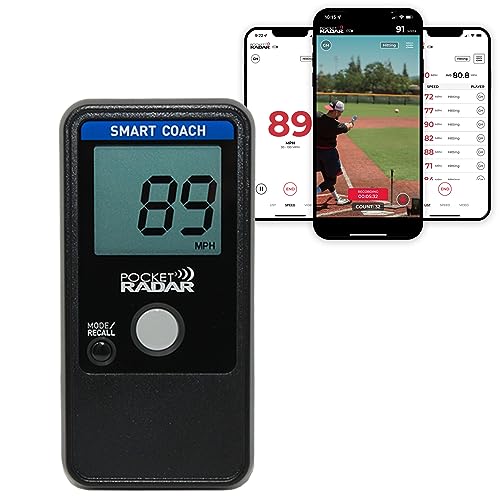
The category standard: pro-trusted accuracy that records the rep and the number together
$399.00 price and availability on Amazon
View on Amazon →Key takeaways
- Top pick: the Pocket Radar Smart Coach ($399), the category standard. It reads pitch and exit velocity with pro-trusted accuracy and records video with the number burned onto the clip.
- A radar gun matters because velocity is the number everyone tracks: pitchers chart progress, hitters measure exit velo, and showcases and recruiters list a player's readings up front.
- Price tiers are real: $65 to $110 buys backyard fun with wider error bars, $150 buys the classic Bushnell Velocity pistol gun, $290 to $399 buys measurement you can make decisions with, and $550 to $960 buys full-size smart and scout-grade radar.
- The big dividing line in the pocket class is recording: a basic radar shows you a number, while the Smart Coach records video with the velocity displayed right on the clip.
- Where you stand matters more than the brand. Point the radar directly down the line of the throw or hit (behind the pitcher, behind the catcher, or behind the net); reading from the side undercounts the true speed.
- For a solo player working into a net, an app-connected unit that records is worth the upgrade: you review the throw and the number together instead of glancing at a display mid-rep.
The best baseball radar gun for most players, parents, and coaches is the Pocket Radar Smart Coach ($399.00): the category-standard pocket unit with pro-trusted accuracy, app logging, and video recording that burns the velocity right onto the clip. If you just want a trustworthy number with zero setup, the Pocket Radar Ball Coach ($299.00) is the proven point-and-read pick, and the TAG ONE ($289.99) is the rechargeable, app-connected value play. From there the field spreads out by budget and job: a $65 hands-free backyard unit, a $150 classic Bushnell speed gun, a $550 full-size smart radar, and the $960 Stalker Sport 3, the same family of gun you see behind the backstop at showcases.
We verified every listing live through Amazon's Creators API on August 7, 2026: nine radar and speed guns, who each is actually for, a decision framework by buyer type, and a plain-English guide to how radar accuracy works, where to stand, pocket versus full-size, and why recording changes how you train.
At a glance
| Pick | Best for | Price* | ||
|---|---|---|---|---|
| Pocket Radar Smart Coach (App-Connected, Records Video + Velocity) | The category standard: pro-trusted accuracy that records the rep and the number together | $399.00 | View → |
 | Pocket Radar Ball Coach | The proven, point-and-read simple radar coaches trust | $299.00 | View → |
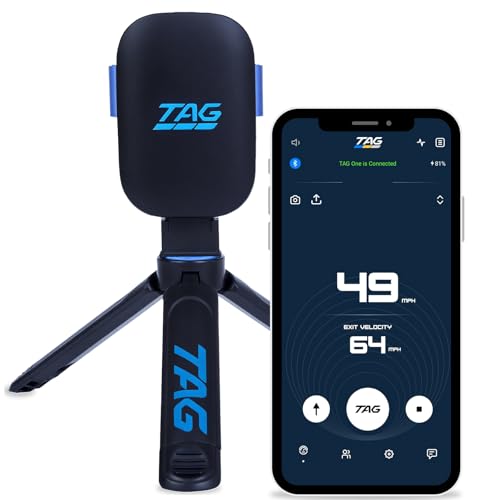 | TAG ONE Sports Radar (Rechargeable, App Integration) | The best-value app-connected radar with a rechargeable battery | $289.99 | View → |
 | Bushnell MACH2 Smart Radar Gun (Baseball & Softball) | The full-size smart radar for teams that want pistol-grip range and modern features | $549.99 | View → |
 | Bushnell Velocity Speed Gun | The classic full-size pistol-grip gun at the lowest serious price | $149.96 | View → |
 | Stalker Sport 3 Connect (with Hard Case) | Scout-grade radar for programs, facilities, and serious recruiting prep | $960.00 | View → |
 | Swing Speed Radar (Doppler Bat/Swing Speed) | The hitter's specialty tool: measures bat speed, not ball speed | $134.46 | View → |
 | PLAYAPUT Baseball Radar Gun with Tripod (LED + LCD Display) | The budget practice-station setup: tripod plus a big LED readout | $79.99 | View → |
 | NET PLAYZ Multi-Sports Speed Radar (Hands-Free) | The cheapest hands-free unit that makes velocity fun | $64.99 | View → |
*Prices at time of writing — they move; check the listing.
Pocket Radar Smart Coach (App-Connected, Records Video + Velocity)
$399.00
The Smart Coach is the radar gun the sport has standardized on below the pro-scout tier, and it is our top pick for one reason: it is the only unit at its size and price that captures the two things training actually needs, the number and the rep that produced it. It pairs with the Pocket Radar app (iOS or Android), logs every reading so you can chart velocity over time, and records video of the throw or swing with the velocity displayed right on the clip. You see the mechanics that produced an 82 instead of glancing at a display and forgetting what the delivery looked like.
At $399 it costs $100 more than the simple picks below, and the extra money buys the app, the logging, and the video: features a casual user may skip but a dedicated player, parent, or coach will use constantly. If you are going to track development seriously, build a showcase reel, or coach off footage, this is the unit. If you just want a number, keep reading.
- Records video with the velocity displayed on the clip
- App-connected (iOS/Android): logs and charts every reading
- Pocket Radar's trusted accuracy in a pocket-size unit
- Ideal for solo net work, showcase reels, and coaching off footage
- Most expensive pocket unit here
- App + phone setup is more than a point-and-read user needs
Pocket Radar Ball Coach
$299.00
The Ball Coach is the radar you see in a lot of dugouts and behind a lot of nets, and it earned that spot by being dead simple and dependable. Point it down the line of the throw, get a clean speed reading, repeat. There's no app to set up and no screen to fuss with, which is exactly why a lot of coaches keep one in the bag. (Note the model name on this listing: it's the Ball Coach that is not compatible with the Pocket Radar app, so if app logging is a must-have, take the Smart Coach above instead.)
At $299 it sits right alongside the TAG ONE on price, but the trade is different: you're paying for Pocket Radar's established reputation and a stripped-down, do-one-thing-well tool rather than app features. For a coach reading a bullpen, or a parent who just wants a trustworthy number without another app on their phone, that simplicity is a feature, not a limitation.
- Pocket Radar's proven, widely trusted name
- Truly simple: point, read, repeat, no setup
- Compact enough to keep in a bag or jacket pocket
- No app or phone required to get a number
- This model is NOT compatible with the Pocket Radar app, so no logging
- No video recording; you read the number off the unit
TAG ONE Sports Radar (Rechargeable, App Integration)
$289.99
The TAG ONE is the value pick of the serious tier, because it covers the things people actually run into. It's the lowest price of the three pocket units here, it charges over USB instead of eating disposable batteries (the listing rates the pack at about 6 hours of use), and it pairs with an app so your readings aren't trapped on a tiny display. For a pitcher tracking velocity week to week, or a hitter checking exit velo off the tee, that combination of price, battery, and app does the job without the premium spend.
It reads across baseball, softball, and golf, so one unit covers a multi-sport household. As with any radar, the read is only as good as where you point it: line it up directly behind the throw or hit (see the "where to stand" section below) for a true number.
- Lowest price of the serious pocket picks
- Rechargeable battery (rated ~6 hours), no buying disposables
- App integration so readings log to your phone
- Works for baseball, softball, and golf
- Less established track record than Pocket Radar
- Does not record video with the velocity like the Smart Coach
Bushnell MACH2 Smart Radar Gun (Baseball & Softball)
$549.99
The MACH2 is what the classic full-size speed gun grew up into: a pistol-grip radar built specifically for baseball and softball, from the brand whose Velocity gun has lived in equipment bags for two decades. The full-size format is the point. A pistol-grip gun is easier to aim and hold steady from behind the backstop, reads comfortably from a coaching distance, and looks like what players expect a radar gun to look like, which matters more than you'd think for showcase-day nerves.
At $549.99 it's a team-budget purchase rather than an impulse buy, and it sits in a gap the pocket units can't fill: a program that guns every bullpen from behind the plate, runs tryout stations, or wants one gun shared across squads will get more out of a full-size unit than a pocket radar passed hand to hand. For an individual family, the Smart Coach above does more for less money.
- Full-size pistol-grip: easy to aim and steady from behind the backstop
- Purpose-built for baseball and softball
- Bushnell's decades of speed-gun track record
- The modern step up from the classic Velocity below
- Team-budget price for an individual family
- Bulkier than a pocket unit; lives in the equipment bag, not your jacket
Bushnell Velocity Speed Gun
$149.96
The Velocity is the speed gun a whole generation of coaches learned on, and it's still the cheapest way to get the full-size pistol-grip experience from an established brand. Point it, squeeze the trigger, read the number off the big display. No app, no pairing, no charging cable: it runs on C batteries and just works, season after season.
The trades are exactly what the price says. It's bigger than anything else serious here, there's no app or recording, and the readings live and die on the display. But for a parent who wants a dependable number at practice, a coach outfitting a budget program, or a family not ready to spend $300, it's the classic answer, and its long track record is the reason "Bushnell speed gun" is still one of the first things coaches search.
- Full-size pistol grip at a fraction of scout-gun money
- Dead simple: trigger, read, repeat
- Established brand with a two-decade track record
- Big display that's easy to read outdoors
- No app, no logging, no video
- Bulky compared with the pocket class
- Runs on disposable C batteries
Stalker Sport 3 Connect (with Hard Case)
$960.00
Stalker is the name on the guns behind big-league backstops, and the Sport 3 is the company's sport line: the gun for the buyer who wants scout-grade range, pickup, and credibility rather than a consumer pocket unit. This listing pairs the Sport 3 Connect with a hard case, which is how a gun like this should travel between fields anyway.
Be clear-eyed about who this is for. At $960 it's a facility, program, or academy purchase: high-school and travel programs that gun every pitcher, training facilities that publish velo boards, or a family deep into the recruiting process that wants readings nobody argues with. For everyone else, the Smart Coach reads the same pitch for a fraction of the money. Note availability on this listing has been showing a ships-on date rather than same-day stock, so check the date on the listing before you plan a purchase around an event.
- Scout-grade brand: the radar family pro scouts actually carry
- Range and pickup built for full-field use
- Ships with a hard case in this bundle
- The reading nobody at a showcase argues with
- Serious money: facility or program budget, not impulse territory
- Listing has shown backorder ship dates; check before an event
- Overkill for one family tracking one player
Swing Speed Radar (Doppler Bat/Swing Speed)
$134.46
This one measures a different number, and for hitters it's a number worth having. Where every other unit here reads the ball, the Swing Speed Radar sits on the ground near the plate and reads the bat: swing speed through the zone, the input that produces exit velocity. It's been a quiet fixture of golf and baseball training for years (the listing leans on that long track record), and it needs no pitcher, no net contact, not even a ball; you can measure dry swings in the garage.
Pair it with any ball-reading radar above and you get both halves of the hitting equation: how fast the bat moves and how hard the ball leaves. For a hitting-obsessed household or a lessons coach, that's a $134 addition that makes tee work measurable. It will not read a pitch, so it's a complement to the picks above, not a substitute.
- Measures bat/swing speed directly, no ball contact needed
- Works for dry swings anywhere, garage included
- Long track record as a golf and baseball training tool
- Cheap enough to add alongside a ball radar
- Does not measure pitch or exit velocity
- A specialty tool, not your only radar
PLAYAPUT Baseball Radar Gun with Tripod (LED + LCD Display)
$79.99
The PLAYAPUT's pitch is the setup, not the spec sheet: it ships with a tripod and puts the reading on a large LED plus LCD display, so you can stand it behind a net, throw, and see your number from the mound without anyone holding a gun. That hands-free station format is genuinely useful for solo practice and for kids who will throw all afternoon if the number lights up.
Treat the accuracy claims with budget-tier skepticism: sub-$100 radar reads best straight-on at short range, and error bars are wider than the Pocket Radar tier (see our cheap-radar section below). But as a backyard velo station that keeps a kid throwing, or a fun tryout-day side station, it's the best-equipped unit of the budget class we verified.
- Ships with a tripod: real hands-free station setup
- Big LED readout visible from the mound
- Cheap enough for backyard duty
- Verified live and in stock at our check
- Budget-tier accuracy; wider error bars than the serious picks
- Not a tool to make development decisions with
NET PLAYZ Multi-Sports Speed Radar (Hands-Free)
$64.99
The NET PLAYZ is the entry ticket: a $65 hands-free unit you set behind the target that reads baseball, soccer, and most anything else your household throws or kicks at it. As a gift, a backyard motivator, or a first taste of "how fast was that," it does the job, and hands-free means nobody has to stand there pointing a gun at their little brother all afternoon.
The honest framing: this is the fun tier. Expect wider error bars, short effective range, and the occasional missed read, which is fine, because its job is to make throwing measurable and fun, not to chart a development program. When the numbers start mattering, on velocity goals, showcase prep, or lesson feedback, step up to the TAG ONE or Pocket Radar tier and keep this one for the backyard.
- Cheapest verified unit here
- Hands-free: set it and throw
- Multi-sport, so the whole household uses it
- A genuinely good gift
- Fun-tier accuracy; not for training decisions
- Short effective range and occasional missed reads
Which baseball radar gun should you buy? The decision framework
Match the gun to the buyer, not the spec sheet: parents tracking one player want the Pocket Radar Smart Coach ($399) or TAG ONE ($289.99), coaches gunning bullpens want the Ball Coach ($299) or a full-size Bushnell ($149.96 to $549.99), programs and facilities want the Stalker Sport 3 (~$960), and backyard buyers should stay in the sub-$100 fun tier. Every serious unit here reads the same pitch; what differs is what happens to the number and how the gun fits the job.
| You are… | Buy | Price | Why |
|---|---|---|---|
| A parent tracking one player's development | Pocket Radar Smart Coach | $399.00 | Logs every reading and records video with the velo on the clip |
| A parent who wants value + app logging | TAG ONE | $289.99 | Rechargeable, app-connected, lowest serious-tier price |
| A coach who wants a number, zero fuss | Pocket Radar Ball Coach | $299.00 | Point, read, repeat; the trusted dugout standard |
| A coach or program on a budget | Bushnell Velocity | $149.96 | The classic full-size pistol-grip gun |
| A team stepping up its gun | Bushnell MACH2 | $549.99 | Modern full-size smart radar built for baseball/softball |
| A program, facility, or showcase-serious family | Stalker Sport 3 Connect | ~$960.00 | Scout-grade range, pickup, and credibility |
| A hitter measuring the swing itself | Swing Speed Radar | $134.46 | Reads bat speed, the input behind exit velo |
| A backyard family | PLAYAPUT station or NET PLAYZ | $64.99 to $79.99 | Hands-free fun; not for training decisions |
Spend up only where the feature will actually get used: recording for solo training, full-size ergonomics for all-day team duty, scout-grade range for programs. Otherwise the cheaper serious pick reads the same numbers.
Why velocity tracking matters: pitchers, hitters, and recruiting
Velocity is the number the whole sport tracks, so being able to measure it turns vague feel ('he's throwing harder') into data you can actually train against. For a pitcher, a radar gun is a progress meter: chart your bullpen sessions over a month and you can see whether a mechanical change or a strength block is actually adding velocity, instead of guessing. For a hitter, the same tool reads exit velocity, how hard the ball comes off the bat, which is one of the clearest indicators of how well a swing is producing real, hard contact rather than just looking good.
And it's not just for personal feedback. Showcases, camps, and recruiting profiles lead with velocity numbers: a pitcher's top fastball reading and a hitter's peak exit velo are often the first stats a college coach or scout looks at. Being able to measure those numbers at home means you walk into an event knowing where you stand, and you can track the climb toward a target instead of finding out cold on the day.
| Who | What the radar reads | Why it matters |
|---|---|---|
| Pitchers | Pitch / throwing velocity | Charts progress; shows whether training is adding speed |
| Hitters | Exit velocity off the bat | Measures how hard the swing produces contact |
| Hitters (specialty) | Bat/swing speed (Swing Speed Radar) | The input that produces exit velo; measurable off dry swings |
| Showcases / recruiting | Top readings (fastball, exit velo) | Often the first numbers a scout or coach looks at |
Pocket radar vs. full-size baseball speed gun
A pocket radar reads the same velocities as a full-size baseball speed gun, so the choice is really about ergonomics, range, and budget: pocket units win on price, portability, and app features, while pistol-grip guns aim easier from behind a backstop and suit all-day team duty. The old image of radar is the big handheld gun behind the backstop at a pro game. That format still exists, and this guide now covers it: the Bushnell Velocity ($149.96) is the classic budget version, the MACH2 ($549.99) is the modern smart version, and the Stalker Sport 3 (~$960) is the scout-grade real thing.
For tracking your own pitcher or hitter, a pocket unit covers the same job: it captures pitch speed and exit velocity and shows you a number, and on the connected models (TAG ONE, Smart Coach) it logs or records too, which no classic pistol gun does. Where the full-size format earns its keep is team and program duty: a gun that aims naturally from a coaching distance, reads all day without a phone attached, and, at the Stalker tier, carries the range and credibility a showcase demands. Buy the format that matches the job, not the image.
Are pocket radars accurate? (Short answer: yes, within about 1 mph)
Yes. A quality pocket radar like the Pocket Radar Smart Coach or Ball Coach reads within about 1 mph of a full-size scouting gun when it is pointed straight down the line of the throw. The unit uses the same Doppler principle as a Stalker or Bushnell; what it gives up is range and pickup speed, not accuracy. The $30 to $80 "fun" tier is a different story: expect plus or minus 2 to 3 mph and occasional misses, which is fine for a backyard leaderboard and not fine for a recruiting video.
| Tier | Typical accuracy | Good for |
|---|---|---|
| Backyard fun ($30-$80) | plus or minus 2-3 mph, some misses | Leaderboards, kids |
| Pocket Radar Ball Coach / Smart Coach ($299-$399) | within about 1 mph | Development tracking, video, recruiting clips |
| Full-size scouting guns ($150-$960) | within about 1 mph, faster pickup, longer range | Teams, scouts, bullpens from distance |
The three things that make any radar read wrong are angle (stand directly behind the line of the throw), distance (pocket units want to be within about 120 feet), and trigger timing (catch the ball in flight, not after it hits the mitt). The full explainer with the math and the test method is in how accurate are pocket radar guns?
How radar accuracy actually works, and where to stand
A radar gun is most accurate when it's pointed directly down the line the ball is traveling, straight behind the pitcher, straight behind the catcher, or straight behind the net, because reading from an angle undercounts the true speed. This is the single most common reason home readings come in 'low.' Radar measures the speed of the ball moving toward or away from the unit; if you stand off to the side, the gun only sees part of that motion and reports a slower number than the pitch actually was.
So position the radar in line with the flight path. For a pitcher, that usually means standing behind the catcher (or behind the pitcher), aimed down the middle of the throw. For exit velocity, line up behind the hitter or behind the net in the direction the ball is hit. Hold the unit reasonably steady and let it catch the ball in flight. Get the angle right and a pocket radar will give you a consistent, trustworthy number; get it wrong and you'll chase phantom velocity changes that are really just changes in where you were standing.
App and recording: what 'connected' actually gets you
The dividing line in the pocket class is what happens to a reading after the gun catches it: a basic unit shows you a number and forgets it, while an app-connected unit logs every reading, and the Smart Coach records video with the velocity displayed right on the clip. That difference changes how you can train. A standalone reading is fine for a quick 'how hard is he throwing today,' but it's a poor record over time; you're writing numbers on your hand between pitches.
An app-connected radar (the TAG ONE and the Pocket Radar Smart Coach here) sends readings to your phone, so a bullpen or exit-velo session becomes a logged set of data you can review and chart. The Smart Coach goes a step further by recording video of the rep with the velocity burned onto the footage, so you can watch the delivery that produced the number, not just the number. The Ball Coach, by contrast, is deliberately simple: this listing's model is not app-compatible, so it's point-and-read only. None of this is better or worse in the abstract; it's about whether you want a tool that logs and records, or a tool that just tells you the number.
Battery and ease of use behind the plate or net
Battery type and one-handed ease of use are the practical, day-to-day factors that decide whether a radar actually gets used, and a rechargeable unit you can charge over USB beats one that drains disposable batteries mid-session. The TAG ONE's rechargeable pack (rated around 6 hours on this listing) means you top it up like a phone instead of keeping spares in the bag. Pocket Radar's units are known for being grab-and-go simple, which is its own kind of ease: less to set up means you're more likely to actually pull it out for a quick reading. The full-size Bushnell Velocity runs on disposable C batteries: worth keeping spares in the team bag for tournament weekends.
Think about the real setting. Behind the net for solo work, you want something you can aim down the line, glance at, and reset between reps without fuss, or, with the Smart Coach, set up to record so you're not glancing at all; the tripod-mounted PLAYAPUT exists exactly for this. Behind the plate at practice, a coach wants a unit that reads quickly and doesn't need a phone tethered to work, which is where the pistol-grip guns and the Ball Coach shine. Match the unit to how you'll actually hold and read it, and the radar becomes a tool you use every session instead of one that lives in the bottom of the bag.
Tag One vs. Pocket Radar: the question everyone asks
The two names families actually cross-shop. The short version: Pocket Radar (Smart Coach) is the proven standard, pro-grade accuracy in a phone-sized unit with app pairing and years of team use behind it. The Tag One pitches itself on rechargeable convenience and app tracking at a lower price point. Our take for youth and travel programs: Pocket Radar's accuracy record and app ecosystem keep it the safer buy, and it is the unit our top pick is built around; the TAG ONE is the right call when the extra $109 matters more than the video. Whichever you choose, mount it behind the backstop at the same height every session: consistency of setup matters more to useful velo data than the brand on the case.
Cheap baseball radar guns: what $65 buys (and what it doesn't)
Search "cheap radar gun for baseball" and you'll find $30-$80 units promising the same numbers as the $300 ones. The honest physics: budget radar guns typically read from short range with wider error bars (plus or minus 2-3 mph on a good day), struggle with smaller youth baseballs, and often need the ball coming almost straight at the sensor. The two budget units we verified live, the NET PLAYZ ($64.99) and the tripod-mounted PLAYAPUT ($79.99), are exactly this tier: genuinely fun, genuinely useful for making backyard throwing measurable, and genuinely not tools to chart a pitcher's development with. For anything you'll make decisions on, tracking a pitcher month over month, verifying exit velo, showcase prep, the measurement consistency of the step-up units is the whole point of owning one. A radar gun that's randomly wrong by 3 mph teaches the wrong lessons.
Also worth a look

FAQ
Are pocket radars accurate?
Yes. The Pocket Radar Ball Coach and Smart Coach read within about 1 mph of a full-size scouting gun when aimed straight down the line of the throw from inside about 120 feet. Cheap $30 to $80 units are typically within 2 to 3 mph and occasionally miss a pitch. Angle is the number one cause of low readings on any radar.
What is the best baseball radar gun?
The Pocket Radar Smart Coach ($399.00) is the best baseball radar gun for most buyers: pro-trusted accuracy in a pocket-size unit, app logging, and video recording with the velocity displayed on the clip. The best value is the TAG ONE ($289.99), the best simple pick is the Pocket Radar Ball Coach ($299.00), and the best full-size guns are the Bushnell Velocity ($149.96) and MACH2 ($549.99).
What is the best baseball speed gun for coaches?
For a coach who wants a number with zero fuss, the Pocket Radar Ball Coach ($299.00) is the trusted dugout pick. For all-day team duty from behind the backstop, a full-size pistol-grip gun aims easier: the Bushnell Velocity ($149.96) on a budget, or the Bushnell MACH2 ($549.99) for a modern smart radar built for baseball and softball.
How accurate are cheap baseball radar guns?
Budget ($30-$80) units commonly read within plus or minus 2-3 mph under good conditions and degrade with distance, angle, and smaller youth balls. Fine for backyard fun; not consistent enough for tracking development decisions. The serious tier starts around $290 with the TAG ONE and Pocket Radar units.
Do I need an expensive 'scout gun' to track velocity?
No. A pocket radar reads the same pitch speed and exit velocity as a full-size scout gun, fits in a pocket, and costs far less. Scout-grade guns like the Stalker Sport 3 (~$960) earn their price for programs, facilities, and showcases where range, all-day ergonomics, and credibility matter, not for a family tracking one player.
Why does my radar gun read low?
Almost always it's the angle. A radar is most accurate pointed straight down the line the ball is traveling: directly behind the pitcher, catcher, or net. If you stand off to the side, the gun only catches part of the ball's motion and reports a slower number. Line up behind the flight path and the reading climbs to the true speed.
Which radar guns record video?
The Pocket Radar Smart Coach ($399.00) records video of the throw or swing with the velocity displayed right on the clip, via the Pocket Radar app on iOS or Android. The TAG ONE logs readings to its app but does not record video, and the Ball Coach model here is not app-compatible at all; it's point-and-read only.
Can a radar gun measure exit velocity off the bat?
Yes. The same radar that reads pitch speed reads exit velocity, how hard the ball comes off the bat, as long as you point it down the line the ball is hit (behind the hitter or behind the net). For the other half of the equation, the Swing Speed Radar ($134.46) measures the bat itself, even on dry swings.
Is the Pocket Radar Ball Coach compatible with the Pocket Radar app?
The Ball Coach model on this list is specifically noted as NOT compatible with the Pocket Radar app, so it does not log readings to your phone. If app logging or video recording is a must-have, the Pocket Radar Smart Coach is the unit that connects to the app.
How much should I spend on a radar gun for baseball?
Match the spend to the job: $64.99 to $79.99 buys backyard fun (NET PLAYZ, PLAYAPUT), $149.96 buys the classic full-size Bushnell Velocity, $289.99 to $399.00 buys the serious pocket tier (TAG ONE, Ball Coach, Smart Coach), and $549.99 to about $960 buys full-size smart and scout-grade radar for teams and programs. Spend up only for features, recording, range, team ergonomics, you'll actually use.
Pocket radar vs. full-size radar gun: which should I buy?
Buy pocket if you're a parent or player tracking development: same accuracy, lower price, and the connected models log and record. Buy full-size if you're a coach or program gunning bullpens and tryouts all day: pistol-grip ergonomics aim easier from behind the backstop, and the Stalker tier adds scout-grade range and credibility.
We're the team behind MAVTRAX — pitch-calling software used by baseball and softball teams from 9U travel ball up. We spend our days around dugouts, gear bags and tournament weekends. Picks are chosen on specs, durability for youth-sports abuse, real-world price, and owner feedback — not on who pays the highest commission. Full criteria on how we pick.