The 7 Best Baseball Training Aids That Actually Get Used (2026)
Most training gear ends up in the garage by July. These seven earn a permanent spot in the bag — picked for the drills coaches actually run, from backyard tee work to live-arm velocity tracking.
In this guide · 10 sections
Quick picks
Our top recommendations — full reviews below.

Key takeaways
- The boring gear wins: a quality tee + a net produce more development per dollar than any gadget.
- Pick aids that one player can use alone — parent-required gear gets used half as often.
- Reps beat features. The best training aid is the one that makes 50 extra swings or throws frictionless.
- A radar isn't a toy — tracked velocity is the single best motivator we've seen for young pitchers.
- Count everything. Scored drills (hits per 10, kills per 20) double the training value of identical reps.
- Buy in order: hitting volume first, mechanics fixes second, measurement last — gadgets before reps is the classic garage-graveyard mistake.
Walk any tournament vendor row and you'll see a hundred gadgets promising a better swing. Most die in the garage. The aids that survive share one trait: they reduce the friction of getting reps — more swings, more throws, more game-speed reads, with less setup and less chasing baseballs.
This list is built from what we actually see getting used at the travel-ball fields week after week — by 9U parents, high-school programs and private instructors alike. Plain-Jane picks, ranked by use-it-forever value.
At a glance
| Pick | Best for | Price* | ||
|---|---|---|---|---|
| Pro-Style Batting Tee (Tanner-style) | The non-negotiable foundation | ~$100 | View → |
 | Hit-A-Way Style Swing Trainer | Solo swing reps without chasing balls | ~$26 | View → |
 | Weighted Training Ball Set | Arm strength + bat speed in one set | ~$20 | View → |
 | Swing-Path Trainer Sleeve (SwingRail-style) | Fixing casting / long swings | ~$30 | View → |
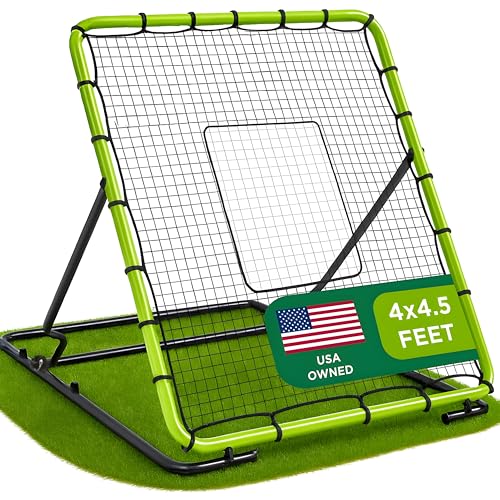 | Pitchback Rebounder Net | Solo throwing + fielding reps | ~$90 | View → |
 | Agility Ladder + Cone Set | Speed and footwork for any position | ~$40 | View → |
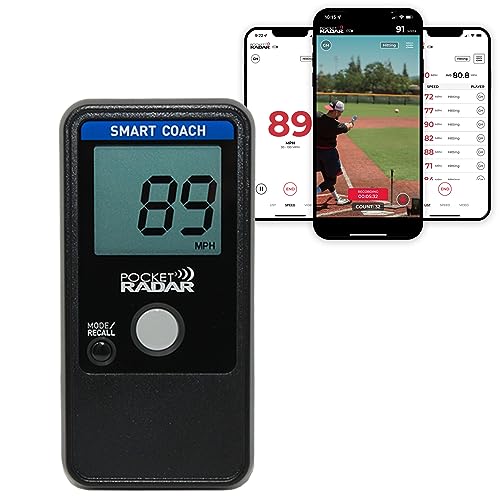 | Pocket Radar (Ball Coach style) | Tracking velocity development | ~$399 | View → |
*Prices at time of writing — they move; check the listing.
Pro-Style Batting Tee (Tanner-style)
~$100
Every hitting coach on earth starts here, and there's no debate why: tee work isolates the swing from timing, so a player can groove mechanics with total focus. The difference between a $25 big-box tee and a pro-style stem tee is durability and adjustability — cheap tees wobble, tip and crack at the collar within a season, while a quality stem tee takes thousands of mishits and adjusts from low-and-away to letters in seconds.
The reason coaches love the adjustable stem isn't convenience — it's that tee work only develops a hitter when the ball moves around the zone. The classic session is 5 swings at each of five stations: middle, low-and-away, low-and-in, up, and the back-of-the-plate "let it travel" position for opposite-field work. Twenty-five intentional swings beat a hundred lazy ones off a tee parked belt-high-middle forever.
Pair it with the practice net below and a bucket of balls, and a player has a complete daily hitting station in a garage or backyard.
- Used by every level from 6U to MLB
- Infinitely adjustable height/position
- Years of life vs months for cheap tees
- Enables solo daily reps
- Real tees cost real money
- Zero 'wow factor' for kids — until results show
- Stem wears with heavy mishits (replaceable)
Hit-A-Way Style Swing Trainer
~$26
A ball on a tethered cord that wraps a pole, rebounds, and returns — which means a kid can take hundreds of full-speed swings alone without picking up a single ball. That ball-return loop is the whole magic: it turns "practice" into something closer to a game, and kids voluntarily stay out there.
It won't teach a perfect swing path by itself (the cord's return angle adds some artificiality), but as a volume tool — building bat speed, hand-eye, and the habit of daily swings — it's unmatched at the price. Needs a pole, post or tree.
One setup trick owners pass around: mount it on a dedicated 4x4 post sunk in a bucket of concrete rather than a live tree — the consistent wrap means a consistent return path, and the trainer stops migrating around the yard. Treat the cord-and-ball as a consumable (a heavy swinger eats one a season) and the pole setup lasts for years of replacements.
- Solo practice, zero ball-chasing
- Kids actually choose to use it
- Develops timing on a moving ball
- Cheap
- Needs a sturdy pole or tree
- Cord return path isn't a true pitch
- Wears out with heavy use — it's consumable
Weighted Training Ball Set
~$20
Heavier and lighter balls (typically 7oz–12oz alongside the standard 5oz) used for overload/underload training — the same principle pro velocity programs run. Throwing slightly heavy builds arm strength; slightly light teaches the arm to move fast. Same story on the hitting side against a tee.
The starter throwing scheme instructors recommend for 13+ arms: after a full warm-up, 10 throws with the heavy ball at 70 percent effort, 10 with the game ball, 10 with the light ball letting the arm feel fast — twice a week, never on consecutive days, never through fatigue. The sequencing (heavy → game → light) is the point; the light-ball finish is where the speed feel gets stamped in.
The set lives in the bag, costs less than a single lesson, and serves pitchers, catchers (blocking drills love soft weighted balls) and hitters at once.
- One set serves pitching, catching and hitting drills
- Backed by legit overload/underload principle
- Durable — survives seasons
- Bag-friendly
- Misused programs can stress young arms
- Needs basic guidance to use well
- Boring without a drill plan
Swing-Path Trainer Sleeve (SwingRail-style)
~$30
A simple arm band connecting lead arm to the bat that gives instant physical feedback when a hitter "casts" — throwing the hands away from the body instead of staying connected. It's one of the few cheap aids that targets a specific, common flaw with feedback the player can feel on every rep, no coach required.
Use it in tee and soft-toss work in short doses (10–15 swings), then take it off and let the feel transfer. It's a corrective, not an everyday accessory.
How you know it's working without an instructor: contact moves from weak opposite-field slices and topped grounders toward firm pull-side and middle line drives, and the tell-tale "loop" disappears on slow-mo phone video. Film 5 swings before week one and 5 after week three — the before/after sells the kid on the tool better than any lecture.
- Instant physical feedback on a top-3 swing flaw
- Works in solo tee work
- Cheap and tiny — lives in the bag
- Clear before/after feel
- Only fixes the one thing
- Overuse creates dependence on the feel
- Sizing matters for small arms
Pitchback Rebounder Net
~$90
An angled rebound net throws the ball back — grounders, pop-ups or chest-high returns depending on angle. It's the defensive equivalent of the Hit-A-Way: removes the practice-partner requirement so a player can take 100 ground balls before dinner.
Vary the throw, not just the angle: throw from one knee for transfer work, from a shuffle for infield feeds, from the catcher's crouch for pop-time exchanges. The net doesn't care, and each variation buys a different 50 reps from the same ten feet of yard. For outfielders, steepen the angle and work drop-steps on the over-the-shoulder return.
Frame quality is the whole purchase decision — bungee tension and weld points fail first on cheap units. Buy the sturdier frame, and re-tension the bungees at midseason: a saggy net returns lollipops, and lollipop returns quietly turn a fielding drill into a catching nap.
- Solo fielding, throwing AND catching drills
- Adjustable angles = many drills in one
- Saves parents' arms
- Outdoor-durable
- Cheap frames die fast — spend up
- Needs flat yard space
- Return speed limited vs real fungo work
Agility Ladder + Cone Set
~$40
Baseball is short bursts: first step on a steal, exploding out of a crouch, range on a ground ball. A ladder-and-cones set is the cheapest legitimate speed equipment in sports, and it serves the whole team at warm-ups instead of one player.
For catchers specifically, ladder footwork patterns map directly onto blocking shuffles and pop-time exchanges. Ten focused minutes before practice, twice a week, shows up on the field within a month.
The cones are secretly the better half of the set for game speed: base-stealing breaks, first-step reads on grounders, and home-to-first turns are all cone drills, not ladder drills. The ladder builds foot quickness; the cones convert it into baseball-shaped bursts — use both every session and keep the whole thing under ten minutes so it never crowds out skill work.
- Whole-team utility
- Direct transfer to base running & defense
- Almost indestructible
- Cheapest item on this list
- Needs programming — random hopping ≠ training
- Zero baseball-specific skill work
- Easy to buy, easy to forget
Pocket Radar (Ball Coach style)
~$399
The expensive pick on the list, and the one with the most surprising behavioral payoff: when velocity is measured, pitchers train harder. A pocket-sized radar turns every bullpen into a game, gives instant feedback on mechanical changes, and tracks development across a season with real numbers instead of feel.
How the smart programs use it: not every throw, but a measured set at the same point in every bullpen — say, the last 10 fastballs — logged in a notes app with the date. Velocity wanders 2–3 mph day to day with sleep and weather, so the trend line over a month is the signal and any single reading is noise. Measuring the same way every time is what makes the numbers worth keeping.
For a single family it's a splurge; for a team it's one of the best shared purchases possible — one radar serves every pitcher in the program all season.
- Numbers motivate like nothing else
- Instant feedback on mechanical tweaks
- Serves entire pitching staff + hitters
- Holds resale value
- Real money
- Velocity obsession can outrun mechanics — coach accordingly
- Cheaper radar toys are wildly inaccurate; the good one costs
The pattern behind every pick
Notice what's missing: nothing here needs batteries, an app subscription or a parent with a free hour (except the radar — and it removes friction in a different way). The common thread is rep volume with low setup cost. Development at the youth level is overwhelmingly a volume game; buy the gear that makes volume easy and the fancy stuff can wait.
A weekly plan that fits a real family schedule
Gear without a plan is garage decoration, so here's the plan most of this list assumes — three short home sessions layered around team practice:
- Tuesday (20 min): tee stations — 5 swings at five ball positions into the net, then 25 Hit-A-Way swings as the fun finisher.
- Thursday (20 min): defense day — 21-out game on the rebounder, six-minute ladder-and-cone menu, reaction work if there's time.
- Saturday or Sunday (25 min): the focused session — sleeve sandwich sets if there's a swing fix in progress, weighted-ball scheme for 13+ arms, radar set if you own one. End with 10 free-swing bombs off the tee so the session closes on fun.
That's barely an hour a week, and it roughly doubles the touches a travel-ball kid gets. The secret is the ceiling, not the floor — cap every session at 25 minutes so the kid finishes wanting more, and the routine survives the whole season.
Age-by-age: what to buy first (8U → 14U)
The full list is overkill for one birthday. The buying ladder that matches how kids actually develop:
- 8U–9U: tee + net, full stop, plus the Hit-A-Way if there's a yard. This age is about loving reps; everything corrective can wait.
- 10U–11U: add the rebounder (defense becomes a separator at this age) and the ladder-and-cone set for team warm-ups. Weighted balls only as soft-toss and blocking tools.
- 12U–13U: add the swing sleeve when a real flaw shows up on video — this is the prime window for fixing casting before high-school pitching exposes it. Mature 13U arms can start the supervised light overload/underload scheme.
- 14U+: the radar earns its money here, when velocity development becomes a tracked, year-over-year project and showcase numbers start to matter.
How to know the gear is working
Every aid on this list has a checkpoint you can read without a trained eye. Tee work: the line-drive count per 10 climbs and the net pocket you're hitting tightens. Sleeve: the loop disappears on slow-mo video and pull-side contact firms up. Rebounder: the 21-out game finishes faster each week with fewer resets. Radar: the monthly trend line creeps up while the strike percentage holds.
Review on a four-week cadence, not daily — development is lumpy, and a parent checking for progress every Tuesday will see noise and panic. Film five swings or throws on the first of every month and compare month-to-month; the camera roll becomes the development log, and kids genuinely love scrolling their own before/after.
Mistakes that waste reps
The big four we see at every complex: uncounted reps ("hit till the bucket's empty" trains half as well as scored sets), tee parked in one spot (belt-high-middle forever grooves a one-pitch swing), corrective tools worn all session (the sleeve is a 15-swing medicine, not an outfit), and buying the gadget before the volume base — a radar for a kid who throws twice a week measures nothing but disappointment.
The fix for all four is the same: every drill gets a number, every session gets a cap, and every purchase waits until the previous tool is actually being used three times a week. The gear list above is ordered for a reason.
The free training lever: smarter game reps
One more lever that costs nothing: calling pitches with intent — working zones, setting up hitters — turns every inning into training. That's the entire idea behind MAVTRAX: tap the pitch and the spot, your catcher hears it instantly, and your battery learns to pitch with a plan instead of throwing and hoping. A kid who spends a season hearing "fastball, low and away — set up the curve" is learning sequencing the way the backyard gear teaches mechanics. And it really does cost nothing — MAVTRAX is free, and it works with any Bluetooth headset.
Also worth a look
 Rawlings GREAT HANDS Pancake Training GloveThe receiving trainer from our catcher guide — secretly a whole-infield soft-hands tool.~$32 · View on Amazon →
 SKLZ Reaction Ball$12 of reflex training that pairs with the rebounder for solo defense days.~$12 · View on Amazon →
 Bearwill 9-Hole Pitching Net with Strike ZoneTurns pitcher practice into location practice — the upgrade over aiming at the net's center.~$63 · View on Amazon →
 Strike Zone Target (Fence-Hang)The $12 fence-hang version of location work for throw-anywhere families.~$12 · View on Amazon →
 Spin-Trainer Ball (Rise/Drop Spinner)Got a softball sibling? The one tool that's truly fastpitch-specific.~$33 · View on Amazon →
 Complete Youth Catcher's SetIf the rebounder reps reveal a kid who loves the dirty work, gear them up properly.~$120–$200 · View on Amazon →
FAQ
What's the best first purchase on a tight budget?
Tee, net, bucket of balls. Roughly $150 total builds a daily hitting station that outworks any gadget. Everything else on this list is an add-on to that core.
Are weighted balls safe for a 10-year-old?
Light, supervised use (soft-toss drills, light overload play) is generally fine; structured high-intent velocity programs are for physically mature players, typically 13+. When in doubt, ask a qualified pitching instructor — not a fact sheet.
Do swing-path gadgets actually fix swings?
The good ones give feedback on ONE flaw (like casting) and work when used in short corrective doses. Nothing wearable replaces good coaching — but a $30 sleeve makes a coach's cue physical, which speeds the fix.
Radar vs app-based velocity tracking?
Phone apps estimating velo from video are fun but inconsistent. A dedicated radar is accurate within ~1 mph, which matters when you're tracking 2–3 mph of seasonal progress.
How many swings a day should a youth player take?
Quality beats quantity: 25–50 intentional, counted swings a session, three or four sessions a week, is plenty for most kids under 13. The number to watch isn't swings per day, it's sessions per week — frequency builds skill, marathons build bad habits and sore hands.
Can all of this be used indoors over the winter?
Most of it. The tee-and-net station, swing sleeve, reaction drills and ladder all fit a garage or basement; soft-shell weighted balls are the indoor-safe option for throwing-adjacent work. The Hit-A-Way and rebounder are the two outdoor-only pieces, and winter is exactly when home stations pay for themselves.
Is a pitching machine worth it before any of this?
Usually no. Machines are expensive, parent-dependent, and train timing against an arm-less delivery. A tee, a net, and a Hit-A-Way generate more useful swings for a tenth of the price — save machine money until a hitter has a grooved swing worth timing, then rent cage time instead.
What actually keeps a kid using this stuff past July?
Three things, per the families whose gear doesn't gather dust: a fixed weekly schedule anchored to existing routines, a score on every drill so there's something to beat, and sessions capped short enough that the kid ends wanting more. Motivation is a system, not a personality trait.
We're the team behind MAVTRAX — pitch-calling software used by baseball and softball teams from 9U travel ball up. We spend our days around dugouts, gear bags and tournament weekends. Picks are chosen on specs, durability for youth-sports abuse, real-world price, and owner feedback — not on who pays the highest commission. Full criteria on how we pick.