Best Baseball Pitching Machines (2026): Every Tier From $68 Toy to $3,599 Pro
A pitching machine turns one parent and a bucket of balls into hundreds of quality cuts a week. But the right machine depends entirely on who's hitting: a $68 toy machine for a 5-year-old, a $150 backyard workhorse for coach-pitch, a $800 two-wheel machine that throws 75 mph curveballs, or a $2,700-plus three-wheel machine that runs a travel team's entire batting practice. Here are the 12 machines worth buying at every tier, plus the wheel-count, speed, ball, and safety knowledge that keeps you from buying the wrong one.
In this guide · 12 sections
- Helmet headset
- At a glance
- The four machine tiers, and which one your hitter is in
- Wheel count explained: why 1, 2, and 3 wheels are different machines
- Machine speed by age: what your hitter should actually see
- Ball type: check this before you buy anything
- Power: mechanical, battery, or AC (and the generator question)
- Machine safety: the L-screen, the helmet, and the launch path
- Budget tiers: what your money buys from $68 to $3,599
- Which pitching machine should you buy?
- Also worth a look
- FAQ
Quick picks
Our top recommendations — full reviews below.

The serious family machine: 75 mph, real curveballs, auto feeder, real baseballs
$799.99 price and availability on Amazon
View on Amazon →Key takeaways
- Match the machine to the hitter first: a toy or soft-toss machine ($68 to $70) for the youngest players, a manual real-pitch machine ($149 to $200) for coach-pitch and timing work, a powered wheel machine ($365 to $846) for serious hitters, and a two or three-wheel team machine ($1,845 to $3,599) for clubs and travel programs.
- Wheel count is the spec that separates the tiers. One wheel throws straight pitches, two wheels add speed and breaking balls, and three wheels (Hack Attack, JUGS mini3) deliver game-real fastballs and breaking pitches with the most realistic look for the hitter.
- Our top overall pick is the Heater Sports Deuce (about $800): a two-wheel machine that throws fastballs and curveballs up to 75 mph, works with real baseballs, and includes an automatic ball feeder, at a fraction of pro-machine money.
- For travel teams, the Junior Hack Attack (about $2,699) is the machine you see at serious facilities: a three-wheel design that throws fastballs and breaking balls and travels to the field.
- Check the ball type before you buy. Some machines need lightweight dimpled or poly balls, others throw regulation baseballs. Feeding the wrong ball can damage a machine or wreck its accuracy.
- Speed is only useful if it's repeatable: a machine that puts the ball in the same spot every pitch builds a swing far better than one that scatters, regardless of the number on the box.
The best baseball pitching machine for most families is the Heater Sports Deuce (about $800 at time of writing): a two-wheel machine that throws fastballs and curveballs up to 75 mph, feeds itself with an automatic ball feeder, and works with real baseballs, which covers a hitter from Little League through high school without team-machine money. On a budget, the Louisville Slugger Blue Flame (about $149) is the proven manual real-pitch workhorse, and for travel teams the Junior Hack Attack (about $2,699) is the three-wheel machine serious programs buy. A machine's value isn't its top speed. It's the repetition it unlocks: one adult, one machine, and a bucket of balls produce hundreds of consistent, same-spot cuts in the time it takes to hand-toss a few dozen, and that volume of quality reps is what actually builds a swing.
Below are 12 machines worth buying across the full budget range, from a $68 toy machine for the youngest players to the $3,599 three-wheel Hack Attack that colleges and academies run, plus a plain-English guide to wheel count, speed by age, power, ball compatibility, and machine safety.
At a glance
| Pick | Best for | Price* | ||
|---|---|---|---|---|
| Heater Sports Deuce 75 MPH Two-Wheel Pitching Machine | The serious family machine: 75 mph, real curveballs, auto feeder, real baseballs | $799.99 | View → |
 | Louisville Slugger Blue Flame Pitching Machine | The proven manual workhorse: consistent real pitches with no power needed | $149.00 | View → |
 | Junior Hack Attack Baseball Pitching Machine | The travel-team standard: three-wheel realism that runs a full program's BP | $2,699.00 | View → |
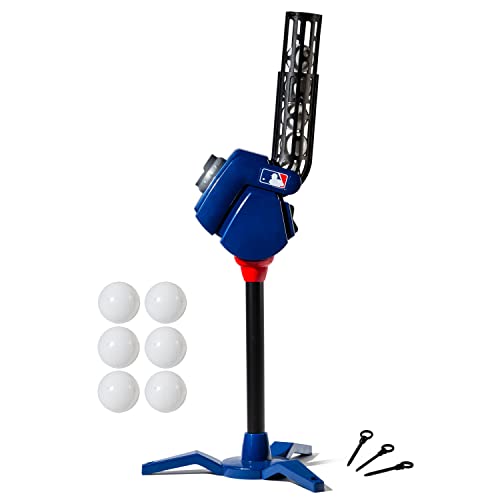 | Franklin MLB Superstar 4 in 1 Pitching Machine | The toy-tier starter for the youngest hitters | $67.99 | View → |
 | Furlihong 898BH Baseball Soft Toss Machine | High-volume backyard soft toss with no power and real baseballs | $69.99 | View → |
 | Heater Sports Slider Lite 360 Pitching Machine | A versatile machine with auto-feed and varied looks for all ages | $179.99 | View → |
 | Heater Sports Base Hit Pitching Machine (45 MPH, Real Baseballs) | The cheapest powered machine that throws real baseballs with an auto feeder | $199.99 | View → |
 | PowerNet Launch F-lite Baseball & Softball Pitching Machine | A portable, adjustable step-up machine for baseball and softball families | $365.49 | View → |
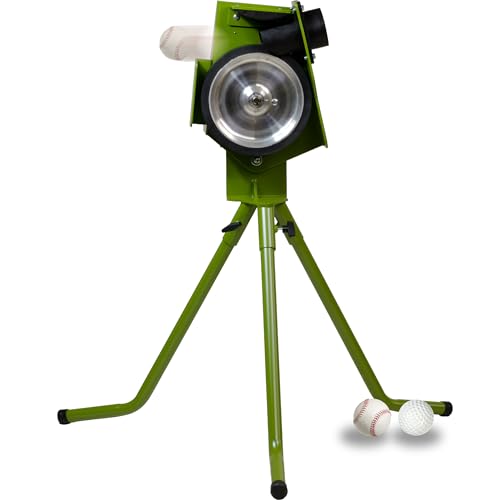 | Mound Yeti-1 Single Wheel Pitching Machine (30 to 60 MPH) | A single-wheel machine covering youth through adult speeds for baseball and softball | $846.00 | View → |
 | JUGS MVP Combo Pitching Machine (Baseball or Softball) | The machine built for machine-pitch leagues, from the biggest name in machines | $1,845.00 | View → |
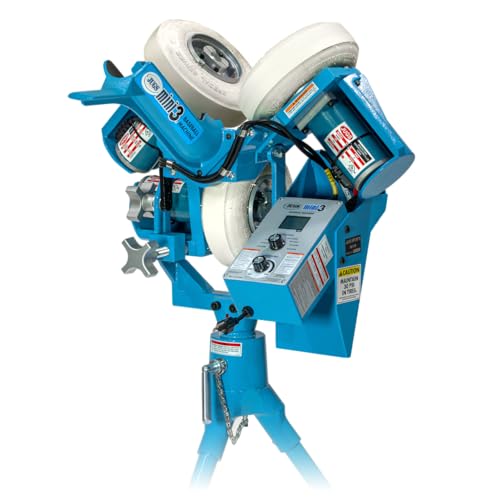 | JUGS mini3 Three-Wheel Baseball Pitching Machine | JUGS' compact three-wheel machine: pro-style pitches in a portable package | $3,195.00 | View → |
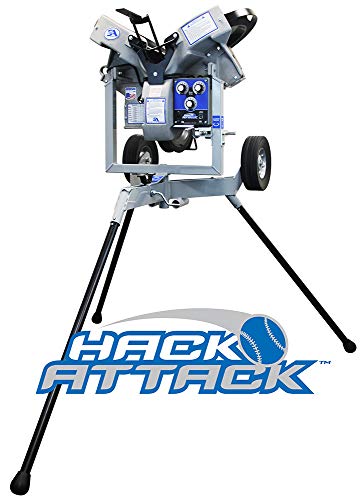 | Hack Attack Baseball Pitching Machine (Full Size) | The full-size three-wheel machine that high schools, colleges, and academies run | $3,599.00 | View → |
*Prices at time of writing — they move; check the listing.
Heater Sports Deuce 75 MPH Two-Wheel Pitching Machine
$799.99
The Deuce is the machine we'd buy for a committed hitter who has outgrown the manual tier, and it's our top overall pick because it delivers the three things that used to require a team machine: real speed (up to 75 mph per the listing), real breaking balls (its two-wheel design throws both fastballs and curveballs), and an automatic ball feeder so a player can take full rounds without a parent loading every pitch. It also works with real baseballs as well as pitching machine balls, so the look and feel off the machine matches the game.
At about $800 it is real money, but look at what surrounds it: the manual machines below it can't throw breaking balls or reach this speed, and the three-wheel machines above it start at $1,845. For a 12U through high school hitter who needs to see velocity and spin, the Deuce is the price-to-capability sweet spot in this entire guide. Feed it with Heater's lite balls for backyard sessions and real baseballs in the cage.
- Throws fastballs and curveballs up to 75 mph
- Two-wheel design puts real spin on the ball
- Automatic ball feeder: full rounds without a feeder standing at the machine
- Works with real baseballs and pitching machine balls
- A fraction of the price of three-wheel team machines
- Needs power at the field or cage
- Overkill for tee-ball and early coach-pitch hitters
- Not the three-wheel realism of a Hack Attack or mini3
Louisville Slugger Blue Flame Pitching Machine
$149.00
The Blue Flame is the long-running, widely trusted name for families ready to move past soft toss into real, repeatable pitches without spending wheel-machine money. It's a manual machine, no cord and no battery, that delivers a consistent pitch to the same spot, pitch after pitch, which is exactly what a player needs to start working on timing and tracking the ball. That's the thing a tee or soft toss simply can't teach.
At about $149 it sits in the sweet spot between the backyard toy tier and the powered machines above it. It's designed to throw lightweight balls (the kind sold for these machines) rather than heavy regulation baseballs, which keeps it safe for younger players and easy on the machine. It's also the machine many coach-pitch and machine-pitch leagues actually use, so cage reps off a Blue Flame can mirror what your hitter sees on game day. For a player who's making consistent contact and needs to start seeing a pitch come in, this is the proven, affordable step up.
- Long-trusted, widely recognized machine line
- Consistent, repeatable pitch location for real timing work
- No power needed: works at any field or backyard
- Far more affordable than powered wheel machines
- Designed for lightweight balls, not heavy regulation baseballs
- Lower speed than a powered wheel machine
- Manual feed: an adult loads each pitch
Junior Hack Attack Baseball Pitching Machine
$2,699.00
The Junior Hack Attack is the machine you see at serious travel practices and hitting facilities, and there's a reason coaches keep choosing it: the three-wheel design. With three wheels, the machine throws fastballs and true breaking balls, and the hitter can see the ball through the entire feeding motion, pick it up early, and time a real load and stride, the way they would against a live arm. That visual realism is the single biggest training difference between this tier and everything below it.
At about $2,699 this is a program purchase: a machine a travel organization, a training facility, or a serious baseball family buys once and runs for years. It's the junior version of the full-size Hack Attack below, sized and priced for youth and travel programs. If your club is still running BP off a parent's arm or a manual machine, this is the upgrade that changes what practice produces.
- Three-wheel design throws fastballs and true breaking balls
- Hitter sees the ball through the feed for a real timing cue
- The machine serious travel programs and facilities actually buy
- Built for full-roster, everyday batting practice
- Program-level price
- Needs power at the field
- More machine than a single young hitter needs
Franklin MLB Superstar 4 in 1 Pitching Machine
$67.99
The Franklin Superstar is the classic first machine for the youngest players: a toy-tier unit that lobs lightweight plastic balls into the hitting zone so a 4 to 7-year-old can learn to watch a moving ball and swing. Franklin's 4-in-1 design is built to grow through those first backyard seasons, and at about $68 it costs less than a single youth bat.
Be clear about what this tier is: it is a toy that teaches the first version of timing, not a training machine. The plastic balls are light, the speeds are gentle, and that's the point, because a young hitter's job is making confident contact, not surviving velocity. When your player starts squaring balls up consistently and asking for more, that's the signal to step up to the soft-toss and manual real-pitch tiers below.
- Lowest price in this guide
- Gentle, age-appropriate way to learn a moving ball
- Lightweight plastic balls are safe for backyard use
- Franklin is the trusted name in the toy tier
- A toy, not a training machine
- Plastic balls only; no real-pitch feel
- Outgrown quickly once a hitter squares balls up
Furlihong 898BH Baseball Soft Toss Machine
$69.99
The Furlihong is the machine we'd buy for a young hitter or any family that just wants more cuts in the backyard without a power cord. It's a fully mechanical soft-toss machine: you load a regulation baseball, step on the paddle, and release to launch the ball up into the hitting zone. No batteries, no outlet, nothing to charge. At about $70 it's the easiest, cheapest way to turn solo practice into real repetition with real baseballs.
The launch angle is adjustable, so you can dial in a comfortable toss for the player's height and swing. Because it works with regulation baseballs rather than special poly balls, you're not buying a separate ball supply. It won't simulate a real pitch coming in at speed, and that's fine, because that's not its job. For sheer volume of easy, repeatable cuts on a budget, it's the smart buy. Pair it with a good pair of batting gloves to round out a backyard station.
- Fully mechanical: no batteries or power needed
- Step-on paddle is simple enough for a parent to run solo
- Works with regulation baseballs; no special balls to buy
- Adjustable launch angle
- Soft toss only; does not simulate a real incoming pitch
- Not for older players working on timing against speed
- Manual load each ball (no auto-feed)
Heater Sports Slider Lite 360 Pitching Machine
$179.99
The Slider Lite 360 is the most versatile machine in the under-$200 tier for a family that wants more than straight fastballs. Its 360-degree design lets you adjust the delivery so a hitter sees different looks rather than the same pitch every time, and it includes an automatic ball feeder, so a player can take a full round of cuts without an adult loading each ball by hand. That auto-feed is the difference between a drill that needs two people and one a player can run largely on their own.
At about $180 it's a small step up from the Blue Flame in both price and capability, and it's built to work for a wide range of ages. Like other machines in this class it's designed for the lightweight balls sold for it, which keeps it portable and safe for younger hitters. If you want one affordable machine that grows with a player and keeps practice varied, this is the pick.
- Automatic ball feeder: a player can run a full round solo
- 360-degree adjustability for varied pitch looks
- Built to work across a wide range of ages
- Portable and lightweight
- Designed for lightweight balls, not heavy regulation baseballs
- Pricier than the Blue Flame
- Not a high-speed wheel machine
Heater Sports Base Hit Pitching Machine (45 MPH, Real Baseballs)
$199.99
The Base Hit answers the most common complaint about the manual tier: lightweight-ball machines don't look or sound like the real game. This is the cheapest powered machine in our lineup that throws real baseballs, at speeds up to 45 mph per the listing, and it includes an automatic ball feeder, so a hitter gets game-ball reps on a timer instead of waiting on a parent's hands.
At about $200 it competes directly with the Slider Lite 360, and the choice between them is simple: the Slider Lite gives you more varied looks with lightweight balls, while the Base Hit gives you real baseballs at real (youth) speed. For a 9U to 12U hitter preparing for kid-pitch velocity, seeing an actual baseball leave an actual machine matters, and the Base Hit is the cheapest way to get it. It also doubles as a fielding tool: aim it up and out and it serves pop flies and grounders per the listing's hitting-and-fielding design.
- Throws real baseballs, not just lightweight balls
- Speeds up to 45 mph: right in the youth kid-pitch range
- Automatic ball feeder included
- Doubles as a fielding trainer for flies and grounders
- Not fast enough for older, advanced hitters
- Needs power
- Single-wheel design: no breaking balls
PowerNet Launch F-lite Baseball & Softball Pitching Machine
$365.49
The Launch F-lite is PowerNet's answer for the family caught between the $200 machines and the $800-plus wheel machines. Per the listing it offers variable speed up to 90 mph with its F-lite balls, adjustable height and angles, and it works for both baseball and softball, which makes it the natural pick for a two-sport household or a family that wants one machine to carry from the backyard to the field.
The honest framing: that 90 mph figure applies to the lightweight F-lite balls the machine is built around, and lightweight balls at high speed are a training look, not a game-identical one. What you're really buying at about $365 is adjustability and portability: a machine you can dial up and down across ages, aim for flies and grounders, and move without a truck. For a family not ready to commit to the Deuce, this is the flexible middle step.
- Variable speed with a high ceiling for its lite balls
- Adjustable height and angles for BP, pop flies, and grounders
- Covers both baseball and softball
- Portable next to the wheel machines above it
- Built around lightweight F-lite balls, not regulation baseballs
- Top speed figure applies to lite balls, not game balls
- No breaking-ball capability like a two or three-wheel machine
Mound Yeti-1 Single Wheel Pitching Machine (30 to 60 MPH)
$846.00
The Mound Yeti-1 is the straightforward wheel-machine play: a single-wheel unit that throws 30 to 60 mph per the listing, handles both baseball and softball, and is built for youth and adult use. That 30 to 60 mph band is exactly the range a hitter lives in from 8U machine ball through 14U, which makes this a machine a family or a rec program can set behind an L-screen and grow with for years.
Against our top-pick Deuce at a similar price, the trade is clear: the Deuce's two wheels add curveballs and a higher 75 mph ceiling, while the Yeti-1 keeps it simple with one wheel, straight pitches, and dual-sport coverage. If your program runs baseball and softball off one machine, or you simply want repeatable straight velocity without managing breaking-ball settings, the Yeti-1 is the simpler tool. If your hitter needs to see spin, buy the Deuce instead.
- 30 to 60 mph covers 8U machine ball through 14U speeds
- Handles both baseball and softball
- Single-wheel simplicity: fewer settings to manage
- Wheel-machine consistency for repeatable location work
- No breaking balls: single wheel throws straight pitches
- Similar money to the Deuce but a lower speed ceiling
- Less established brand than JUGS, Heater, or Sports Attack
JUGS MVP Combo Pitching Machine (Baseball or Softball)
$1,845.00
The MVP Combo is JUGS' machine designed specifically for pitching-machine leagues, per the listing, with a speed range up to 60 mph and a setup that converts between baseball and softball. JUGS is the name that has defined this category for decades (the same company whose machines gave us the phrase "JUGS gun" speeds), and the MVP Combo is where that pedigree meets the league and rec-program budget.
At about $1,845 this is a league, program, or facility purchase more than a single-family one. What that money buys over the sub-$900 tier is JUGS build quality and a machine leagues trust to throw strike after strike for entire seasons of games and practices, for both baseball and softball rosters. For a machine-pitch league or a rec organization outfitting fields, this is the standard choice.
- Designed specifically for pitching-machine leagues
- Converts between baseball and softball
- Up to 60 mph: the full youth game-speed range
- JUGS pedigree and league-season durability
- League-level price for a 60 mph ceiling
- No breaking balls
- Heavier commitment than a family machine
JUGS mini3 Three-Wheel Baseball Pitching Machine
$3,195.00
The mini3 is JUGS' entry in the three-wheel tier: the compact machine for programs and serious families who want three-wheel pitch quality, fastballs and breaking pitches with a clear visual release for the hitter, in a smaller, more portable package than a full-size unit. Three wheels are the top of the machine food chain because varying the three wheel speeds shapes the ball's spin in any direction, which is how a machine throws a believable curveball, slider, or riser instead of only straight pitches.
At about $3,195 the mini3 sits between the Junior Hack Attack ($2,699) and the full-size Hack Attack ($3,599), and the honest comparison is brand and form factor: JUGS' take on the three-wheel machine in a compact body, against Sports Attack's youth and full-size units. For a facility adding a second machine, a program that travels, or a family with a high-level hitter and a cage, the mini3 delivers the top training tier with the most trusted name in the category on the side.
- Three-wheel design throws fastballs and breaking pitches
- Compact next to full-size three-wheel machines
- JUGS build pedigree at the pro-training tier
- The pitch realism advanced hitters actually need
- Costs more than the Junior Hack Attack
- Needs power and a proper cage or field setup
- Far more machine than a developing hitter needs
Hack Attack Baseball Pitching Machine (Full Size)
$3,599.00
The full-size Hack Attack is the ceiling of this guide and the machine you'll find in high school, college, and academy cages across the country. Its three-wheel design throws game-speed fastballs and true breaking balls, and the hitter watches the ball through the entire feed, picking up the release the way they would from a live arm. When coaches talk about a machine that can genuinely prepare a hitter for elite velocity and spin, this is the machine they mean.
At about $3,599 this is an institutional purchase that earns its keep through years of daily, full-roster batting practice. Programs pair it with a quality L-screen, a bucket of game-grade machine baseballs, and a generator when field power is short, and it becomes the centerpiece of every hitting session the program runs.
- The three-wheel standard in high school, college, and academy cages
- Game-speed fastballs and true breaking balls
- Hitter sees the ball through the feed, like a live release
- Built for years of daily full-roster batting practice
- The most expensive machine in this guide
- Institutional size, weight, and power needs
- Complete overkill below serious high school play
The four machine tiers, and which one your hitter is in
Pitching machines sort into four real tiers: toy and soft-toss machines ($68 to $70), manual and step-up real-pitch machines ($149 to $365), powered wheel machines ($800 to $846), and team or three-wheel machines ($1,845 to $3,599). The tier matters more than the brand. A toy machine like the Franklin Superstar teaches a 5-year-old to watch a moving ball. A manual machine like the Blue Flame teaches a coach-pitch hitter to time a real pitch. A wheel machine like the Heater Deuce introduces velocity and breaking balls. And a three-wheel machine like the Hack Attack runs a program's entire batting practice at game speed.
Buying across tiers is the classic mistake in both directions. A $2,699 machine does nothing for a 6-year-old that a $70 one doesn't, and a $180 lightweight-ball machine can't prepare a 15-year-old for varsity velocity. Find your hitter's tier first; then pick the best machine inside it.
| Tier | Price range | Who it's for | Picks in this guide |
|---|---|---|---|
| Toy / soft toss | $68 to $70 | Ages 4 to 8, first moving-ball contact | Franklin Superstar, Furlihong |
| Manual / step-up | $149 to $365 | Coach-pitch through 12U timing work | Blue Flame, Slider Lite, Base Hit, Launch F-lite |
| Wheel machines | $800 to $846 | Committed 12U to HS hitters | Heater Deuce, Mound Yeti-1 |
| Team / three-wheel | $1,845 to $3,599 | Leagues, travel teams, facilities, HS+ | MVP Combo, Junior Hack Attack, mini3, Hack Attack |
Wheel count explained: why 1, 2, and 3 wheels are different machines
Wheel count is the spec that actually separates serious machines: one wheel throws straight pitches, two wheels add spin and breaking balls, and three wheels shape spin in any direction for the most game-real pitch a machine can throw. A single-wheel machine (the Mound Yeti-1, the Base Hit) fires the ball between one spinning wheel and a plate, which produces consistent straight pitches, ideal for grooving a swing against velocity. A two-wheel machine (the Heater Deuce) spins its two wheels at different speeds, which puts real spin on the ball: run the top wheel faster and the ball breaks downward like a curveball.
Three-wheel machines (Junior Hack Attack, JUGS mini3, full-size Hack Attack) are the top tier because three contact points let the machine shape spin on any axis, throwing fastballs, curveballs, sliders, and more, while the hitter watches the ball through the feeding motion for a live-arm timing cue. That's why three-wheel machines dominate high school, college, and academy cages, and why they cost what they cost.
| Wheels | What it throws | Examples here |
|---|---|---|
| 1 wheel | Consistent straight pitches | Base Hit, Mound Yeti-1 |
| 2 wheels | Fastballs plus breaking balls (spin from wheel-speed difference) | Heater Deuce |
| 3 wheels | Full pitch shapes on any spin axis, best visual timing cue | Junior Hack Attack, JUGS mini3, Hack Attack |
Machine speed by age: what your hitter should actually see
Match machine speed to the pitching your hitter actually faces: roughly 35 to 40 mph for 8U machine ball, 40 to 50 mph for 9U to 12U kid pitch, 50 to 65 mph for 13U to 14U, and 65 mph and up for high school hitters, as a general coaching guideline. These are approximate bands, not rules, and every league and hitter differs, but they explain why each tier of machine exists. The Base Hit's 45 mph ceiling per its listing covers the entire kid-pitch range. The Deuce's 75 mph and the three-wheel machines cover high school velocity and beyond.
Two cautions. First, machine distance changes everything: a machine set at 40 feet gives the hitter less reaction time than the same speed from 46 or 60 feet, so a 45 mph machine up close can simulate a much faster pitch. Second, buying speed a hitter isn't ready for just produces misses and bad habits. The goal is a speed the hitter can compete against and occasionally be stretched by, not overwhelmed with.
| Age / level | Typical machine speed (approx.) | Machines in that range here |
|---|---|---|
| Tee-ball to 7U | Toy and soft-toss speeds | Franklin Superstar, Furlihong |
| 8U machine ball | ~35 to 40 mph | Blue Flame, MVP Combo, Yeti-1 (low end) |
| 9U to 12U kid pitch | ~40 to 50 mph | Base Hit, Launch F-lite, Yeti-1 |
| 13U to 14U | ~50 to 65 mph | Deuce, Yeti-1, MVP Combo (top end) |
| High school and up | ~65 mph and up | Deuce (to 75), Junior Hack Attack, mini3, Hack Attack |
Ball type: check this before you buy anything
Machines are built for specific balls, and feeding the wrong ball can ruin accuracy or damage the machine, so confirm ball compatibility before your first session. Three categories cover most machines: regulation baseballs (the Furlihong soft toss, the Base Hit, and the wheel machines handle these), lightweight, poly, or dimpled machine balls (what the Blue Flame, Slider Lite, and Launch F-lite are designed around, and what most cages run through wheel machines to save wear), and plastic balls on toy-tier machines like the Franklin.
This trips up more buyers than anything else. A machine designed for lightweight dimpled balls will jam or throw wildly if you load heavy regulation baseballs into it, and over time you can damage the mechanism. Going the other way, real leather baseballs chew through wheel-machine tires faster than dimpled machine balls do, which is why teams buy dedicated machine balls by the bucket. Budget for the correct balls as part of the purchase; a dozen dimpled machine balls typically runs $30 to $65.
Power: mechanical, battery, or AC (and the generator question)
How a machine is powered decides where you can use it: mechanical machines go anywhere, while every powered wheel machine in this guide wants AC power, which at a field without outlets means a generator or a battery-inverter setup. The Furlihong and Blue Flame are fully mechanical, no cord and no charge, which is why they live so happily in backyards. The powered tier, from the Base Hit up through the Hack Attack, trades that freedom for consistent wheel speed, and consistent wheel speed is exactly what makes the pitches repeatable.
Match the power source to where the machine will actually live. Backyard with no outdoor outlet: stay mechanical or plan an extension-cord run. Team machine at a field with power: AC is a non-issue. Travel program hitting at whatever field the tournament assigns: a small inverter generator rides in the trailer with the machine, and coaches who run three-wheel machines budget for one from day one. Always confirm the power requirement on the listing before you buy.
Machine safety: the L-screen, the helmet, and the launch path
A pitching machine session has three non-negotiables: the hitter wears a helmet, the feeder stands behind an L-screen or the machine's protective position, and nobody is ever downrange of the launch path. A wheel machine throwing 60 mph delivers a ball with real injury potential, and even the soft-toss tier can sting at close range. Set the machine on stable, level ground, confirm it's aimed into a net, cage, or open field with no one in the flight path, and clear the area in front of the machine before every round.
Two machine-specific habits matter more than most parents realize. First, never look into or reach toward the feeding side of a running wheel machine; balls leave the wheels instantly and without a windup the body can react to. Second, teach hitters that the first pitch after any speed or angle adjustment is a watch pitch, not a swing pitch, because the machine's new location isn't proven yet. Auto-feeders (Slider Lite, Base Hit, Deuce) add convenience but also mean pitches keep coming on a timer, so the hitter steps out only between feeds, exactly like live BP etiquette.
Budget tiers: what your money buys from $68 to $3,599
Every jump up this price ladder buys a specific, nameable capability: moving-ball contact at $68, repeatable real pitches at $149, real baseballs with auto-feed at $200, velocity with breaking balls at $800, and full-roster, game-real team BP from $1,845 up. That's the honest way to shop this category: not "how much machine can I afford" but "which capability does my hitter actually need next."
| Price | What you get | Pick |
|---|---|---|
| $67.99 | Toy-tier moving-ball contact for the youngest hitters | Franklin Superstar 4 in 1 |
| $69.99 | Mechanical soft toss with regulation baseballs | Furlihong 898BH |
| $149.00 | The proven manual real-pitch workhorse | Louisville Blue Flame |
| $179.99 | Auto-feed and varied looks under $200 | Heater Slider Lite 360 |
| $199.99 | Real baseballs at 45 mph with auto-feed | Heater Base Hit |
| $365.49 | Adjustable dual-sport step-up machine | PowerNet Launch F-lite |
| $799.99 | 75 mph, curveballs, auto feeder, real baseballs | Heater Deuce |
| $846.00 | Single-wheel 30 to 60 mph, baseball and softball | Mound Yeti-1 |
| $1,845.00 | The JUGS machine built for machine-pitch leagues | JUGS MVP Combo |
| $2,699.00 | Three-wheel travel-team standard | Junior Hack Attack |
| $3,195.00 | JUGS' compact three-wheel machine | JUGS mini3 |
| $3,599.00 | The full-size three-wheel institutional standard | Hack Attack |
The honest guidance: don't overspend on a young or casual hitter, and don't under-buy for a serious program. A $70 soft-toss does more for a 7-year-old than a $3,599 machine ever would, and a travel club running daily BP will outgrow the sub-$400 tier in a season. Buy the capability that matches the hitter and the use.
Which pitching machine should you buy?
Buy the Heater Deuce (about $800) if you have a committed 12U to high school hitter: it's the cheapest machine here that throws real velocity and real breaking balls with an auto feeder. Buy the Blue Flame (about $149) if you're stepping a coach-pitch hitter into timed real pitches on a budget. Buy the Junior Hack Attack (about $2,699) if you're outfitting a travel team or facility. Those three picks cover the large majority of buyers, and the rest of the lineup handles the specific cases around them.
The youngest hitters start with the Franklin Superstar ($67.99) or the Furlihong soft toss ($69.99). Families wanting auto-feed or real baseballs under $200 take the Slider Lite ($179.99) or Base Hit ($199.99). Dual-sport and flexible-budget households step to the Launch F-lite ($365.49) or Mound Yeti-1 ($846.00). Machine-pitch leagues buy the JUGS MVP Combo ($1,845.00), and high schools, academies, and colleges buy the JUGS mini3 ($3,195.00) or the full-size Hack Attack ($3,599.00) and run it for a decade. Whatever tier you land in, add a helmet, the correct machine balls, and an L-screen for any powered machine, and the machine starts paying for itself the first week.
Also worth a look
 Heater Sports PowerAlley 60 MPH Lite Baseballs (Dozen)Lite machine balls for backyard wheel-machine sessions$33.99 · View on Amazon →
 JUGS Lite-Flite Baseballs (One Dozen)JUGS Lite-Flite machine balls, the youth-cage standard$57.48 · View on Amazon →
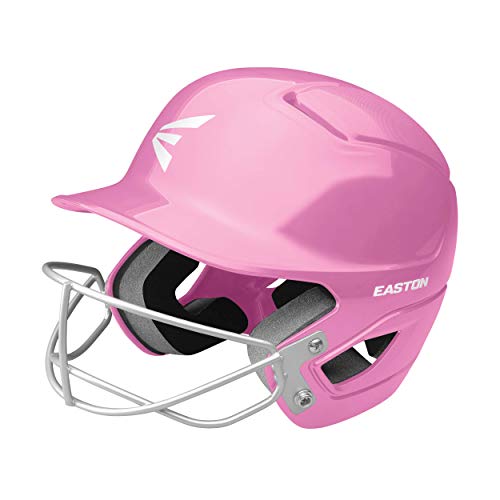 Easton ALPHA Fastpitch Helmet w/ FacemaskA batting helmet for machine work (non-negotiable)~$53 · View on Amazon →
 Franklin Youth 'Grow to Pro' Batting GlovesYouth batting gloves for long machine sessions~$20 · View on Amazon →
FAQ
What is the best baseball pitching machine?
For most families with a committed hitter, the Heater Sports Deuce (about $800) is the best overall pick: a two-wheel machine that throws fastballs and curveballs up to 75 mph, works with real baseballs, and includes an automatic ball feeder. On a budget, the Louisville Slugger Blue Flame (about $149) is the proven manual choice, and for travel teams the three-wheel Junior Hack Attack (about $2,699) is the standard.
How much does a good pitching machine cost?
It depends entirely on the tier. Toy and soft-toss machines for young kids run $68 to $70, manual and step-up real-pitch machines run $149 to $365, real wheel machines with velocity run $800 to $846, and team or three-wheel machines run $1,845 to $3,599. Buy the tier that matches the hitter: a $70 soft toss serves a 7-year-old better than a $3,599 pro machine would.
What's the difference between 1-wheel, 2-wheel, and 3-wheel pitching machines?
One-wheel machines (like the Mound Yeti-1, $846) throw consistent straight pitches. Two-wheel machines (like the Heater Deuce, $799.99) spin their wheels at different speeds to throw breaking balls as well as fastballs. Three-wheel machines (Junior Hack Attack $2,699, JUGS mini3 $3,195, Hack Attack $3,599) shape spin in any direction for the most game-real pitches, and the hitter sees the ball through the feed for a live-arm timing cue.
How fast should a pitching machine be for my kid's age?
As a general coaching guideline: around 35 to 40 mph for 8U machine ball, 40 to 50 mph for 9U to 12U kid pitch, 50 to 65 mph for 13U to 14U, and 65 mph and up for high school. Remember machine distance matters too: the same speed from a closer machine gives less reaction time, so start slower than you think and work up.
Do pitching machines use regulation baseballs?
Some do and some don't, so always check before buying. The Furlihong soft toss ($69.99), Heater Base Hit ($199.99), and Heater Deuce ($799.99) work with real baseballs, while the Blue Flame, Slider Lite, and Launch F-lite are designed for lightweight or dimpled machine balls. Teams usually run dimpled machine balls even in machines that accept leather baseballs, because real leather wears wheel-machine tires faster.
Is an expensive three-wheel pitching machine worth it?
For a program, yes. The three-wheel tier (Junior Hack Attack $2,699 and up) throws real breaking balls with a visual release the hitter can time, and it runs full-roster batting practice daily for years, which is why high schools, colleges, and academies standardize on machines like the Hack Attack ($3,599). For a single developing hitter, the Heater Deuce at $799.99 delivers most of the training value at a fraction of the price.
What safety equipment do I need with a pitching machine?
Three things: a batting helmet for the hitter every single round, an L-screen (or the machine's protective position) for whoever is feeding a powered machine, and a clear launch path into a net, cage, or open field. Also teach hitters to take a watch pitch after any speed or angle adjustment, and never reach toward the feeding side of a running wheel machine.
Do pitching machines need to be plugged in?
The mechanical tier doesn't: the Furlihong ($69.99) and Blue Flame ($149.00) need no power at all. Every powered machine here, from the Base Hit ($199.99) through the Hack Attack ($3,599.00), wants AC power, so plan for an outlet, an extension run, or a generator at fields without power. Travel programs typically keep a small inverter generator with the machine.
We're the team behind MAVTRAX — pitch-calling software used by baseball and softball teams from 9U travel ball up. We spend our days around dugouts, gear bags and tournament weekends. Picks are chosen on specs, durability for youth-sports abuse, real-world price, and owner feedback — not on who pays the highest commission. Full criteria on how we pick.