Best Bluetooth Headset for a Catcher's Helmet (2026)
The best Bluetooth headset for a catcher's helmet is a $13 motorcycle-helmet speaker pod velcroed inside the ear flap: it rides with the helmet through every pop-up rip, runs a full tournament weekend, and works with any pitch-calling app. We ranked 10 helmet-mount units from $13 to $394 for baseball and fastpitch, by budget and by job.
In this guide · 13 sections
- At a glance
- The verdict by situation
- Price bands: what each tier actually buys
- How the install works (one minute, no tools)
- How to choose: the 4-point fit test
- Why not earbuds, bone conduction or a headband?
- What about PitchCom and the $999 hardware systems?
- Is electronic pitch calling legal in youth leagues?
- Battery math for a tournament weekend
- Game-day setup routine
- Making cheap electronics survive a baseball season
- Also worth a look
- FAQ
Quick picks
Our top recommendations — full reviews below.

Best overall: the $13 helmet hack that most teams actually run
~$13 price and availability on Amazon
View on Amazon →Key takeaways
- Mount it in the helmet, not on the player. Motorcycle-helmet Bluetooth headsets are thin velcro speaker pods built to live inside a helmet. Stick one in the ear flap (about a minute) and the audio is part of the helmet: rip it off for a pop-up, put it back on, the next call is already in the ear.
- Under $20 does the job. The ELIKIDSTO IPX7 pod (~$13, about 50 hours of battery) is the unit more of our readers actually buy and run than any other. Pitch calls are three-word voice commands; you do not need music-grade audio.
- Spend more for reliability, not sound. Fodsports FX-S (~$41) and FreedConn TCOM (~$55) add better seals and pairing; Cardo Spirit (~$99) and Sena 5S (~$152) are the pro-shop brands that pair the same way every single game.
- One ear only. Mount a pod over one ear and leave the other fully open for the umpire, the pitcher and the play behind the plate.
- Wire the backup helmet too. At $13 to $17 a unit, every game helmet on the rack can carry the call, so a helmet swap never takes pitch calling offline.
- Any pick below works with MAVTRAX, the free pitch-calling app: the coach taps pitch + location, the catcher hears the spoken call in under a second.
The short answer: buy a motorcycle-helmet Bluetooth headset, not headphones. The speaker pods are thin, flat, velcro-backed discs designed to sit between a helmet shell and its padding. A catcher's helmet has the same anatomy, so the install is one minute: peel, stick the pod inside the ear flap, tuck the wire. From then on the audio rig is part of the helmet. Catchers rip the lid off on every pop-up and mound visit, which is exactly where earbuds, headbands and clip-on speakers fail. A pod wired into the helmet just rides along.
Every pick on this page is that same helmet-mount design. What separates them is battery (a tournament Saturday is 6 to 8 hours of on-time), weather sealing (sweat, rain, a 130-degree car trunk), pairing reliability (the $13 units are fine; the $99 units never make you think about it), and intercom modes (some pair coach-pod to helmet-pod with no phone in the loop, which is gold in the bullpen). Nothing here goes in or on the player's ear. That is the rule.
At a glance
| Pick | Best for | Price* | ||
|---|---|---|---|---|
| ELIKIDSTO Motorcycle Helmet Bluetooth Speakers (IPX7, 50-hr) | Best overall: the $13 helmet hack that most teams actually run | ~$13 | View → |
 | ELIKIDSTO Helmet Speakers (1000mAh, 25-hr, IPX6) | Best backup: wire the second helmet for the price of lunch | ~$15 | View → |
 | ELIKIDSTO 2-Way Intercom Helmet Headset (550 yd) | Best under $20 with intercom: coach pod to helmet pod, no phone needed | ~$17 | View → |
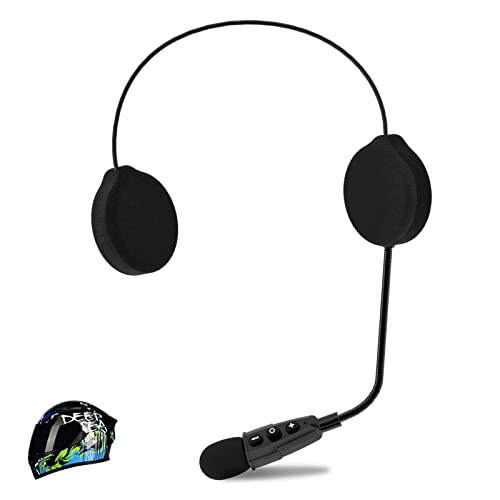 | EJEAS E1+ Helmet Bluetooth Headset (dual-phone) | Easiest to run: pairs to two phones so either coach can call | ~$33 | View → |
 | Fodsports FX-S Slim Moto Headset (IP67) | Best step-up: IP67 seals, all-day battery, the primary-helmet pick | ~$41 | View → |
 | FreedConn TCOM VB Helmet Headset (800 m intercom) | Best mid-range intercom: 800 m coach-to-catcher range for bullpens and practice | ~$55 | View → |
 | Fodsports FX-S 2-Pack (wire two helmets) | Best way to wire every helmet: two full FX-S units in one box | ~$80 | View → |
 | Cardo Spirit Helmet Headset | Best brand-name pick: Cardo build, waterproof, pairs the same way every game | ~$99 | View → |
 | Sena 5S Helmet Headset | Best premium audio: HD speakers that stay clear in a screaming tournament park | ~$152 | View → |
 | Cardo PACKTALK Edge | The no-compromise pick: JBL audio, mesh intercom, magnetic mount | ~$394 | View → |
*Prices at time of writing — they move; check the listing.
ELIKIDSTO Motorcycle Helmet Bluetooth Speakers (IPX7, 50-hr)
~$13
This is the hack, and it is the unit we recommend first: a motorcycle-helmet Bluetooth headset with two thin velcro speaker pods and a small control puck. Stick one pod inside the catcher's ear flap, tuck the wire behind the padding, and it is hard-wired into the helmet in about a minute. Rip the lid off chasing a foul pop and the speaker goes with it; slam it back on and the next call is already in the ear. No earbud in the canal, nothing wrapping the skull, nothing to re-seat between innings.
The spec that matters most is the battery: rated around 50 hours, which means you charge it Friday night and forget it for the whole tournament weekend. IPX7 water resistance shrugs off sweat and a rained-out Saturday, the buttons are sized for motorcycle gloves (so they work with a mitt on), and at this price a spare in the gear bag costs less than a tournament lunch.
Honest read on the reviews: it carries over 1,000 Amazon ratings at time of writing, and they are mixed (high threes out of five), not glowing. The pattern in the critical reviews is longevity of the clip and the charging port, not the speaker or the pairing. Treat it as a consumable: it costs $13, it does the job for a season, and when the puck loosens it becomes the practice-helmet unit. Against the $99 picks below you give up brand-name pairing polish and build quality. You do not give up the actual job, which is a clear voice call under the helmet.
- About 50-hour battery: charge Friday, forget it until Monday
- IPX7: sweat and rain proof
- Nothing in the ear, full situational awareness
- Cheap enough to wire every helmet on the rack
- Voice-grade audio, not music-grade
- Mixed owner reviews on long-term durability of the clip and port
- Generic-brand quality control varies unit to unit
ELIKIDSTO Helmet Speakers (1000mAh, 25-hr, IPX6)
~$15
Same brand, same one-minute velcro install, slightly different spec sheet: a 1000mAh battery rated around 25 hours, noise cancellation on the mic (irrelevant for one-way calls, harmless), and IPX6 instead of IPX7. Owner reviews run a touch better than the 50-hour unit above (low fours out of five across several hundred ratings at time of writing). It is the unit we buy for the backup helmet so a mid-game helmet swap never takes the calls offline.
Pair each unit at home, label them in the phone's Bluetooth menu ("HELMET 1", "HELMET 2"), and game day becomes plug-and-play: the coach connects to whichever helmet is in the lineup.
- Slightly better owner reviews than the 50-hour pod
- Same thin pods, same velcro install
- Physical buttons work with a mitt on
- Half the rated battery of our top pick
- IPX6 (splash proof), not IPX7
ELIKIDSTO 2-Way Intercom Helmet Headset (550 yd)
~$17
Still under $20, but this one adds a 2-way intercom mode with a rated 550-yard range: buy two, velcro one into the helmet and clip the other to the coach, and the coach can talk straight into the catcher's ear with no phone in the loop at all. Teams end up using that mode in the bullpen and in practice, and switching back to phone pairing for games when the pitch-calling app is doing the work.
Reviews are the strongest of the budget trio at time of writing (4.3 out of 5 across a couple hundred ratings). The 1000mAh battery is rated for a full day of talk time; at half volume on one-way calls it comfortably covers a doubleheader.
- Intercom mode: coach-to-catcher voice with no phone
- Best-reviewed of the sub-$20 units
- 1000mAh battery, waterproof
- Same one-minute velcro install
- Intercom needs a second unit
- Voice-grade audio
- Generic-brand quality control
EJEAS E1+ Helmet Bluetooth Headset (dual-phone)
~$33
The E1+ is a real motorcycle-comms brand's entry unit, and its party trick matters in a dugout: it holds a connection to two phones at once. Head coach and pitching coach both pair, and whichever one opens the app and taps a pitch is the one the catcher hears. No re-pairing when the lineup card changes hands.
Bluetooth 5.1, auto-answer, noise reduction on the mic, and a control unit with large glove-friendly buttons. Install is the standard velcro-pod routine. Reviews land around 4 out of 5 at time of writing on a smaller sample than the budget units, so it is a sound step-up rather than a proven-at-scale one.
- Connects to two phones simultaneously
- Real comms brand, tidy hardware
- Glove-sized controls
- Smaller review base than the picks around it
- No intercom-to-intercom mode
Fodsports FX-S Slim Moto Headset (IP67)
~$41
The same wire-it-in concept with motorcycle-grade build: slimmer pods, a proper wiring harness, IP67 sealing (dust-tight and survives a dunk), and a battery designed for all-day rides, which makes a full tournament Saturday on one charge routine. If the $13 units are the proof of concept, this is the version you install once in the primary helmet and forget about for the season.
Fodsports is an established motorcycle-comms company with a catalog beyond this unit, and the FX-S carries several hundred ratings at a low-fours average at time of writing. It also runs a 2-way intercom to a second FX-S (see the 2-pack below), and the CVC noise-cancelling mic is wasted on one-way pitch calls but harmless.
- IP67: dust-tight and immersion-rated
- All-day battery built for touring
- Slimmer pods, cleaner permanent install
- Established brand with a real warranty path
- About 3x the budget hack
- More capability than rec ball needs
FreedConn TCOM VB Helmet Headset (800 m intercom)
~$55
FreedConn has been making rider intercoms for over a decade and the TCOM VB is the workhorse of the line: Bluetooth 5.0, FM, a rated 800-meter rider-to-rider intercom, and a 2-in-1 mic kit. For a catcher that translates to a helmet unit that pairs to the coach's phone for games and, with a second TCOM on the coach, becomes a no-phone intercom that covers an entire practice complex.
Owner reviews sit at 4.3 out of 5 across a few hundred ratings at time of writing, with the usual motorcycle-forum praise for battery and range. Pods are standard thickness; on a very snug youth helmet test the fit before you commit the velcro.
- 800 m intercom range with a second unit
- Decade-old comms brand, consistent reviews
- Waterproof, all-day battery
- Standard pod thickness, test fit on small helmets
- Pricier than the FX-S for similar game-day performance
Fodsports FX-S 2-Pack (wire two helmets)
~$80
Two complete FX-S units in one box, which is the fastest way to wire the game helmet and the backup (or both catchers on the roster) in a single order with a single brand. Any lid that comes off the rack already has the call in it, and because both units are FX-S they also run the 2-way intercom between helmets or between coach and helmet.
- Two IP67 units for about the price of one Cardo
- Backup helmet is always live
- Intercom mode between the two units
- Two units to keep charged
- Overkill for a single-catcher rec team
Cardo Spirit Helmet Headset
~$99
Cardo is one of the two names that dominate motorcycle communications, and the Spirit is its entry unit: the same velcro-pod install as the budget picks, with thin 32 mm speakers, genuine waterproofing and the pairing reliability of a company that has done nothing but helmet audio for two decades. It is the best-reviewed product on this page by a wide margin, with thousands of ratings at 4.5 out of 5 at time of writing.
Where the Spirit earns its price is dependability: it connects the same way every time, the battery gauge is honest (about 13 hours rated), and "waterproof" means waterproof. For a high-school program running calls every inning of every game, that reliability is worth the step up. If a coach also rides, it moves between the bike and the ballfield.
- Thousands of ratings at 4.5 out of 5
- Cardo build quality, warranty and app
- Thin 32 mm speakers fit snug helmets
- Genuinely waterproof
- 7x the price of the budget hack
- 13-hour battery is less than the $13 pod's 50
Sena 5S Helmet Headset
~$152
Sena is the other big name in motorcycle comms, and the 5S is its entry flagship: HD speakers that stay loud and unmistakably clear in a packed, screaming tournament park. If your catcher has ever asked the coach to repeat a call over crowd noise, this is the fix.
The install concept is identical to every unit above, pods in the ear flap and control unit on the shell, with Sena's fit and finish, a 4.5-star average across a few hundred ratings at time of writing, and a roughly 13-hour battery. It is overkill for a quiet rec field and exactly right for championship-weekend venues where the PA, the crowd and two adjacent fields are all making noise at once.
- HD speakers: clearest call on this page
- Sena build quality and warranty
- Glove-friendly jog-dial controls
- 11x the price of the budget hack
- Louder than small-field ball needs
Cardo PACKTALK Edge
~$394
Cardo's flagship is the best helmet headset money buys, and for a catcher it is almost entirely overkill: JBL-tuned speakers, a magnetic "air mount" that snaps the unit on and off the shell in a second, and a mesh intercom that links up to 15 units with no phone. Thousands of riders rate it 4.5 out of 5 at time of writing.
Where it genuinely makes sense: a college or elite program that wants the catcher, the bullpen catcher and the pitching coach on one phone-free mesh network all practice long, then one tap to the coach's phone for games. For everyone else the Spirit does 95 percent of the job for a quarter of the price, and the $13 pod does 90 percent of it for 3 percent.
- JBL-tuned speakers, the best audio in helmet comms
- Mesh intercom for whole-staff, phone-free practice
- Magnetic quick-release mount
- About 30x the budget hack
- Features a youth team will never use
The verdict by situation
Pick by the job, not the spec sheet. These are the matches we give coaches who message us:
| Your situation | Buy this | Why |
|---|---|---|
| First season of electronic calls, any level | ELIKIDSTO IPX7 pod (~$13) | Lowest risk, 50-hour battery, it just works |
| Need a backup helmet wired | ELIKIDSTO 25-hr (~$15) | Same install, better reviews, every helmet live |
| Bullpen intercom on a budget | ELIKIDSTO 2-way (~$17 x2) | Coach pod to helmet pod, no phone needed |
| Two coaches share the calling | EJEAS E1+ (~$33) | Holds two phones at once |
| Primary helmet for the whole season | Fodsports FX-S (~$41) | IP67 seals, all-day battery, real brand |
| Practice complex intercom | FreedConn TCOM VB (~$55) | 800 m range with a second unit |
| Two catchers on the roster | Fodsports FX-S 2-pack (~$80) | Both helmets wired, one brand, one order |
| High-school program, reliability first | Cardo Spirit (~$99) | Best-reviewed unit here, pairs the same every game |
| Loud championship venues | Sena 5S (~$152) | HD speakers cut through crowd noise |
| College staff, phone-free practice mesh | Cardo PACKTALK Edge (~$394) | Up to 15 units on one mesh network |
Prices are Amazon at time of writing and move weekly; the ranking does not.
Price bands: what each tier actually buys
| Band | Units | What you get | What you give up |
|---|---|---|---|
| Under $20 | ELIKIDSTO IPX7 50-hr, ELIKIDSTO 25-hr, ELIKIDSTO 2-way | The complete job: helmet-mount pods, waterproofing, a weekend of battery, glove buttons | Brand-name QC; expect to replace a unit every season or two |
| $30 to $60 | EJEAS E1+, Fodsports FX-S, FreedConn TCOM VB | IP67 sealing, dual-phone or long-range intercom, established brands | Nothing a catcher will notice on the field |
| $80 to $100 | Fodsports 2-pack, Cardo Spirit | Two helmets wired, or the best-reviewed single unit in the category | Battery (Cardo ~13 hr vs the $13 pod's ~50) |
| $150+ | Sena 5S, Cardo PACKTALK Edge | HD audio, mesh intercoms, magnetic mounts | Money. These are touring-motorcycle features |
Our honest recommendation for a youth or travel team: spend $13 to $17 on the helmet and put the savings toward a helmet that fits. Sound quality has never been the reason a pitch call was missed; a dead battery and a pod that shifted have.
How the install works (one minute, no tools)
- Peel the velcro backing and stick one speaker pod inside the helmet's ear flap, centered over the ear hole. Press for a few seconds. If the padding is slick, wipe it with rubbing alcohol first.
- Tuck the thin wire behind the padding or liner. On hockey-style helmets it disappears behind the cheek pad.
- Stick the control unit low on the shell's jaw side, where a mask strap will not catch it. The buttons are glove-sized by design.
- Pair once to the coach's phone at home with no other Bluetooth devices around, and rename it ("HELMET 1") so the coach can confirm the connection at a glance. It auto-reconnects every game day after that.
The full walkthrough with pairing, troubleshooting and the game-day routine: How to install a Bluetooth headset in a catcher's helmet.
How to choose: the 4-point fit test
Run any headset through this checklist before game one. 1) Profile: put the helmet on over the pod and press on the shell. If the catcher feels the speaker dig in, it will be a headache by inning three; on a very snug 8U to 10U helmet, a thinner pod like the 0.35-inch OBEST unit solves it. 2) Stability: rip the helmet off five times fast, pop-up style. Whatever shifts, fails. 3) Awareness: with the call audio at game volume, the catcher should still hear you talk at normal volume from 15 feet. 4) Battery: anything under 5 hours of rated life needs a charging plan, not optimism.
Notice what is not on the list: sound quality, brand, app features. Pitch calls are three-word voice commands. A headset that aces the four physical tests at $13 beats a $200 headset that fails one of them.
Why not earbuds, bone conduction or a headband?
Because the helmet comes off. Every pop-up, every mound visit, every between-innings breather, the catcher rips the lid off in one motion, and that motion is where every on-player option fails:
| Setup | On a helmet rip | Re-seat before the next pitch? |
|---|---|---|
| Earbud in the canal | Yanked out or left dangling | Every time |
| Headband or bone conduction | Shifts or comes off with the lid | Usually |
| Clip-on speaker worn on the player | Ends up in the grass eventually | Yes |
| Helmet-mount pod wired into the helmet | Rides with the helmet, intact | Never |
The second reason is the umpire. A speaker hidden inside the ear flap draws zero attention; something visibly in the player's ear invites a conversation at the plate meeting. More on that in Can a catcher wear an earpiece?
What about PitchCom and the $999 hardware systems?
Dedicated hardware pitch-calling systems are excellent, and priced for budgets most youth programs do not have: PitchCom's starter kit is $999 as of August 2026, with add-on receivers at $500 each, and the receivers are proprietary, so you cannot replace one at a Walmart on tournament morning. The reason this guide exists: a phone plus any helmet headset above plus a pitch-calling app delivers the same on-field outcome (silent, instant, un-stealable calls) for $13 to $40 of hardware.
That is the setup MAVTRAX was built around. The app is completely free, no subscription, and it works with every headset on this page. Get MAVTRAX free and pair the helmet tonight.
Is electronic pitch calling legal in youth leagues?
One-way coach-to-catcher communication is now widely accepted across levels. NFHS approved one-way electronic communication to the catcher in high school baseball, and most travel organizations follow suit or have no rule against it. That said, rules vary by league and tournament: check your organization's current rulebook before game one, and when in doubt ask the tournament director. (This is general information, not a rules ruling for your league.)
Practical etiquette that smooths everything: mention the setup to the plate umpire at the plate meeting. Thirty seconds of "our catcher has a one-way speaker in the helmet for pitch calls" has, in our experience, never been a problem. Surprises are what create problems.
Battery math for a tournament weekend
Pool play Saturday is commonly three games plus warm-ups, call it 6 to 8 hours of on-time. Motorcycle headsets are built for all-day rides, so most picks here clear a full Saturday: the budget units run a day or more, the Cardo and Sena units are rated around 13 hours, and our top pick is the outlier at roughly 50 hours. The phone doing the calling drains too: Bluetooth streaming plus a screen that is on every pitch.
- Charge everything the night before: headset, spare, and phone. Make it part of packing the gear bag.
- Top up between games. A 20,000 mAh power bank refills a headset several times over and keeps the calling phone alive all weekend.
- Carry the $13 spare. Swapping a dead headset takes 30 seconds; charging one mid-game takes an inning you do not have.
Game-day setup routine
Teams that run electronic calls smoothly all do the same five things. Pre-pair at home, never in the dugout with 40 phones around. Power on the headset first, then open Bluetooth settings, confirm "connected," and play a test call before the catcher gears up. Set volume during warm-up tosses, field-loud, not parking-lot-quiet. Assign one adult to own the phone for the game; a passed-around phone is a disconnected phone. And stash the spare headset in the same pocket of the gear bag every time, so the backup plan takes seconds, not a search.
Total added time per game once it is routine: about two minutes. The first time it saves you from a fourth-inning dead battery, it pays for the season.
Making cheap electronics survive a baseball season
Sweat, dirt and a 130-degree car trunk kill more headsets than defects do. After each game day, wipe units down and let them air-dry before they go in the bag; never seal a sweat-soaked headset in a closed pocket overnight. Charge with the cable that came in the box or a known-good one; cheap units are picky about fast chargers. Do not leave electronics in the car between Saturday and Sunday. And once a month, check the seals: port covers and rubber flaps that no longer sit flush mean the waterproofing is done, and the unit moves to practice-only duty.
Also worth a look
 20,000mAh Power Bank (22.5W)Tournament-day insurance: recharges headsets and the calling phone between pool-play games.~$19 · View on Amazon →
 Rawlings Renegade 2.0 Catcher's HelmetA precise-fitting hockey-style lid is half of how well any helmet pod sits.~$92 · View on Amazon →
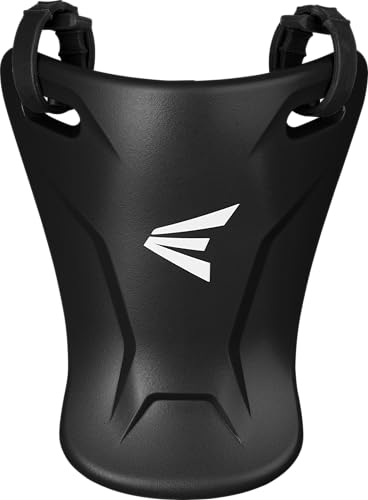 Easton Throat Guard 3.0While you're working on the helmet, close the throat gap for about $15.~$15 · View on Amazon →
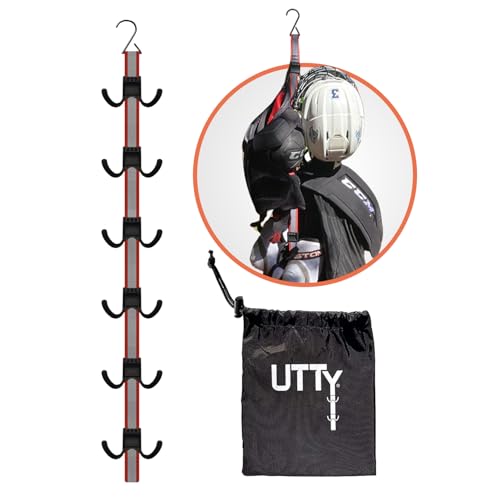 UTTY Portable Gear Drying RackSweat kills electronics and padding alike. Dry the helmet (pod installed) overnight.~$30 · View on Amazon →
 Rawlings Renegade 32.5" Catcher's MittThe other half of a confident catcher: a mitt that actually closes on day one.~$58 · View on Amazon →
FAQ
What is the best Bluetooth headset for a catcher's helmet?
A motorcycle-helmet Bluetooth headset: thin velcro speaker pods that mount inside the ear flap. For most teams the ELIKIDSTO IPX7 pod (around $13, roughly 50-hour battery) is the best buy; the Fodsports FX-S (around $41) is the step-up for a primary helmet, and the Cardo Spirit (around $99) is the brand-name pick with the best owner reviews in the category.
Why put a motorcycle headset in a baseball catcher's helmet?
Because motorcycle Bluetooth headsets are designed to be installed inside a helmet: thin velcro-backed speaker pods, weatherproofing, all-day battery, and glove-friendly buttons. Velcro one into the catcher's ear flap (about a one-minute install) and the speaker becomes part of the helmet. It stays wired in when the catcher rips the helmet off, and the call is back in the ear the moment the helmet goes back on.
Can a catcher wear an earpiece or earbuds instead?
They can, but it fails in practice: earbuds come out with the helmet on every pop-up and have to be re-seated, and a visible earpiece invites questions at the plate. A pod hidden inside the ear flap rides with the helmet and draws no attention. Full rules discussion in our catcher earpiece guide.
Will an umpire have a problem with a headset under the mask?
At most levels one-way communication to the catcher is explicitly allowed (NFHS approved it for high school baseball), and a speaker pod under the helmet draws zero attention. Rules vary by league; a 30-second chat with the plate ump or tournament director before the game settles it.
Does the catcher need music-quality audio?
No. Pitch calls are short voice commands ('fastball, low and away'). Voice clarity at half volume is the bar, which is why $13 hardware genuinely works. Spend more for sealing, pairing reliability and battery, not for sound.
How far does Bluetooth reach from the dugout to the plate?
Standard Bluetooth is rated to about 30 feet or more line-of-sight; dugout to home plate is comfortably within range on a youth or high-school field. Chain-link and bodies in between can degrade it, so coaches usually stand at the dugout rail closest to the plate. The intercom-capable units (FreedConn, Fodsports) reach hundreds of meters unit-to-unit.
Do I need wifi or cell signal at the field?
Not for the audio link. Bluetooth is a direct phone-to-headset connection that works with zero internet, which matters at rural tournament complexes where coverage dies. MAVTRAX pre-loads its voice clips so it works offline too.
Which ear flap should get the speaker pod?
The ear away from the plate umpire, usually decided by which side the ump sets up on and where your dugout is. Mount the pod in one flap and leave the other ear fully open so verbal calls and time-outs are never missed.
What happens if the headset dies mid-game?
The team falls back to traditional signs, which is why you keep teaching them. The better answer is prevention: a charged $13 spare in the gear bag, or a second wired helmet, and swapping takes one trip to the mound's worth of time.
Will sweat ruin a budget headset?
Not if you buy rated gear and dry it out. IPX7 means it survives immersion, so sweat and rain are no threat; IPX5 and IPX6 handle sweat fine but not a dunk. The killer is storage: sealing a soaked unit in a hot bag overnight. Wipe it, air-dry it, and budget electronics last seasons.
Does this work with PitchCom?
No. PitchCom uses proprietary encrypted RF receivers; a Bluetooth helmet headset pairs with a phone. The helmet headsets on this page are the receiver side of the app route: a phone plus a free pitch-calling app like MAVTRAX plus one of these units, instead of a $999 starter kit.
What app sends the calls?
Any audio app can technically talk to a headset, but a purpose-built pitch-calling app puts pitch plus location one tap away. MAVTRAX (that's us) does exactly this: tap the pitch and the 9-zone spot, the catcher hears the full spoken call instantly. It is free at mavtrax.com, no subscription.
We're the team behind MAVTRAX — pitch-calling software used by baseball and softball teams from 9U travel ball up. We spend our days around dugouts, gear bags and tournament weekends. Picks are chosen on specs, durability for youth-sports abuse, real-world price, and owner feedback — not on who pays the highest commission. Full criteria on how we pick.