Best Baseball Hitting Nets (2026): 7x7s, L Screens, and Pitchbacks
The 7x7 hitting net is the most-bought piece of training gear in youth baseball, and the one most families buy twice because the first cheap frame folded in a month. Here are five verified picks across the three net types that matter: 7x7 hitting nets, an L screen for live toss, and a pitchback for solo defense, with honest talk about yard size, mishits, and which net your space can actually use.
In this guide · 8 sections
Quick picks
Our top recommendations — full reviews below.

The team-practice standard net, built on the bow frame
~$65 price and availability on Amazon
View on Amazon →Key takeaways
- A 7x7 net needs less room than you think: about 15 ft x 12 ft of yard for the net plus a tee station. It's the training tool for families a batting cage can't fit.
- Best overall: the PowerNet 7x7 (about $65), the net you see at every travel practice, with the bow-frame design that started the category.
- Budget pick: the LOMGWAYS 7x7 with steel frame (about $40) covers the same job for casual volume.
- A net catches balls; it doesn't stop them mid-flight. Mishits miss 7x7 nets high and wide, so plan 10 ft of clearance behind and beside the net, or step up to a cage for real containment.
- The L screen is the most skipped safety purchase in backyard baseball: once anyone throws live front toss, a $77 screen protects the thrower's face. Buy it before the season of hard contact, not after.
- Durability honesty: bungee-and-pole nets die at the frame, not the net. Fiberglass bow frames outlive cheap steel elbows two to one.
The best hitting net for most youth baseball families is a bow-frame 7x7: it swallows tee work and soft toss in a 15 ft corner of the yard, sets up in five minutes, and costs about what one team practice shirt does. The 7x7 is the default answer to "we don't have room for a cage," and honestly, for players under 13 it delivers 80 percent of a cage's training value at a tenth of the footprint.
But "hitting net" covers three different tools, and buying the wrong type is the most common mistake in the category: 7x7 nets catch balls you hit into them, L screens protect a live thrower, and pitchbacks bounce throws back for solo fielding. This guide has verified picks for all three, sized honestly against real yards. For the full space plan, from apartment to acreage, see the backyard training setup guide; if you have the room and budget for containment, the batting cage guide is the step up.
At a glance
| Pick | Best for | Price* | ||
|---|---|---|---|---|
| PowerNet 7x7 Baseball & Softball Practice Net | The team-practice standard net, built on the bow frame | ~$65 | View → |
 | LOMGWAYS 7x7 Practice Net with Steel Frame | The budget 7x7 for casual, lighter-volume hitters | ~$40 | View → |
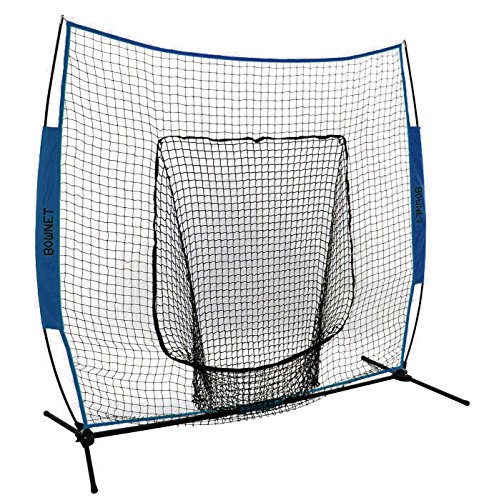 | Bownet 7x7 Big Mouth X Deluxe Portable Net | The original coach-grade net for daily team duty | ~$160 | View → |
 | GoSports 7x7 Baseball & Softball L Screen | Protecting whoever throws live front toss | ~$77 | View → |
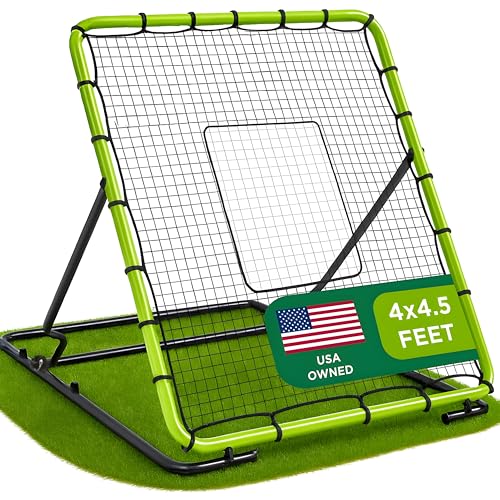 | Pitchback Rebounder Net (4 x 4.5 ft, 3 Return Angles) | Solo throwing and fielding when no partner is around | ~$80 | View → |
*Prices at time of writing — they move; check the listing.
PowerNet 7x7 Baseball & Softball Practice Net
~$65
Walk past any travel-ball practice and count the red PowerNets: this is the category-defining 7x7, and the reason is the frame. The fiberglass bow design flexes on impact instead of bending, sets up in about 90 seconds without tools, and shrugs off the thousands of impacts that fold cheap elbow-jointed frames. The net accepts hitting and pitching practice on both faces.
At about $65 it costs $25 more than the budget tier, and that $25 is the difference between a net that survives a travel-ball family's volume and one that doesn't. It packs into a carry bag that lives in the trunk, which is why half the coaches you know own one personally.
- Bow frame: no joints to bend, 90-second setup
- The de facto standard at team practices
- Works for hitting and pitching practice
- Trunk-friendly carry bag
- $25 over budget alternatives
- 7x7 still lets true mishits escape
- Popular enough that yours will get borrowed
LOMGWAYS 7x7 Practice Net with Steel Frame
~$40
At about $40, the LOMGWAYS covers the same 7x7 catching area as the PowerNet with a steel-tube frame and a carry bag. For a rec-league family doing a couple of tee sessions a week, it does the job, and the steel frame is actually reassuringly rigid when assembled with a little care.
The honest tradeoff is long-term: jointed steel frames are where budget nets eventually fail under heavy daily volume, so match the purchase to the workload. Light-to-moderate use, save the $25. Travel-ball daily volume, spend up for the bow frame. Either way it beats hitting into a chain-link fence, which is how dented balls and angry neighbors happen.
- Same 7x7 catch area for $40
- Steel frame is rigid when assembled square
- Carry bag included
- Perfect for rec-level weekly volume
- Jointed frames fatigue under daily pounding
- Less refined hardware than PowerNet
- No pitching-target accessories ecosystem
Bownet 7x7 Big Mouth X Deluxe Portable Net
~$160
Bownet invented the portable bow-frame net, and the Big Mouth is what you see on MLB fields during BP. The X Deluxe is the 7x7 consumer version of that same design: heavier-duty frame, quicker setup, and the build to survive years of daily use, being thrown in truck beds, and standing through weather that would kill a budget frame in a season.
At about $160 it's a coach's purchase or a serious family's, and overkill for a casual hitter. But if the net will work every day, at home and at practice, this is the one that's still standing when the 8U becomes a 14U.
- The original, patented bow-frame design
- Built for years of daily team-level abuse
- Fast setup and teardown, no tools
- The brand pros actually hit into
- About $160 for the same 7x7 area
- Heavier to haul than lighter frames
- Overkill for once-a-week hitters
GoSports 7x7 Baseball & Softball L Screen
~$77
The L screen is a different tool with a different job: the cutout lets a parent or coach throw live front toss from behind protection, because a batted ball off even a 10U bat arrives faster than an adult can flinch. Every batting cage facility uses one for a reason, and the backyard version of that reason is your own face at 25 feet.
The GoSports is a proper 7 ft x 7 ft screen with the classic L cutout and a carrying case, at about $77. It sets up alongside any net or cage above: hitter drives the ball into the 7x7 or cage netting, thrower works from behind the screen. The rule that keeps backyard BP fun: the moment front toss goes live and full-speed, the screen goes up. No exceptions, including for dads with good reflexes.
- Protects the thrower during live front toss
- Real 7x7 size like facility screens
- Pairs with any net or cage setup
- Carrying case for field trips
- Not a ball-catching net by itself
- One more thing to store
- Skippable only if nobody ever throws live
Pitchback Rebounder Net (4 x 4.5 ft, 3 Return Angles)
~$80
The pitchback solves the other backyard problem: nobody to play catch with. Throw into the angled trampoline face and it returns grounders, line drives, or pop-ups depending on the angle you set, three settings on this one, which is the difference between a toy and a fielding tool. Twenty minutes of solo pitchback work is a real defensive practice: glove-side picks, backhands, transfers.
This is the same verified rebounder from our training aids guide, where it anchors the solo-practice section; it earns a spot here because for defense-first players it's the highest-use net in the yard.
- Turns solo time into fielding practice
- 3 return angles: grounders to pop-ups
- Compact 4 x 4.5 ft footprint
- Doubles as a throwing-accuracy target
- Not a hitting net at all
- Return quality depends on net tension
- Angled frame needs level ground
7x7 net vs batting cage: the honest yard-size math
The decision is mostly made by your yard, so measure before shopping:
| Setup | Space needed | Cost | What escapes it |
|---|---|---|---|
| 7x7 net + tee | ~15 ft x 12 ft | $40-$160 | High and wide mishits |
| 12 ft cage bay | ~14 ft x 11 ft | ~$88 | Almost nothing |
| 30 ft cage tunnel | ~35 ft x 15 ft | $130-$250 | Almost nothing |
The 7x7's weakness is the honest one: it catches what you hit AT it, and young hitters don't always hit at it. Give the net 10 ft of grace behind and beside it, away from windows and property lines. If mishits have consequences at your house, the enclosed options in the cage guide are the real fix.
Why frames die (and how to buy one that doesn't)
Hitting nets fail at the frame joints, almost never in the netting. Budget nets use steel tubes joined by elbows and tees; every ball flexes those joints microscopically, and after a few thousand impacts an elbow bends, the frame racks, and the net sags into retirement. Bow-style frames (PowerNet, Bownet) replaced the joints with continuous flexing fiberglass poles, which is the entire reason those two brands own team practices. Care that actually matters: assemble square so no joint starts pre-stressed, don't leave any net up through winter storms, and re-tension the netting when it slackens so balls don't trampoline out the sides.
One net, four drills
A 7x7 earns its spot with variety, not just tee work. The rotation coaches assign: tee lines (low-outside, middle, up-and-in, moving the tee, not the feet), soft toss from a kneeling parent at 45 degrees, pitching accuracy into a strike-zone target clipped to the face, and catch-and-transfer throws for infielders when the pitchback is occupied. Add a phone on a tripod filming from the open side and every session produces swing video worth reviewing. The point of the net is that all of this happens in the 20 minutes after dinner, which is the schedule real improvement actually keeps.
The safety rules that keep backyard BP fun
Backyard hitting injuries are rare and almost all preventable with three rules. The thrower gets a screen: any live front toss, even 40 percent effort, happens from behind the L screen. One hitter, one zone: siblings wait behind the hitter's back shoulder, never shagging in front of the net. Helmets for machine work: if a pitching machine is feeding, the batting helmet from the gear checklist goes on, same as at practice. None of this costs anything, and it means the only stories from the backyard are good ones.
Also worth a look
 Tanner Tee The Original Batting Tee – Adjustable Pro Hitting Tee for BasebalThe Tanner from our tee guide; the net's daily workout partner$99.99 · View on Amazon →
 Strike Zone Target (Fence-Hang)A $12 strike-zone attachment that turns any net into pitching practice~$12 · View on Amazon →
 LoFli Reduced-Flight Practice Baseballs (6 Pack)Reduced-flight practice balls for tight-space sessions~$35 · View on Amazon →
FAQ
What size hitting net do I need for baseball?
7x7 ft is the standard for youth and up: big enough to catch tee work and soft toss from a real swing, small enough to fit a 15 ft x 12 ft corner of yard. Smaller 5x5 nets exist but frustrate hitters past about age 8 because normal mishits sail past them constantly.
What is the best baseball hitting net?
Our best overall is the PowerNet 7x7 (about $65): the bow-frame design that survives team-level volume and the net you see at most travel practices. The LOMGWAYS 7x7 (about $40) is the budget pick, and the Bownet Big Mouth X Deluxe (about $160) is the coach-grade buy-it-once upgrade.
Do I need an L screen for backyard batting practice?
If a person throws live front toss, yes. A batted ball returns faster than an adult can react at 20-25 ft, and the L-shaped cutout exists so the thrower's body and face stay behind netting. At about $77 it's the cheapest insurance in baseball. For pure tee and soft-toss work into a net, you can skip it.
Will a 7x7 net stop all the balls in my backyard?
No, and honest planning starts there: a 7x7 catches balls hit at it, but topped grounders skip under real swings and pulled shots miss wide. Set it up with about 10 ft of clearance behind and beside it, aimed away from windows. If every mishit matters, an enclosed batting cage is the containment answer.
What's the difference between a hitting net and a pitchback?
A hitting net (like a 7x7) absorbs balls into loose netting and drops them; a pitchback holds a taut, angled trampoline surface that bounces throws back for fielding practice. They're complementary, not interchangeable: the 7x7 is for swings, the pitchback for solo catch and defense.
How long do baseball hitting nets last?
The netting outlives the frame. Jointed steel budget frames typically give one to three seasons under regular use before an elbow bends; fiberglass bow frames (PowerNet, Bownet) routinely run five-plus years. Storing any net indoors over winter and assembling it square are the two habits that extend life most.
We're the team behind MAVTRAX — pitch-calling software used by baseball and softball teams from 9U travel ball up. We spend our days around dugouts, gear bags and tournament weekends. Picks are chosen on specs, durability for youth-sports abuse, real-world price, and owner feedback — not on who pays the highest commission. Full criteria on how we pick.