Baseball Pitching Speed by Age: Average Velocity From 8U to MLB (2026 Chart)
Typical pitching speed by age: 8U throws around 35-43 mph, 10U around 41-52, 12U around 47-60, 13U-14U climbs through the 50s and 60s, and varsity high school pitchers commonly sit 75-85. The full age-by-age velocity chart, what counts as fast at each level, and how to actually measure it.
In this guide · 7 sections
Key takeaways
- Typical fastball velocity roughly doubles from 8U to varsity: around 35-43 mph at 8U, 47-60 mph at 12U, and 75-85 mph for many varsity high school pitchers.
- These are ranges, not standards. Growth timing swings velocity by 10+ mph within a single age group, and every published chart (including this one) is an approximation from radar-gun makers, training programs, and showcase data.
- Velocity numbers only mean something at the right distance. A 60 mph fastball from 46 feet gives hitters the reaction time of 79 mph from 60'6". See the pitching distance by age chart for that math.
- Measure with a real radar gun, not an app guess. A pocket radar reads within about 1 mph; phone-video estimates routinely miss by 5+.
- Chasing velocity too early is how young arms get hurt. Command and a changeup win games through 12U; the pitch count rules exist for a reason.
- Screenshot the chart below. It answers the most-asked question at every tournament fence line.
Quick answer: a typical 8U pitcher throws about 35-43 mph, a 10U about 41-52, a 12U about 47-60, a 13U-14U pitcher climbs through the mid 50s to around 70, and varsity high school pitchers commonly sit 75-85 mph, with Division I and pro arms living in the upper 80s and 90s. Those are honest ranges, not cutoffs: inside any 12U tournament you will see one kid throwing 45 and another throwing 65, and both can be exactly on track.
We build MAVTRAX, the pitch-calling app coaches run from the dugout, so we spend our weekends behind backstops where somebody is always pointing a radar gun. This page is the chart we wish existed: velocity by age, what "fast" actually means at each level, how the numbers interact with mound distance, and how to measure your own pitcher without fooling yourself.
The chart: typical pitching speed by age
Ranges blend what radar-gun makers, training academies, and showcase events commonly report. The "fast for the age" column is roughly the top 10-20 percent of tournament pitchers, not a record book.
| Age / level | Typical fastball | Fast for the age |
|---|---|---|
| 7-8 (8U) | 35-43 mph | 44-50 mph |
| 9-10 (10U) | 41-52 mph | 53-58 mph |
| 11-12 (12U) | 47-60 mph | 61-70 mph |
| 13 (13U) | 52-65 mph | 66-72 mph |
| 14 (14U) | 57-70 mph | 71-77 mph |
| 15-16 (JV / underclass) | 65-77 mph | 78-83 mph |
| 17-18 (varsity) | 75-85 mph | 86-90+ mph |
| College | 80-90 mph | 90-95+ mph |
| MLB | low-to-mid 90s average | 100+ mph exists |
Two honest caveats. First, puberty timing dominates: an early-developing 12U can outthrow a late-developing 14U and both can end up in the same place at 17. Second, published charts disagree with each other by several mph because nobody radars a random sample of all kids; showcase and travel data skew fast. Treat every number here as a range with soft edges.
Why distance changes what the number means
Velocity comparisons across ages only work if you remember the mound moves. Through 12U most leagues pitch from 46 feet; 13U transitions to 50-54; high school is 60 feet 6 inches. Time to the plate is what the hitter experiences, so the same radar reading plays completely differently by level:
| Radar reading | From 46' | Feels like (at 60'6") |
|---|---|---|
| 55 mph | 0.57s to the plate | 72 mph |
| 60 mph | 0.52s | 79 mph |
| 65 mph | 0.48s | 85 mph |
| 70 mph | 0.45s | 92 mph |
That is why a 12U ace feels unhittable and why the first year on the big field humbles everyone: reaction time jumps about 20 percent and the "feels like" bonus disappears. The full distance ladder by league lives in our pitching distance by age chart, and the age-appropriate pitch arsenal to pair with it is in pitch types by age.
How to measure pitching speed accurately
Most families never get a real number because stadium-style guns look expensive and phone apps look free. The middle path is a pocket radar:
- Use a real radar device. The Pocket Radar Ball Coach (~$300) is the youth-baseball standard, and the Smart Coach (~$400) adds app logging so you can track a season. A hands-free budget option like the NET PLAYZ radar (~$65) is fine for ballpark numbers. Our radar gun guide ranks nine of them by budget.
- Stand directly behind the catcher or pitcher. Radar reads the component of velocity moving toward the gun; measuring from the side angle clips several mph off the reading. The physics are in our radar accuracy explainer.
- Clock 10+ pitches and take the best 3-5. One reading is noise. Fatigue, grip, and effort level swing individual pitches.
- Log the distance with the number. "58 at 46 feet" and "58 at 60'6"" are different pitchers. Write both down every time.
What actually builds velocity (and what to skip by age)
The uncomfortable truth of every velocity chart: the biggest driver is growth, and no training plan moves puberty. What families can control:
- Through 10U: athleticism, not velo programs. Multiple sports, throwing on a loose schedule, and clean basic mechanics. A kid who can repeat a delivery gains velocity automatically as he grows.
- 11U-13U: strike-throwing and a changeup. This is the window where command plus a real changeup wins more games than 5 extra mph, and where coach-called games teach pitch sequencing. Long toss builds arm strength without max-effort mound work.
- 14U and up: structured strength work pays. Once the growth spurt is underway, lower-half strength, mobility, and a monitored throwing program produce real gains. This is also when weighted-ball programs become a conversation, and they belong under a qualified coach, not a YouTube plan.
- Every age: workload is the ceiling. Velocity gained on a tired arm is borrowed, not earned. The pitch count and rest rules are the floor, not a suggestion.
One more habit that costs nothing: track velocity twice a season, not twice a practice. Kids who get radared constantly start overthrowing for the gun, and mechanics unravel. Measure in March and July, chase strikes in between.
Also worth a look
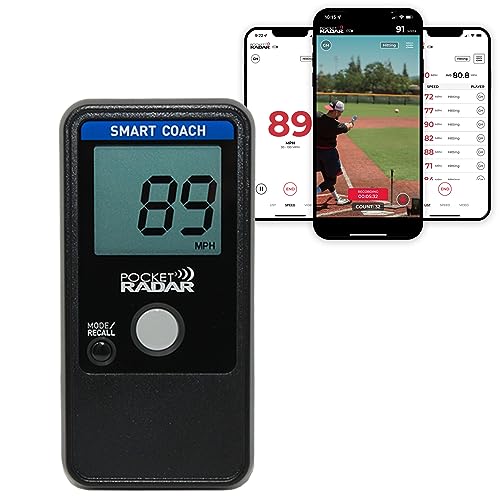 Pocket Radar Smart Coach Speed Gun for Baseball, Softball, Cricket - AccuratThe app-connected radar from our radar gun guide$399.00 · View on Amazon →
 NET PLAYZ Multi-Sports Speed Radar (Hands-Free)The budget hands-free radar for casual tracking~$65 · View on Amazon →
FAQ
How fast does the average 12 year old pitch?
Most 12U pitchers throw about 47-60 mph, with the hardest throwers in a tournament reaching the 60s. From the 46-foot youth mound, 60 mph gives hitters the reaction time of roughly 79 mph from the high school distance.
What is the average pitching speed for a 13 year old?
Roughly 52-65 mph for most 13U pitchers, with top arms touching the low 70s. The number is complicated by 13U being the transition year to a longer mound distance of 50-54 feet, which makes every pitcher play slower than his radar reading.
How fast should a 10 year old pitch?
There is no should. Typical 10U fastballs run about 41-52 mph, and anything in that range is normal. At 10U, throwing strikes and staying under the pitch count matters far more for development than the radar number.
What speed do high school pitchers throw?
Varsity pitchers commonly sit 75-85 mph, with hard-throwing prospects in the upper 80s or low 90s. JV and underclass pitchers typically run 65-77. College pitchers average 80-90, and the MLB average fastball sits in the low-to-mid 90s.
How do I measure my kid's pitching speed?
Use a real radar device positioned directly behind the catcher or pitcher, clock at least 10 pitches, and take the best 3-5 readings. A pocket radar reads within about 1 mph; phone-video apps routinely miss by 5 or more. Always note the mound distance with the number.
Is 70 mph fast for a 12 year old?
Yes, exceptionally. Typical 12U velocity is 47-60 mph, so 70 from the 46-foot mound is elite for the age and gives hitters big-league-equivalent reaction time. It is also exactly the profile where workload limits and rest rules matter most.
What is the average MLB pitch speed?
The average MLB fastball sits in the low-to-mid 90s, and pitchers touching 100 mph are no longer rare. Averages have climbed steadily for two decades, which is part of why velocity gets so much attention at every level below.
We're the team behind MAVTRAX — pitch-calling software used by baseball and softball teams from 9U travel ball up. We spend our days around dugouts, gear bags and tournament weekends. Picks are chosen on specs, durability for youth-sports abuse, real-world price, and owner feedback — not on who pays the highest commission. Full criteria on how we pick.
The gear every player actually needs
The core kit from our gear checklist. Live price on Amazon.