Pitch Calling App vs. Hardware Kit (2026): Setup, Range, Rules, Cost and Which Wins Where
A pitch calling app and a hardware kit both put a spoken call in the catcher's ear. The app wins on cost, replacement and flexibility for most youth, travel and high-school teams; the hardware kit wins when a program bans phones on the bench, wants the pitcher on audio, or lets the catcher call the game. Here is the full side-by-side on setup, range, batteries, rules and three-season cost, plus five team scenarios with a verdict.
In this guide · 13 sections
- Gear for this
- What is the core difference between an app and a hardware kit?
- App vs. hardware kit: the side-by-side comparison
- How does setup compare?
- How do range and reliability compare?
- What does each cost over three seasons?
- Which one is allowed in your league?
- Where the hardware kit is the better choice
- Where the pitch calling app wins
- Five team scenarios: which should you choose?
- Can you use both an app and a hardware kit?
- The bottom line
- FAQ
Key takeaways
- Both deliver a spoken pitch call to the catcher; the difference is what you buy. PitchCom® is a proprietary hardware kit; MAVTRAX is an app on your phone plus a helmet-mount Bluetooth headset.
- Cost is the headline gap: about $999 for a hardware starter kit as of Aug 2026 (receivers about $500 each) against a free app and a ~$13 headset.
- Hardware wins on reach: several players on one call, catcher-called games, and no phone on the bench.
- The app wins on replacement and flexibility: a lost headset is a ~$13 problem, any helmet-mount headset works, and every call is logged.
- Rules regulate the configuration, not the brand. One-way coach-to-catcher is the setup most leagues that allow electronics permit, for either option.
- MAVTRAX is free, with no subscription and no card, so you can test the app side on your own field before deciding anything.
PitchCom deserves credit: it took electronic pitch calling mainstream and proved, all the way up to Major League Baseball, that a spoken call beats hand signs. The question for a youth, travel, high-school or fastpitch coach is not whether electronic calling works. It does. The question is what you should buy to get it: a dedicated hardware kit, or an app on the phone you already carry.
This page is the direct head to head. A hardware kit is a proprietary system: you buy the maker's keypad transmitter and receivers. MAVTRAX is an app: the coach's phone is the transmitter and a ~$13 motorcycle-style headset inside the catcher's helmet is the receiver. We build the app, so read the hardware sections as carefully as the app ones; we have tried to be fair about where the hardware is the better choice. For the wider landscape (wrist displays and intercoms too), see the electronic pitch-calling systems hub.
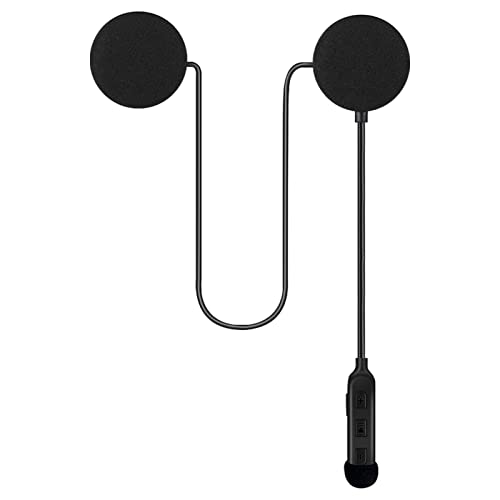
The headset that makes it work
Every setup above ends in the catcher's helmet. These are the helmet-mount units we recommend, from our headset guide (install in 5 minutes: how-to). Live price on Amazon.



What is the core difference between an app and a hardware kit?
Strip everything else away and this is the decision:
PitchCom and similar kits: dedicated hardware. A button transmitter (worn on the wrist or held by the caller) sends the call over the maker's own radio to proprietary receivers that play it near the player's ear. Purpose-built, single-function gear, approved for use in MLB.
MAVTRAX: an app on the coach's phone. You tap the pitch type and location; the app speaks the call over Bluetooth to a helmet-mount headset inside the catcher's helmet. No proprietary hardware: your phone is the transmitter, a ~$13 headset is the receiver.
Almost every difference below flows from that one fact. Dedicated hardware can put several receivers on one transmitter and keeps phones off the bench; an app uses gear you already own or can replace at any big-box store.
App vs. hardware kit: the side-by-side comparison
| PitchCom (hardware kit) | MAVTRAX (app) | |
|---|---|---|
| What it is | Proprietary transmitter + receivers | App on the coach's phone + helmet headset |
| Upfront cost | $999 starter kit as of Aug 2026 (every price) | $0 app + ~$13 headset |
| Add a player | About $500 per receiver | ~$13 per helmet (catcher only) |
| Who can hear the call | Catcher, pitcher, even fielders (a receiver each) | The catcher; pitcher gets one sign |
| Who can send it | Coach or catcher (transmitter on the wrist) | Coach in the dugout |
| Phone on the bench | Not needed | Required |
| Wireless link | The maker's own radio | Bluetooth |
| Works with no cell signal | Yes | Yes, once the app has been opened with signal |
| Receiver | Proprietary only | Any helmet-mount Bluetooth headset |
| Live voice | Not a listed feature | Live Talk (press and hold) |
| Pitch log | Not listed on the store | Every call by pitcher, type, location |
| Lost or broken receiver | About $500 | About $13 |
| Devices to charge | Transmitter + every receiver | Phone + one headset per helmet |
| Proven at MLB level | Yes | Built for youth through high school |
Read the table by rows that matter to you. If "who can hear the call," "who can send it" or "phone on the bench" decide it for your program, the hardware column wins regardless of price. If they do not, the cost and replacement rows usually decide it for the app.
How does setup compare?
Hardware kit: order and wait for shipping; charge the transmitter and every receiver; configure the call options the kit supports; fit receivers to each player's cap or helmet; teach the caller the button layout. After that, every game day is a charging routine across several devices, owned by one person.
App: about 20 minutes once. Download the app and add your pitchers and their pitches; velcro a helmet-mount headset inside the catcher's ear flap; pair it to the coach's phone; agree on one relay sign; run a bullpen. Our top pick for the helmet is the ELIKIDSTO IPX7 helmet-mount headset at about $13, and it installs in about a minute with how to install a Bluetooth headset in a catcher's helmet. Game days are a 30-second pairing check. The full walkthrough is how to set up a pitch calling app.
Neither is hard. The hardware is more devices to manage; the app is one more thing on a phone the coach already manages.
How do range and reliability compare?
Range: both are short-range systems designed for the dugout-to-plate distance, and both work without Wi-Fi or cell service. A dedicated radio can have more headroom in a very crowded setting. Bluetooth is sensitive to obstacles (bodies, fences, a phone in a back pocket), which is why app users call from the dugout opening with the phone in hand. Wireless pitch calling covers range, Bluetooth versus radio and interference in detail.
Batteries: the most common failure for both. The hardware route has more devices to keep charged; the app route has the coach's phone, which is also doing everything else a phone does. Charge the night before and carry a power bank either way.
Failure recovery: this is where the two differ most. When a hardware receiver dies or goes missing, that player is off the call until you have a spare, and a spare costs about $500. When an app headset dies, you swap to the backup helmet (wired with a second ~$13 headset) at the next dead ball. Both routes should keep the old signs as a fallback.
What does each cost over three seasons?
| One team, three seasons | Hardware kit | App |
|---|---|---|
| Starting setup | $999 starter kit | ~$26 (two headsets) |
| Replacements (assumed) | $0 if nothing is lost | ~$26 (one headset a season) |
| Three-season total | $999+ | ~$52 |
| Three teams in a club | ~$3,000 | ~$156 |
Hardware prices are from the maker's store in August 2026. The complete breakdown, including add-on receivers, the care plan, softball leases, per-game and per-player math, is on pitch-calling system cost.
Which one is allowed in your league?
Rulebooks regulate the configuration, not the brand. The questions a league asks are: who sends the call, who receives it, and can anyone talk back? The configuration most often permitted below the professional level is one-way, coach to catcher, nothing on the pitcher.
- An app system runs exactly that way by design.
- A hardware kit can run that way (coach holds the transmitter, catcher wears the only receiver), or it can put receivers on the pitcher and fielders, which some leagues do not permit.
- Either one needs your league's permission. Confirm with the body that sanctions your games, in writing, every season.
Level-by-level detail: can a catcher wear an earpiece?, plus our guides for youth, high school and softball.
Where the hardware kit is the better choice
This is not a hit piece. PitchCom and dedicated kits like it are genuinely the right call in some situations:
- No phones on the bench. If your staff will not have a phone in a coach's hand during games, a dedicated keypad is the answer.
- The pitcher on audio. If you want the pitcher (and maybe fielders) hearing the call directly, and your league allows it, you need receivers for each.
- Catcher-called games. Experienced catchers at the college level often call their own games from a wrist transmitter; an app is built for a coach in the dugout.
- An institutional budget. If the price is not a constraint and you want purpose-built, single-function gear with a big-league track record, the hardware is proven.
If that is you, a hardware kit is a solid system and you will be happy with it. How pitch-calling hardware works goes inside the transmitter and receivers, and is a hardware system worth it? is the buy-or-skip verdict by level.
Where the pitch calling app wins
For most youth, travel, select, high-school and fastpitch programs, the app wins on the things that matter day to day:
1. A cost that fits any team. The app is free; your outlay is one or two helmet headsets at about $13 each, against about $999 for a starter kit.
2. Any headset you want. No lock-in. Our pick is the ~$13 helmet-mount unit above; slimmer pods for snug youth helmets and brand-name units are ranked in best Bluetooth headsets for a catcher's helmet.
3. Disposable resilience. A lost or broken headset is a $13 errand, not a $500 decision. Carry a spare and wire the backup helmet.
4. A pitch log for free. Every call goes through the app, so you get pitch mix and location by pitcher without a second person charting, which also helps you stay inside pitch count rules.
5. Live voice when you need it. Live Talk lets the coach speak through the same headset for anything a pitch menu cannot say.
6. You already own the hard part. The phone in your pocket is the transmitter. Nothing to ship, and one less bag of chargers.
Five team scenarios: which should you choose?
| Team | Verdict | Why |
|---|---|---|
| 12U travel team, one catcher, parent-funded | App | On a 12-player roster, about $2 a family for two headsets versus about $83 a family for a kit; coach calls every pitch anyway |
| High school varsity, staff bans phones in the dugout | Hardware | The phone rule decides it; confirm your state association allows the device |
| 14U fastpitch, catcher-only calling | App | Fast game, wide pitch menu, same helmet headset; wrist displays only if fielders need the call |
| College program, catcher calls the game | Hardware | Transmitter on the catcher's wrist and a receiver for the pitcher |
| Club with six age groups | App | Roughly $156 for twelve headsets versus roughly $6,000 for six kits |
Can you use both an app and a hardware kit?
Yes, and some programs do. Common patterns:
- Hardware for varsity, app for JV and summer teams, so every level gets electronic calling without buying a kit per team.
- App in practice, hardware in games, so the catcher learns the relay and the pitch log builds without wearing out the expensive receivers.
- App as the backup for a hardware program, so a dead receiver never sends the team back to signs.
Because the call vocabulary (pitch plus location) and the catcher's relay are the same, players move between the two without relearning anything.
The bottom line
PitchCom proved electronic pitch calling belongs in the game. An app makes it affordable for teams without a big-league budget: the same spoken call to the catcher, on the phone you already carry, with a ~$13 helmet headset and a pitch log on top.
If you need the pitcher on audio, a catcher-called game or a phone-free bench, buy the hardware and do not look back. If you do not, start with the app. It costs nothing to find out, and nothing you learn is wasted if you move to hardware later.
More reading: pitch-calling apps compared · coach-to-catcher communication devices · pitch-calling system cost
FAQ
Is a pitch calling app as good as a hardware kit?
For a one-way call from the coach to the catcher, yes: both deliver a private spoken call in about a second. A hardware kit does more when you need several players on the call, a catcher-called game or no phone on the bench.
How much cheaper is a pitch calling app than a hardware kit?
A free app plus a ~$13 helmet headset against a $999 hardware starter kit as of August 2026, with extra hardware receivers about $500 each. Over three seasons that is roughly $52 against $999 or more for one team.
Can the pitcher hear the call with an app?
Not directly. In the app setup the catcher hears the call and gives the pitcher one simple sign. Putting the pitcher on audio requires a hardware receiver and a league that allows it.
Which is more reliable, Bluetooth or a hardware kit's radio?
Both are reliable at normal dugout-to-plate distances. A dedicated radio can have more headroom in very crowded settings; Bluetooth needs the phone in hand at the dugout opening rather than in a pocket. Batteries are the most common failure for both.
Do leagues allow pitch calling apps and hardware kits equally?
Rules usually regulate the configuration, not the product. One-way coach-to-catcher with nothing on the pitcher is the setup most often permitted, and both options can run that way. Confirm with your league in writing.
What headset do I need for the app?
A motorcycle-style helmet-mount Bluetooth headset whose thin speaker pod velcroes inside the catcher's helmet ear flap. Our top pick is about $13 and rated around 50 hours per charge.
Can I switch from an app to a hardware kit later?
Yes. The call vocabulary and the catcher's relay are the same, so the habits carry over, and many programs keep the app as a backup or for their younger teams.
We're the team behind MAVTRAX, a free pitch-calling app. This is a research guide: picks are chosen on manufacturer specs, league rules, build quality and real-world price, checked against live listings, not on who pays the highest commission. We haven't hands-on tested every product. Full criteria on how we pick.
Keep reading
PitchCom® is a registered trademark of JHCF, LLC. MAVTRAX and Theory Road LLC are not affiliated with, sponsored by, or endorsed by JHCF, LLC. Competitor prices and features are quoted from the maker's public store on the date shown and can change.