Can a Catcher Wear an Earpiece? Rules by Level and the Setup That Actually Works (2026)
Yes: a catcher can wear an earpiece for one-way pitch calls in MLB, college, NFHS high school baseball (since 2024), NFHS softball (since 2025) and Little League (since 2025), and many travel events allow it too. The rule almost everywhere is one-way, coach to catcher, on defense. And the best "earpiece" is not worn in the ear at all: it is a speaker mounted inside the helmet.
In this guide · 9 sections
- Helmet headset
- Can a catcher wear an earpiece? The rules by level
- What do the rules usually forbid?
- What should a catcher actually wear?
- How do you mount a headset in a catcher's helmet?
- Is it safe for the catcher to wear a headset?
- Who sends the call to the catcher's earpiece?
- What should you tell the umpire?
- FAQ
Key takeaways
- Yes, at most levels. MLB catchers have worn receivers since 2022. NFHS high school baseball has allowed a one-way device to the catcher since 2024, NFHS softball since 2025, and Little League since 2025.
- One-way is the rule. Where it is allowed, the coach (in the dugout) talks and the catcher listens. No microphone on the catcher, no talking back.
- Only the catcher, for now, at youth and high school levels. NFHS has approved letting pitchers receive too from 2027; until then it is catcher only. Check your league's current rules.
- Do not use earbuds. Catchers rip the helmet off constantly. Earbuds get yanked out, fall in the dirt and seal off an ear the catcher needs.
- Do not use bone-conduction headbands either for game use. They shift with the helmet and need re-seating between innings.
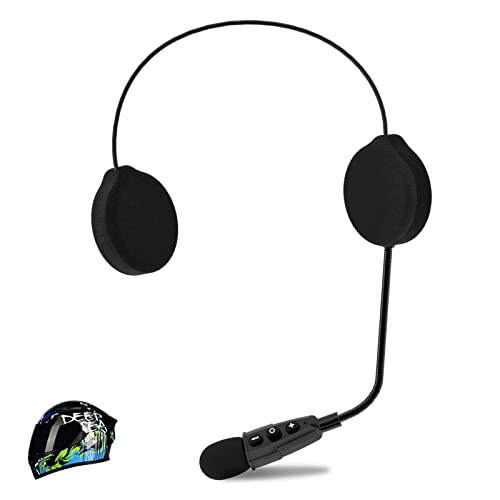
- Mount the speaker in the helmet: a ~$13 motorcycle-style helmet headset velcroed inside the ear flap, one ear only.
Short answer: yes, a catcher can wear an earpiece to receive pitch calls at most levels of baseball and softball, as long as the communication is one-way from a coach in the dugout. MLB catchers have done it since 2022. High school baseball joined in 2024 under NFHS rules, high school softball in 2025, and Little League wrote it into its 2025 rulebook for both baseball and softball. Travel events set their own policies, and many allow it.
The second half of the answer is the one most coaches get wrong: the right "earpiece" for a catcher is not an earpiece. Earbuds and headbands fail behind the plate because the catcher takes the helmet off dozens of times a game. What works is a thin Bluetooth speaker pod mounted inside the helmet, so it rides along every time the helmet comes off. This page covers the rules by level first, then the setup, then the mistakes to avoid.
Can a catcher wear an earpiece? The rules by level
At most organized levels, yes: one-way, coach to catcher, on defense. Here is the picture for the 2026 season. Rules change every year, so confirm the current wording with your governing body before game use.
| Level | Catcher earpiece allowed? | Key conditions |
|---|---|---|
| MLB | Yes, since 2022 | League-approved system; pitcher and up to three other fielders may also wear receivers |
| NCAA | Yes | One-way devices approved from the 2021 to 2022 year; baseball expanded use in 2025. Follow current NCAA rules. |
| NFHS baseball (high school) | Yes, since 2024 | Coach in the dugout, on defense, to call pitches; catcher only until pitchers are added in 2027 |
| NFHS softball (high school) | Yes, since 2025 | Coach in the dugout, on defense; catcher only until pitchers are added in 2027 |
| Little League (baseball and softball) | Yes, since 2025 | Rule 3.17 exception: manager or coach in the dugout, catcher only, on defense, to call pitches |
| Travel (USSSA, Perfect Game, PONY, others) | Often | Set by organization and event; ask the tournament director |
What do the rules usually forbid?
Almost every rule that allows a catcher earpiece forbids the same things. Based on the NFHS and Little League language:
- Two-way communication. The catcher cannot answer the coach. No microphones on players.
- Calls from outside the dugout. The coach using the device must be in the dugout or bench area, not the coaching box.
- Other receivers. At youth and high school levels, only the catcher may receive through 2026. No earpieces for fielders.
- Offense. No electronic communication with hitters or baserunners.
Break those and the penalties can be stiff. Under NFHS baseball rules, a violation brings a team warning, and a repeat ejects the offender and the head coach. That is why the safest setup is also the simplest one: coach in the dugout, one-way, catcher only. MAVTRAX is built exactly that way.
What should a catcher actually wear?
A motorcycle-style Bluetooth helmet headset with its speaker pod mounted inside the catcher's helmet over one ear. Once the rule allows it, the hardware decides whether the rig survives an inning. Ranked by how they handle a catcher's reality:
Earbuds: do not use them. They get yanked out every time the helmet comes off, fall in the dirt, and seal off an ear the catcher needs for the umpire and the infield. A lost earbud mid-inning ends electronic calling for the game.
Bone-conduction headbands: not behind the plate. They shift with the helmet and need re-seating between innings. They can be fine for a coach; they are wrong for a catcher.
Clip-on speakers: skip them. They rattle loose and end up in the wrong spot after the first pop-up.
A speaker mounted in the helmet: this is the one. Motorcycle helmet headsets are built with thin, velcro-backed speaker pods designed to sit between a helmet shell and its padding. A catcher's helmet has the same anatomy. Stick the pod inside the ear flap and the speaker becomes part of the helmet: rip the lid off for a pop-up, put it back on, and the next call is already in the ear.
How do you mount a headset in a catcher's helmet?
It takes about five minutes the first time. The full photo walkthrough is in how to install a Bluetooth headset in a catcher's helmet; here is the short version.
- Charge and pair first. Pair the headset with the coach's phone before it goes in the helmet, and rename it "CATCHER 1" in the Bluetooth menu.
- Pick one ear. Mount one speaker pod only. The other ear stays fully open for the umpire's count, the pitcher and the infield.
- Place the pod. Peel the velcro backing and press the pod inside the ear flap, centered over the ear hole. For hockey-style helmets, check the fit with the helmet on before pressing it down permanently.
- Tuck the wire. Route it behind the padding so nothing snags when the helmet comes off.
- Mount the control unit low on the shell, away from where the mitt hand reaches.
- Test from the dugout. Call ten pitches from your real dugout position with the catcher in full gear. Adjust volume on the headset so the call is clear but the batter cannot hear it.
Wire the backup helmet too. At about $13 per unit, a mid-game helmet swap should never take calling offline.
Is it safe for the catcher to wear a headset?
Mounted correctly, yes: nothing goes in the ear canal, one ear stays open, and nothing is attached to the player. A few safety habits keep it that way:
- One ear only. The catcher needs to hear the umpire, the pitcher, "Mine!" on a pop-up and runners breaking.
- Moderate volume. Loud enough to hear over the crowd, no louder. If the batter can hear the call, turn it down.
- No hard parts near the ear. The flat pod sits between shell and padding. Do not remove padding to make room; the padding is protection.
- Check the helmet's certification guidance. Catcher's helmets carry safety certification. We are not aware of guidance against velcroing a thin speaker pod inside the liner, but if your helmet maker or league says otherwise, follow them.
Who sends the call to the catcher's earpiece?
A coach in the dugout, using either a phone app or a dedicated hardware kit.
App route: MAVTRAX is free on iPhone, Android and the web. The coach taps pitch type and location, and the catcher hears "Fastball, low and away" in under a second. It works offline and logs every pitch by pitcher. Total cost is the headset.
Hardware route: a dedicated kit uses a keypad transmitter and its own receivers, starting at $999 (cost breakdown). It suits programs that want no phone on the bench. How those kits work: how electronic pitch-calling hardware works.
After the catcher hears the call, they give the pitcher one simple sign. That relay is why the pitcher does not need anything in their ear at youth and high school levels. For the pitcher side of the rules, see do pitchers wear earpieces?
What should you tell the umpire?
Tell the plate umpire at the pregame meeting that your catcher is receiving one-way pitch calls from the dugout. Where it is allowed, it is uncontroversial, and it speeds the game up, which umpires tend to appreciate. If the other coach asks, explain that it is one-way, catcher only, from the dugout. If you are at a travel event, have the tournament director's written approval on your phone.
More on the category and the rules at each level: electronic pitch calling systems guide.
FAQ
Do MLB catchers wear earpieces?
Yes. Since 2022, MLB has allowed an electronic pitch-calling system, and catchers, pitchers and up to three other fielders may wear receivers. That is why you rarely see traditional finger signs in big-league games now.
Can a high school catcher wear an earpiece?
Yes, under NFHS baseball rules since 2024 and NFHS softball rules since 2025: a coach in the dugout may send one-way calls to the catcher on defense. Confirm with your state association.
Can a Little League catcher wear an earpiece?
Yes, since 2025. Little League's Rule 3.17 exception allows a manager or coach in the dugout to call pitches one-way to the catcher on defense, in baseball and softball.
What is the best earpiece for a youth catcher?
Not an earpiece at all: a thin motorcycle-helmet Bluetooth speaker (~$13) velcroed inside the helmet's ear flap. It stays put through helmet rips, keeps one ear open, and installs in minutes.
Can the catcher talk back to the coach?
No. Rules that allow catcher earpieces limit them to one-way communication from the coach. MAVTRAX is strictly one-way for exactly this reason.
Can catchers wear AirPods or earbuds?
We strongly advise against it even where a device is allowed. Earbuds fall out when the helmet comes off and block an ear the catcher needs. Mount a helmet headset instead.
Can other fielders wear earpieces?
In MLB, yes, up to three fielders besides the battery. At NFHS and Little League levels through 2026, only the catcher may receive. College and travel rules vary.
Does a catcher headset need Wi-Fi or cell service?
No. With MAVTRAX the call travels from the coach's phone to the helmet headset over Bluetooth, and the pitch audio is stored on the phone, so it works on a back field with no signal once the app has been opened with a connection. Test the range from your dugout before the first game.
We're the team behind MAVTRAX, a free pitch-calling app. This is a research guide: picks are chosen on manufacturer specs, league rules, build quality and real-world price, checked against live listings, not on who pays the highest commission. We haven't hands-on tested every product. Full criteria on how we pick.
The headset that makes it work
Every setup above ends in the catcher's helmet. These are the helmet-mount units we recommend, from our headset guide (install in 5 minutes: how-to). Live price on Amazon.