Best Indoor Baseball Training Equipment (2026): The Garage, Basement, and Apartment Off-Season Plan
Fall ball ends, the field closes, and the next four months decide who shows up in March a better player. This is the indoor plan by the space you actually have: what to buy for an apartment with no swing room, how to build a garage tee station under an 8-foot ceiling, how to hang a basement cage net, and how a catcher spends the winter. Twelve resolved products, a 16-week calendar, and the math on ceiling height.
In this guide · 11 sections
- Helmet headset
- At a glance
- How much room does indoor hitting actually need?
- What can a player do in an apartment with no swing room?
- How do you build a garage hitting station under a standard ceiling?
- What does a basement setup add, and what does it need?
- How should a catcher spend the off-season indoors?
- How do you run a cage session like a game?
- What does the 16-week off-season calendar look like?
- What should you skip?
- FAQ
Quick picks
Our top recommendations — full reviews below.

The first purchase in every indoor setup
~$58 price and availability on Amazon
View on Amazon →Key takeaways
- Buy for the space, not the wish list. An apartment needs about $60 of grip, band, plyo, and reaction work. A garage needs a tee, a 7x7 net, and a mat, roughly $230. A basement adds a hanging cage net and an L-screen for front toss, about $180 more.
- The ceiling rule: hitter height plus bat length plus 12 inches. A 4-foot-8 hitter with a 30-inch bat needs about 8 feet 2 inches to the lowest obstruction, so a standard garage works only if the door track and opener are out of the swing lane.
- The 7x7 net is the first purchase in every indoor setup. It turns a 12-by-8-foot patch of floor into a hitting station and doubles as a throwing target with a $12 strike-zone attachment.
- Winter is a volume season, not a velocity season. Two to three tee sessions of 60 to 100 swings a week, plus 3 band and plyo days, beats one exhausting Saturday.
- Catchers have the best indoor off-season in baseball. Blocking, framing, and receiving all fit in a 10-foot lane, and a partner with a bucket of balls replaces the pitcher entirely.
- Run one cage session a week like a game. Call the pitch to the catcher's helmet headset with the free MAVTRAX app and the hitter stops guessing, which is exactly what spring pitching will demand.
The best indoor baseball training equipment is the smallest set that fits your actual space: a 7x7 net, a tee, and a mat for a garage; a hanging cage net and an L-screen for a basement; and bands, plyo balls, a grip trainer, and a reaction ball for an apartment with no swing room at all. The off-season is long. From the last fall-ball game in late October to the first spring practice in late February is 16 to 18 weeks, and the players who use that window with even modest consistency come back noticeably ahead of the ones who wait for the weather.
This guide is organized by space, because the space decides everything. A family with a two-car garage and a family in a third-floor apartment should not buy the same gear, and both should skip most of what the "home batting cage" search results try to sell them. Every product below was resolved on Amazon this week with a real ASIN and current price. For the outdoor version of this plan, see the backyard training setup; this page is what happens when the yard is frozen. Winter's job is volume, mechanics, and arm care, not live at-bats. Build for that.
At a glance
*Prices at time of writing — they move; check the listing.
PowerNet 7x7 Baseball & Softball Practice Net
~$58
Every indoor plan starts here. A 7x7 bow-frame net absorbs a full-speed swing off a tee from 8 feet away, sets up in a couple of minutes, and folds into a bag that lives against the garage wall between sessions. It is the piece that turns a parking space into a hitting station, and the piece that makes the tee, the mat, and the strike-zone target worth owning.
The PowerNet is the reference 7x7: the bow frame stays taut after hundreds of hits, the pocket catches balls instead of spitting them back at ankles, and the footprint is an honest 7 feet wide by 4 feet deep. Indoors, put it against the long wall with a foot of clearance behind it. The budget steel-frame and deluxe Bownet alternatives are compared in the hitting nets guide.
- Takes real swings from 8 feet
- Two-minute setup, folds flat
- Doubles as a throwing target
- Years of use at about $58
- Needs 7 feet of wall width
- Bow poles can wear at the joints

Tanner Tee The Original
~$100
Winter hitting is tee hitting, and cheap tees are the most-replaced item in youth baseball. The Tanner's rolled rubber cup gives honest feedback (a topped ball rolls the cup, a mis-hit smacks the stem) and the stem does not slowly sink between swings the way friction-fit tees do. At around $100 it costs more than the plastic tees and outlasts three of them.
Set it on the mat about 8 feet in front of the net and move it every 10 swings: belt-high middle, knee-high inside, letter-high away. The batting tees guide covers the Champro and PLAYAPUT alternatives if the budget needs to land closer to $40.
- Rolled cup gives honest feedback
- Stem holds height all session
- Adjustable range covers 8U to adult
- Field-standard for a reason
- About $100
- Base is light; a mat or sandbag helps
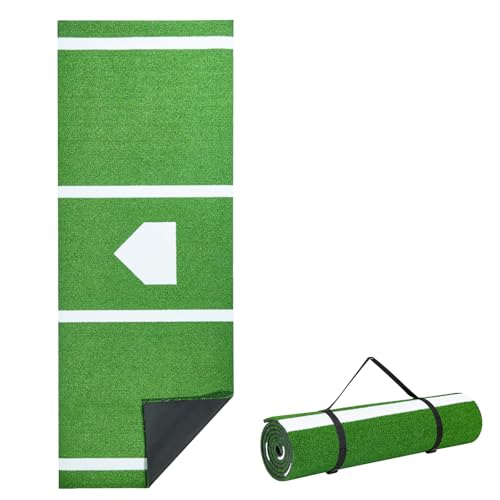
VEVOR 10 x 3.8 ft Indoor/Outdoor Hitting Mat
~$69
Concrete is the enemy of indoor hitting. It is slick under sneakers, the tee base slides on it, and every dropped ball skitters into a corner. A turf mat fixes all three: anti-slip backing grips the floor, the tee has something to bite, and a visible box on the floor puts the hitter in the same spot every swing.
The VEVOR 10 by 3.8 foot mat is long enough for a full stride with the tee out front, and narrow enough to roll up when the car needs the space. Around $69. A bigger 12 by 6 mat with a printed plate is in the backyard setup guide; for a shared garage the roll-up size is the practical pick.
- Anti-slip backing on concrete
- Long enough for a full stride
- Rolls up in seconds
- Marks a consistent setup spot
- Narrower than a full batter's box
- Turf sheds a little at first

VEVOR 35 ft Baseball Batting Cage Net (net only)
~$100
A frame-and-net cage does not fit in most basements, but the net alone does. A 35-foot cage net hung from exposed joists with eye hooks and carabiners makes a full enclosed lane: hitter and tosser inside, walls and water heater outside. At around $100 for the net only, this is the cheapest way to get true front toss indoors without a ball ever reaching drywall.
Measure first. Most basements give 7 feet to the joists, enough for a youth hitter but tight for a tall teenager (see the ceiling math below). Hang the net with a foot of slack at the floor so balls die instead of rolling under. If outdoor room for a framed cage arrives later, the backyard batting cages guide is the next step.
- Full enclosed lane for about $100
- Hangs from joists, no frame needed
- Protects walls and appliances
- Same net moves outside in spring
- Needs exposed joists or a hanging frame
- Hooks and carabiners sold separately
- 7-foot basements limit tall hitters

GoSports 7x7 L-Screen Pitching Screen
~$80
The biggest upgrade over tee work is front toss: a parent kneeling 12 to 15 feet away, flipping balls into the zone. The L-screen is what makes that safe indoors, where a line drive off a metal bat has nowhere to go but back at the tosser. The GoSports 7x7 sets up in minutes, and the cutout is sized for an adult tossing from a knee or a bucket.
Pair it with the hanging cage net, or point it at the 7x7 practice net with the tosser offset a step. Use soft-core or reduced-flight balls in tight spaces; real baseballs off a hot bat in a 7-foot basement are a wall-repair bill waiting to happen. Around $80.
- Makes indoor front toss safe
- Quick assembly, breaks down flat
- Adult-sized cutout
- Pairs with any net
- Needs 7 feet of ceiling to stand
- Frame is light; weight the base

GoSports Plyometric Training Balls, 6-Pack (3.5 oz to 16 oz)
~$40
Plyo balls are the off-season throwing program that fits in a closet. The soft weighted balls (this set runs 3.5 to 16 ounces) are thrown into a wall, a mattress leaned against a wall, or a plyo mat, and the point is not velocity. It is a full-range arm path and a controlled load on the arm during the months it would otherwise do nothing.
For youth players, the light balls and the wall drills (reverse throws, pivot picks, rocker throws) are the whole program; the 16-ounce ball is a warm-up tool, not a max-effort tool. Three sessions a week, 10 to 15 minutes. If a coach has issued a formal throwing program, use their weights and reps. Around $40 for six.
- Full throwing program in a closet
- Soft shell is drywall safe
- Standard 3.5 to 16 oz range
- Under $40
- Needs a wall you are allowed to hit
- Heavy balls are for warm-ups, not max effort

SunNordik Resistance Bands for Pitchers (with carry bag)
~$20
Band work is the most-skipped and highest-return item in youth baseball. Ten minutes of external rotation, internal rotation, scap rows, and forearm work three times a week is the difference between a shoulder that shows up in March ready to throw and one that starts sore. A door-anchored set does it in a hallway.
This set includes a door anchor and a carry bag, which matters because bands in a bag get used and bands in a drawer do not. Pair it with the plyo balls above for a complete winter throwing program under $60 that needs no ceiling height at all. Around $20.
- Complete arm-care kit for about $20
- Door anchor works in any room
- Carry bag travels to tournaments
- Zero space required
- Bands wear; inspect for nicks
- Needs a routine to be useful

SKLZ Reaction Ball
~$12
The six-knob reaction ball bounces where nobody can predict, which is the point. Toss it against a wall or the floor and field it barehanded, and a player gets a hundred unpredictable hops in five minutes with no partner and no space. It is the cheapest infield practice that exists and the best use of a hallway in January.
For catchers it is a blocking-read drill in disguise: drop to the knees, bounce it, react. At around $12 it goes in every bat bag on this page. The training aids guide pairs it with the rebounder net for the solo defense session.
- Unpredictable hops train real reactions
- Works in any hallway
- No partner required
- About $12
- A novelty unless used in a routine
- Hard floors make it loud
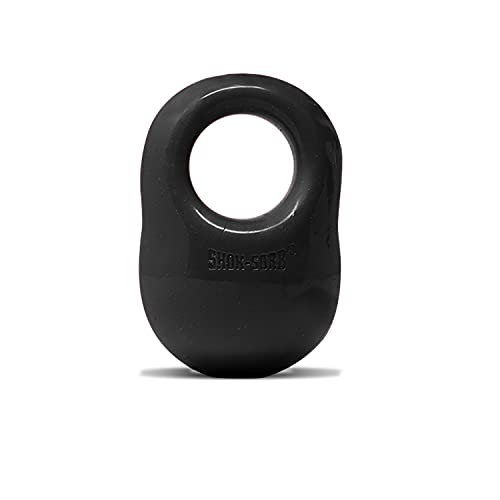
Franklin Sports MLB Gator Grip Bat Swing Trainer
~$7
Most youth swing problems start at the hands. A grip too deep in the palm, or knuckles that are not lined up, produces a bat that drags through the zone no matter how many tee swings the kid takes. The Gator Grip is a molded slip-on that sets the hands and lines the knuckles up automatically, and at around $7 it is the cheapest correction on this page.
Use it for the first 20 swings of every tee session, then take it off. It is also the one hitting aid that works in an apartment: dry swings in a doorway with the trainer on, 25 a night, build the grip without a ball ever leaving a hand.
- Corrects grip and knuckle alignment
- About $7
- Works for dry swings anywhere
- Fits most youth and adult bats
- Not a swing-path fix on its own
- Take it off for the last reps

Axe Power Trainer Weighted Training Bat (Pro Flared Handle)
~$100
Overload training, swinging a heavier bat in controlled sets, is a legitimate winter tool for a hitter who already has a sound swing and the strength to move the extra mass without changing it. The Axe Power Trainer is a purpose-built weighted bat with Axe's flared handle, sold in a 30-inch youth and a 33-inch adult length. It is the splurge on this list at around $100, and it is only worth it for the right hitter.
The right hitter is a strong 12U or older with a coach-approved swing. The wrong hitter is anyone who gets long or drops the back shoulder swinging it. Use it for 10 to 15 swings at the start of a tee session, then switch to the game bat. Smaller hitters should use the $12 bat donuts below instead.
- Purpose-built overload bat, not a donut
- Flared handle teaches a proper grip
- Youth and adult lengths
- Durable one-piece build
- About $100
- Wrong for small or mechanically raw hitters
- Overload only, no underload

GoSports Bat Weights, 2-Pack (16 oz and 12 oz donuts)
~$12
For a hitter not ready for a full weighted bat, the classic donut gives a modest overload for warm-up swings and, more usefully, a wrist and forearm loading tool for apartment dry swings. Two weights in the pack: a 12-ounce for a younger hitter and a 16-ounce for a bigger one, both sliding onto standard barrels.
The winter use: 3 sets of 10 slow, controlled dry swings with the donut on, keeping the barrel path identical to a game swing, then 10 fast swings without it. That contrast is the whole trick. Around $12 for the pair.
- Two weights for two hitter sizes
- About $12
- Works for dry swings anywhere
- Fits standard barrels
- Modest overload only
- Can shift on a thin-barrel bat

Strike Zone Target (Fence and Net Hang)
~$12
Clip this onto the 7x7 net and the hitting station becomes a throwing station. A pitcher gets a visible zone from 20 or 30 feet down a garage lane; a catcher gets a target for the throw-down footwork that never happens in winter. It is a $12 attachment that doubles the use of a $58 net.
Indoors, distance is the limit, not the target. A two-car garage gives about 20 feet; a long basement gives 30. That is fine for flat-ground mechanics and pickoff throws; it is not a mound session. For the catcher, it is the transfer-and-throw target the off-season section below builds around.
- Converts the net to a throwing target
- About $12
- Hangs on a net or a fence
- Catcher throw-down target
- Needs the net to be useful
- Plain vinyl, nothing fancy
How much room does indoor hitting actually need?
The rule: hitter height plus bat length plus 12 inches of finish clearance, measured to the lowest obstruction in the swing lane, not to the ceiling. A 4-foot-8 hitter swinging a 30-inch bat needs roughly 8 feet 2 inches of clear height where the follow-through finishes. A 5-foot-6 teenager with a 32-inch bat needs closer to 9 feet 2 inches. Ceiling height is the first number to write down, and the honest answer for most homes is:
| Space | Typical clear height | Who fits |
|---|---|---|
| Standard garage | 8 to 9 ft to the ceiling, often 7 ft to the door track or opener | Youth through 12U in the clear lane; teens only if the track is out of the lane |
| Basement (exposed joists) | 7 to 7.5 ft | 8U to 12U comfortably; teens hit level and shorten the finish |
| Garage with a high or vaulted ceiling | 10 ft or more | Everyone, any bat, full finish |
| Apartment | 8 ft ceilings, no swing lane | Dry swings in a doorway only; no ball contact |
The garage door track is the obstruction people forget. It usually runs about 7 feet off the floor for the first 8 to 10 feet inside the door, and the opener motor hangs lower. Set the station deeper in the garage than the track, or hit with the door open so the track is empty. Floor footprint is easier: a tee-and-net station needs about 12 feet from the back of the batter's box to the net and 8 feet of width. A front-toss lane needs 25 to 30 feet total, which is why front toss is usually a basement or long-garage project.
What can a player do in an apartment with no swing room?
More than most families think: grip, wrist, band, plyo, and reaction work cover the arm, the hands, and the eyes for about $60, and none of it needs a ceiling. The apartment plan is not a consolation prize. Arm care and hand strength are the two things that get skipped when a garage station exists, because the tee is more fun. Without the tee, they become the program.
- Bands, 3 days a week, 10 minutes. The door-anchored band set: external and internal rotation, scap rows, forearm pronation and supination. This is the routine a high-school trainer would hand the player anyway.
- Plyo wall throws, 3 days a week, 10 to 15 minutes. The plyo ball set into a mattress leaned against a wall, or an outside brick wall on a mild day. Reverse throws, pivot picks, and rocker throws with the light balls are the whole youth program.
- Dry swings with the grip trainer, nightly, 25 swings. The Gator Grip on a game bat in a doorway with the ceiling checked. Add the 12-ounce donut for 3 sets of 10 slow swings once the grip feels normal.
- Reaction ball, 5 minutes, any hallway. The SKLZ ball off the wall, barehanded. Catchers do it from the knees.
Total cost: roughly $60, or about $80 with the donuts. Total space: a doorway and a hallway. Do not attempt ball contact or heavy overload indoors; both need a lane. If a local facility rents cage time, one paid session a week on top of this routine is the complete plan, and the cage-session section below covers how to make that half hour count.
How do you build a garage hitting station under a standard ceiling?
Tee, net, mat, in that order, on a 12-by-8-foot footprint deep enough in the garage to clear the door track, for about $230 total. This is the setup that produces the most winter swings per dollar, and the layout matters more than the brand names.
| Piece | Where it goes | Cost |
|---|---|---|
| 7x7 net | Against the long wall, 1 ft off it, past the door track | ~$58 |
| Hitting mat | 8 ft in front of the net, long axis toward the net | ~$69 |
| Tanner Tee | On the front third of the mat, home-plate end | ~$100 |
| Bucket of balls (30 to 40) | Behind the hitter, off the mat | Varies |
| Strike-zone target | Clipped to the net for throwing days | ~$12 |
Ball choice. Real baseballs off a tee into a 7x7 net from 8 feet are fine. The risk is the miss that skips off the tee stem toward the car or the window, and reduced-flight or soft-core training balls remove it. The practice softballs guide covers the equivalents for a fastpitch sibling sharing the station.
Lighting and temperature. A $20 clamp work light aimed at the tee from the side kills the overhead-bulb shadows. Below about 40°F, composite bats stay in the house (cold composite cracks; the composite bat guide explains why) and an alloy or wood bat takes the winter swings.
The session. 60 to 100 swings, 2 or 3 times a week, in sets of 10 with a purpose each: middle-middle, inside at the knee, away at the letters, grip trainer on, donut on, then game swings. That is 30 minutes. The practice plan templates add the throwing and fielding blocks. The pitching machines guide covers models that fit a 25-foot lane, but front toss (next section) gets most families the same benefit for a fifth of the cost.
What does a basement setup add, and what does it need?
A basement adds the one thing a garage usually cannot: an enclosed lane long enough for front toss. It needs exposed joists, a hanging cage net, an L-screen, and about 25 feet of length. The trade is ceiling height. Most basements give 7 to 7.5 feet to the joists, which is enough for a youth hitter and a shortened finish for a teenager.
Hanging the net. The 35-foot cage net is sold without a frame, which in a basement is the feature. Screw eye hooks into the joists along both sides of the lane about every 4 feet, clip the net's top rope with carabiners, run it down both sides and across the far end, and leave a foot of slack pooled on the floor. That is a 10-by-25-foot enclosed lane that keeps every ball off the drywall, for about $20 in hardware. If the joists are covered, a rectangle of 1-inch PVC hung from the ceiling works, though it takes a weekend.
Front toss. With the lane enclosed, the L-screen goes 12 to 15 feet in front of the hitter and a parent tosses from a knee or a bucket. This is the closest thing to live hitting a home can offer: timing, pitch recognition, a moving ball. Twenty to 30 tosses per round, 3 rounds, after the tee session, with soft-core balls at first.
What the basement does not need: a framed cage (no room), a full-size pitching machine (the lane is too short for most), or a mound. A portable training mound can live in the lane for a pitcher's flat-ground-plus work, but it is an add-on for a family with a pitcher, not part of the base build.
How should a catcher spend the off-season indoors?
Catchers have the best indoor off-season of any position, because blocking, framing, and receiving all fit in a 10-foot lane and a partner with a bucket of balls replaces the pitcher completely. The three skills that decide a catcher's spring are the three skills a game never gives enough reps of, and winter is the only time to get them.
Blocking. A partner 10 to 15 feet away, on a knee, bouncing balls at the catcher in full gear. Start with the ball rolled, progress to a firm bounce, then to a bounce off the L-screen at an angle. Sets of 10, three sets, twice a week. The full progression, including the no-hands drill, is in how to block pitches, and the catcher training equipment guide covers the pancake glove and weighted training balls that build the hands.
Framing with a partner. The partner throws from 20 to 30 feet, aiming at the edges of the zone, and the catcher receives with a quiet glove and works the ball toward the plate. No pitcher needed, no velocity needed. Hang the strike-zone target on the net behind the catcher at first so both players see the zone; then take it away. The technique lives in catcher pitch framing. The reaction ball, from the knees, is the five-minute warm-up.
Receiving off a pitching machine. The one catcher drill worth paying for. A facility's machine throws a consistent speed to a consistent spot, so the catcher takes 100 receptions in 20 minutes with nobody's arm getting tired. Once a week through the winter, and the glove beats the ball to the spot by March.
Throwing. Transfer-and-throw from the crouch to the strike-zone target 20 feet away, 20 reps. Not full throw-down distance; footwork and exchange, which is where pop time is won anyway (pop time by age has the benchmarks). Bands and plyos before, every time.
How do you run a cage session like a game?
Call the pitch to the catcher before every toss, and the hitter stops guessing, which is the one thing winter tee work cannot teach and spring pitching will demand. The problem with home hitting, and with most rented cage time, is that the hitter knows exactly what is coming. Fifty tee swings build a swing. They do not build an at-bat. One session a week should be an at-bat.
The setup: a catcher in gear behind the plate, a tosser (or a machine) in front, the hitter in the box. Before each pitch, the coach or parent taps the pitch and location in the free MAVTRAX app, and the catcher hears it in a headset wired into the helmet: "fastball, low and away." The catcher sets up, the tosser reads the target and delivers, and the hitter sees only what a game shows them: a catcher shifting, a ball in the air, a decision to make. Fifteen pitches, then rotate.
The headset is a $13 motorcycle-helmet Bluetooth unit, the same catcher headset teams run in games, with the speaker pod inside the helmet's ear flap; the install is an evening's work, covered in how to install a Bluetooth headset in a catcher's helmet. The app is 100% free, no subscription, on iPhone, Android, and the web, so the whole game-calling layer costs the price of the headset.
- Hitter's session. Call a mix (fastball in, fastball away, change) and track swing decisions, not results. A take on a called changeup out of the zone is a win in January.
- Catcher's session. Hear the call, set the target, receive. It is the exact sequence they will run 100 times a game in April, and nobody else practices it in winter.
- Coach's session. The parent running the app learns to sequence pitches, which is its own off-season skill. How to call a baseball game is the primer, and pitch locations explained covers the vocabulary the catcher needs to hear.
Once a week is enough. The other sessions stay simple tee and toss volume. But that one game-shaped session is what turns winter swings into spring at-bats.
What does the 16-week off-season calendar look like?
Build the arm first, then the volume, then the game reps, and never all three at full effort in the same week. From the end of fall ball to the first spring practice is about 16 weeks. Here is the shape that works for a youth player with a home station and a family that can give it 3 or 4 short sessions a week.
| Weeks | Focus | The week |
|---|---|---|
| 1 to 2 (early Nov) | Rest and reset | No throwing. Bands 3x. Nightly dry swings with the grip trainer. Build the station. |
| 3 to 6 (Nov to early Dec) | Arm and hands | Bands 3x, plyo walls 3x, reaction ball. Tee 2x, 60 swings, mechanics only. Catchers: blocking 2x. |
| 7 to 12 (Dec to mid Jan) | Volume | Tee 3x, 80 to 100 swings. Front toss 1x. Bands and plyos continue. Overload swings for eligible hitters. Catchers: framing 2x, machine 1x. |
| 13 to 15 (late Jan to Feb) | Game shape | Tee 2x, front toss 2x, one called-pitch cage session a week. Throwing out to 60 feet where a lane allows. Catchers: full receive-and-throw sessions. |
| 16 (late Feb) | Taper | Light everything. Gear check, glove work, bat check against the league standard. First practice. |
Two rules protect the plan. First, the arm ramps slowly: no max-effort throwing before week 10, and no full-distance long toss indoors at all; the pitch count rules page sets the guardrails by age. Second, volume beats intensity. A 12U hitter who takes 80 swings three times a week for six weeks has 1,440 swings in the bank; the hitter who takes 300 exhausting swings on two Saturdays has 600 and a sore back.
What should you skip?
Most of what the "home batting cage" search sells: framed cages for rooms that cannot hold them, heavy pitching machines for lanes that cannot use them, and swing gadgets that promise to fix mechanics a coach has not looked at. The credibility list:
- A framed cage indoors. A 20-foot frame-and-net cage is a great backyard purchase (see the backyard cages guide) and a terrible garage one. The hanging net does the same job for a third of the price and no floor space.
- A full-size pitching machine for a two-car garage. Most need 40 feet to be useful and 50 to be safe. A 20-foot lane wants front toss, or a small soft-toss machine at most.
- Weighted bats for 8U and 10U hitters. The overload bat is a 12U-and-up tool for a strong hitter with a clean swing. Below that, it lengthens the swing. Use the donut, lightly, or skip it.
- The $150 swing trainer with the arm. A tee, a net, and a parent's front toss teach more, and a $30 swing-path sleeve does the mechanical part. The training aids guide ranks them honestly.
- Live BP indoors without an L-screen. Ever. The screen is $80. The alternative is a parent with a broken hand.
- Buying it all in October. Net and bands first. The tee when the swings start, the basement net when the front toss starts. The plan is 16 weeks long; the shopping can be too.
What the player wears to an unheated garage is in the fall ball gear checklist. The one thing not to skip: the bands. They are $20 and they are the reason the rest of the plan is safe.
FAQ
What is the best indoor baseball training equipment for a garage?
A 7x7 practice net, a quality tee, and a turf hitting mat on a 12-by-8-foot footprint deep enough in the garage to clear the door track. That trio runs about $230 and produces more winter swings per dollar than any other purchase. Add a $12 strike-zone target to the net for throwing days.
How much ceiling height do you need to hit indoors?
Hitter height plus bat length plus about 12 inches, measured to the lowest obstruction in the swing lane. A 4-foot-8 hitter with a 30-inch bat needs about 8 feet 2 inches; a 5-foot-6 teenager with a 32-inch bat needs about 9 feet 2 inches. The garage door track (usually 7 feet up) and the opener are the obstructions most families forget.
Can you train for baseball in an apartment?
Yes, and the arm-care side is often better than what garage households manage. Door-anchored resistance bands, a plyo ball set thrown into a mattress against a wall, a grip trainer for nightly dry swings, and a reaction ball cover the arm, grip, and reflexes for about $60 with no ceiling height needed. Skip ball contact and heavy overload indoors; rent one cage session a week if you can.
How do you set up a batting cage in a basement?
Hang a frame-free cage net from exposed joists with eye hooks and carabiners, running it down both sides and across the far end of a 10-by-25-foot lane, with a foot of slack pooled on the floor. A 35-foot net costs about $100 plus roughly $20 in hardware. Add an L-screen for front toss. Most basements give 7 to 7.5 feet of clearance, which suits youth hitters and a shortened finish for teens.
Is winter baseball training at home worth it for a 10U player?
Yes, if it is short and consistent: two or three 30-minute tee sessions a week, bands three times a week, and a few minutes of reaction-ball work. A 10U hitter who does that from November to February arrives in spring with over a thousand swings banked and a healthier arm. The thing to avoid at 10U is intensity: no heavy weighted bats and no max-effort throwing.
What should a catcher do in the off-season?
Blocking with a partner bouncing balls from 10 to 15 feet, framing with a partner throwing to the edges of the zone from 20 to 30 feet, and receiving off a pitching machine at a facility once a week. Add transfer-and-throw footwork to a strike-zone target and the standard band and plyo arm care. All of it fits in a 10-foot lane.
Do you need a pitching machine for indoor training?
Usually not. Most machines need 40 feet or more to be useful, which rules out garages and basements. Front toss from behind an L-screen, 12 to 15 feet away, gives a home hitter timing and a moving ball for about $80. The exception is a catcher, for whom a facility's machine is the best receiving practice available; once a week is enough.
How do you make home hitting practice feel like a game?
Put a catcher behind the plate and call the pitch before every toss instead of letting the hitter know what is coming. The free MAVTRAX app sends the pitch and location to a headset wired into the catcher's helmet; the catcher sets the target, the tosser delivers to it, and the hitter has to read it like a real at-bat. One session a week like this turns winter swings into spring at-bats.
We're the team behind MAVTRAX — pitch-calling software used by baseball and softball teams from 9U travel ball up. We spend our days around dugouts, gear bags and tournament weekends. Picks are chosen on specs, durability for youth-sports abuse, real-world price, and owner feedback — not on who pays the highest commission. Full criteria on how we pick.