Best Backyard Batting Cages (2026): 8 Real-Brand Picks from $180 to $1,000
A backyard batting cage is the single biggest rep multiplier a youth hitter can own: no field trip, no shagging balls, just swing after swing after dinner. But cage listings are a mess of look-alike netting and optimistic frame claims. Here are eight verified cages and nets from brands that actually stand behind them (Heater Sports, FORTRESS, JUGS, Skywalker, PowerNet), from a $180 pop-up to a $1,000 steel-frame cage.
In this guide · 8 sections
Quick picks
Our top recommendations — full reviews below.

Best overall: a real-brand 30 ft tunnel built around a pitching machine
~$350 price and availability on Amazon
View on Amazon →Key takeaways
- Measure the yard first, then shop. A 30 ft cage needs roughly 35 ft x 15 ft of clear, reasonably flat space once you count stakes and guide ropes. If you don't have it, a 7x7 hitting net beats a cage that doesn't fit.
- Best overall: the Heater Sports Xtender 30 ft cage (about $350): a real cage-and-machine brand, heavy netting, replacement parts, and a built-in machine position.
- Best value: the Heater PowerAlley 20 ft cage (about $200), a brand-name cage at the price of the no-name kits, sized for small yards.
- Trapezoid pole cages are NOT steel batting cages. Under $300 you are buying tensioned netting on poles: fine for tee work, soft toss, and youth machine speeds, not for adult BP off a live arm.
- Durability honesty: expect 2 to 4 seasons outdoors, less if the cage lives in the sun and weather year-round. Taking netting down for winter roughly doubles its life.
- A cage contains the ball; it doesn't coach. Pair it with a quality tee or a pitching machine and it becomes a daily hitting station.
The best backyard batting cage for most families is the Heater Sports Xtender 30 (about $350): a 30 ft tunnel from a real cage brand with a machine position built in, because that size turns tee work, soft toss, and machine BP into a daily habit without a field trip. The cage itself is the least glamorous purchase in youth baseball and quietly the highest-leverage one: hitters improve on volume, and volume happens when the swings are twenty steps from the back door.
The catch is that Amazon's cage category is crowded with near-identical netting kits making near-identical claims. This guide sorts it into honest tiers: what $200 actually buys, where the $350 sweet spot is, and when a $400 to $1,000 framed cage is worth it. We dropped the Amazon-native no-name kits from this list on purpose: cages are a multi-season purchase and we only recommend brands with a parts channel. Every pick below is verified in stock with real pricing. If your yard can't fit any of them, that's fine too: the hitting net guide covers the small-yard route, and the full space-by-space plan lives in our backyard training setup guide.
At a glance
| Pick | Best for | Price* | ||
|---|---|---|---|---|
| Heater Sports Xtender 30 ft Batting Cage (Net + Frame) | Best overall: a real-brand 30 ft tunnel built around a pitching machine | ~$350 | View → |
 | Heater Sports PowerAlley Batting Cage (Net + Frame, 20 ft) | Best value from a real brand: 20 ft cage with a built-in machine mount | ~$200 | View → |
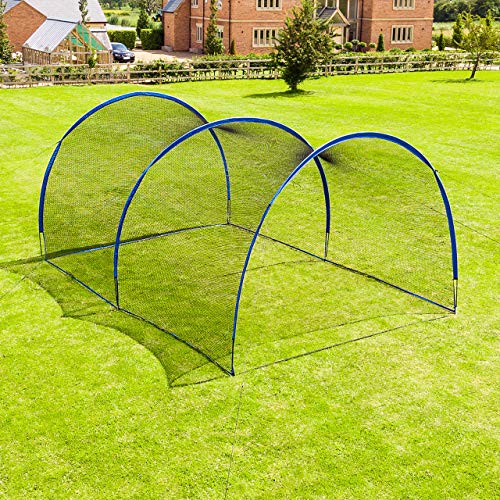 | FORZA Pop-Up Batting Cage (Portable, Fiberglass Frame) | Best portable: sets up in minutes, travels to practice | ~$235 | View → |
 | FORTRESS Ultimate Baseball Batting Cage (20 ft, Complete Kit) | Best frame under $500: steel poles, heavy net, sized 20 to 70 ft | ~$420 | View → |
 | Heater Sports Xtender 36 ft Batting Cage | Best for machine BP with real ball flight | ~$400 | View → |
 | Skywalker Sports 40 ft Collapsible Batting Cage | The big one: 40 ft steel-frame cage that collapses for winter | ~$1,000 | View → |
 | JUGS #27 Batting Cage Net (Net Only) | Best net for a DIY frame: the JUGS standard | ~$660 | View → |
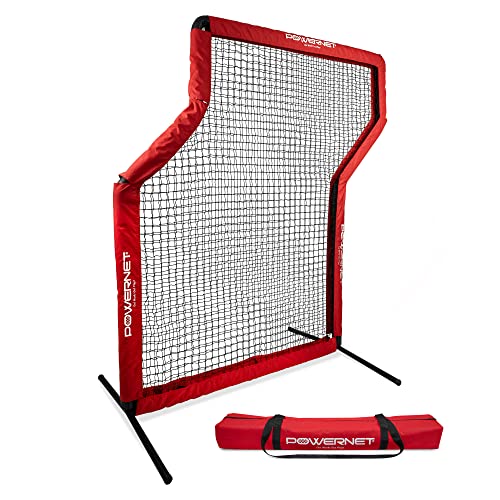 | PowerNet Portable Pop-Up Practice Net (Pitching + Hitting) | The honest alternative when a cage will not fit | ~$180 | View → |
*Prices at time of writing — they move; check the listing.
Heater Sports Xtender 30 ft Batting Cage (Net + Frame)
~$350
Heater Sports has made home pitching machines and cages for decades, and the Xtender 30 is the cage the company designs its machines to live in: a 30 ft x 12 ft x 9 ft tunnel of heavy polyethylene netting on a fiberglass-pole frame, with a built-in machine position at the far end. Tee work, soft toss and youth machine BP all fit, and the netting is the grade that survives a second and third season if it comes down for winter.
The honest trade against the no-name $130 cages: you pay about 2.5x for a brand with a parts channel (replacement poles and nets exist) and netting that does not bag out by July. For a family that will hit four days a week, that is the difference between a cage and a project.
- Established cage-and-machine brand with replacement parts
- Heavier netting than the sub-$200 tier
- Sized for Heater and similar youth machines
- 30 ft is enough for real ball flight at youth speeds
- Pole frame, not steel: stake it and tension it properly
- Needs about 35 ft x 15 ft of flat yard
Heater Sports PowerAlley Batting Cage (Net + Frame, 20 ft)
~$200
The PowerAlley is Heater's small-yard cage: about 20 ft long with a pocket at the end for the PowerAlley or Base Hit machine, heavy-duty net, and a footprint that fits yards where a 30 ft tunnel will not. At around $200 it lands at the same price as the Amazon-native 30 ft cages while coming from a company you can call.
Twenty feet is tee-and-soft-toss territory with short machine work; if you want to see ball flight, step up to the Xtender 30. Stock runs thin in spring, so buy it when you see it.
- Real brand at a no-name price
- Fits small yards
- Machine pocket built in
- Quick to set up and take down
- 20 ft limits ball flight
- Goes in and out of stock
FORZA Pop-Up Batting Cage (Portable, Fiberglass Frame)
~$235
Net World Sports (FORZA / FORTRESS) is the UK sports-netting company behind a large share of club-level nets, and this pop-up cage is the one to buy if the cage has to come down every week or ride to the field. The fiberglass frame springs into shape, the netting is polyester rather than polyethylene, and it packs into a carry bag.
It is shorter and lighter than a staked tunnel, so treat it as a tee, soft-toss and short-machine cage. The win is convenience: no stakes, no guide ropes, no permanent footprint on the lawn.
- Minutes to set up, no stakes
- Portable to practice or a friend's yard
- Reputable netting brand
- Carry bag included
- Shorter than a 30 ft tunnel
- Lighter frame: not for full-speed machine BP
FORTRESS Ultimate Baseball Batting Cage (20 ft, Complete Kit)
~$420
The Ultimate is the step from pole-tensioned netting to an actual framed cage: galvanized steel poles, a heavy HDPP net, and a modular kit that also comes in 35, 55 and 70 ft lengths for yards that can take it. At $420 for the 20 ft version it is the cheapest real frame we could verify from a credible brand.
Assembly is a weekend-afternoon job and the cage stays up all season. If a 16U is throwing serious velocity into it, this is the tier that starts to make sense; below this, everything is netting on sticks.
- Steel frame, not fiberglass
- Four lengths up to 70 ft
- Heavy HDPP netting
- Credible netting brand
- Longer assembly
- 20 ft base length; longer sizes cost $630 to $1,190
Heater Sports Xtender 36 ft Batting Cage
~$400
Same Xtender construction, six more feet. The extra length is what lets a machine throw from a realistic distance with the ball still contained, which is the point at which a backyard cage starts to feel like a real cage. Needs a long yard (call it 42 ft x 15 ft) and the same staking discipline as the 30.
- Machine distance that feels real
- Same parts channel as the 30
- Heavy netting
- Needs a long, flat run
- Pole frame still not for adult velocity
Skywalker Sports 40 ft Collapsible Batting Cage
~$1,000
Skywalker is the trampoline company, and this 40 ft cage borrows that hardware: a steel frame that collapses accordion-style instead of being dismantled, heavy netting, and enough length for L-screen front toss and full machine BP. It is the closest thing on Amazon to a commercial-style cage from a brand with a warranty desk.
It is also $1,000 and a two-person build. Buy it when the cage is a multi-season program asset, not an experiment.
- Steel frame collapses rather than disassembles
- 40 ft handles L-screen and full machine work
- Brand with real support
- $1,000
- Two-person assembly, big footprint
JUGS #27 Batting Cage Net (Net Only)
~$660
If you are hanging a cage from a pipe or cable frame you build yourself, this is the net programs buy: JUGS #27 twisted-knotted polyethylene, the same material the company has supplied to high schools for decades. Net only; no frame, no door, no ropes. It will outlast every consumer cage on this page.
- Program-grade netting
- Outlasts consumer kits by years
- The name every coach knows
- Net only; you build the frame
- $660 before any hardware
PowerNet Portable Pop-Up Practice Net (Pitching + Hitting)
~$180
Not a cage, and on this page on purpose: if the yard cannot take a 30 ft tunnel, a large PowerNet pop-up catches the same tee and soft-toss reps in a fraction of the space. PowerNet is the dominant practice-net brand in youth baseball and the netting holds up. Pair it with a tee and a bucket of balls and you have a hitting station for under $250.
- Fits where a cage will not
- PowerNet build quality
- Sets up in a minute
- Does not contain mishits like a cage
- No machine work
Cage size and yard math (measure first)
The number one cage-buying mistake is ordering the tunnel before measuring the yard. The rules of thumb:
| Cage size | Clear space needed | What it supports |
|---|---|---|
| 12 ft bay | ~14 ft x 11 ft (any surface) | Tee work, short front toss |
| 30 ft tunnel | ~35 ft x 15 ft, mostly flat grass | Tee, soft toss, youth machine speeds |
| 40 ft tunnel | ~45 ft x 16 ft plus mowing access | Machine BP with real ball flight, L-screen toss |
Count the whole footprint: stakes and guide ropes add 2 to 3 ft per side on pole cages, and you'll want to mow around (or under) whatever you put up. Slopes matter too; a tunnel pitched across a grade will fight its own tension all season.
What $200 buys vs what $1,000 buys (durability honesty)
Under about $300, every backyard cage is fundamentally the same object: polyethylene netting tensioned over fiberglass or thin steel poles. That's not a criticism; it's the right tool for youth training volume. But be honest about what it is: expect 2 to 4 outdoor seasons, with sun exposure (UV slowly embrittles netting) doing more damage than baseballs. The single best thing you can do for any cage is take the netting down over winter; owners who do routinely double its life.
The $900 tier buys a stouter frame, heavier netting, and length. What no consumer cage buys is safe containment of high-level adult BP; a 16U throwing serious velocity into a backyard cage is how netting fails and windows break. For youth players through about 13U, every cage here contains what they produce.
A cage is a container, not a coach
The cage multiplies whatever training happens inside it, which means it needs something to multiply. The proven backyard stack, in order: a quality batting tee (the highest-rep-per-dollar tool in baseball), a bucket of practice balls so sets run 20 swings instead of 6, and eventually a pitching machine fed through the machine hole every cage above offers. A phone mounted on a tripod at the back of the cage for slow-motion swing video costs nothing and is the cheapest hitting coach alive.
The full room-by-room plan, from apartment-friendly up through the whole-yard build, is in our backyard baseball training setup guide.
Neighbors, fences, and where the mishits go
One underrated spec: a cage's real job in a neighborhood is keeping YOUR baseballs in YOUR yard. Trapezoid tunnels are open at the hitter's end, so orient that opening toward the house, not the property line. Foul tips off the top edge are the most common escape route; hanging a strike-zone target (cheap to add to any cage) pulls contact toward the middle of the net. For truly tight lots, a large pop-up net like the PowerNet gives up ball flight in exchange for a footprint that fits, and that's usually the right trade where windows are close.
Also worth a look
 Tanner Tee The Original Batting Tee – Adjustable Pro Hitting Tee for BasebalThe pro-standard tee from our tee guide; a cage's best friend$99.99 · View on Amazon →
 Amazon Basics Bucket of Practice Baseballs (24 Count)A 24-ball bucket so nobody stops to collect after six swings~$48 · View on Amazon →
 ZivPlay 12x6 ft Baseball Hitting Mat with Batter's BoxA turf batters-box mat that saves the grass inside the cage~$110 · View on Amazon →
FAQ
How much space do I need for a backyard batting cage?
About 35 ft x 15 ft of clear, mostly flat space for a standard 30 ft x 12 ft x 8 ft cage, once stakes and guide ropes are counted. A 40 ft cage needs about 45 ft x 16 ft. If you don't have that, a 12 ft freestanding bay or a 7x7 hitting net are the small-yard answers.
Are cheap Amazon batting cages any good?
For youth training, yes, with honest expectations: the $200-$350 tier buys tensioned netting on fiberglass or light steel poles, which handles tee work, soft toss, and youth machine speeds fine. Expect 2 to 4 seasons outdoors, and store the netting over winter to double its life. What they don't handle is high-velocity adult BP.
What is the best batting cage for a backyard?
Our best overall is the Heater Sports Xtender 30 (about $350): a real cage-and-machine brand, heavy netting, and a built-in machine position. The Heater PowerAlley (about $200) is the value pick, and the FORTRESS Ultimate (from about $420) or Skywalker 40 ft (about $1,000) are the framed-cage choices for travel-ball volume.
Is a backyard batting cage worth it for youth baseball?
If a player hits at least a few times a week, it's one of the best per-rep investments in youth baseball: a $350 cage used 4 days a week costs pennies per session versus rented cage time, and removes the friction that kills practice habits. It's not worth it if the yard doesn't fit one or the player hits once a week.
Can you leave a batting cage outside all year?
The frame usually, the netting ideally not. UV exposure and winter weather age netting faster than baseballs do. Most owners leave poles or frame up and take the netting down in the off-season, which roughly doubles netting life. Budget cages with carry bags make full takedown a 30-minute job.
What speed pitching machine can a backyard cage handle?
The pole-style cages here are comfortable with youth machine speeds, roughly the 30 to 50 mph range of machines like the Blue Flame in our pitching machine guide. For 60-plus mph machine BP, you want the 40 ft framed tier for both netting strength and enough distance to see the ball.
We're the team behind MAVTRAX — pitch-calling software used by baseball and softball teams from 9U travel ball up. We spend our days around dugouts, gear bags and tournament weekends. Picks are chosen on specs, durability for youth-sports abuse, real-world price, and owner feedback — not on who pays the highest commission. Full criteria on how we pick.