Best Youth Baseball Cleats (2026): Molded Picks for 8U-12U
For 8U through 12U, the cleat answer is molded rubber: legal in essentially every youth league, safe on every surface, and $24-$61 instead of metal-spike money. Here are five verified molded cleats from Nike, New Balance, Under Armour, and Mizuno, plus the fit rules that matter for feet that grow a size a season.
In this guide · 8 sections
Quick picks
Our top recommendations — full reviews below.
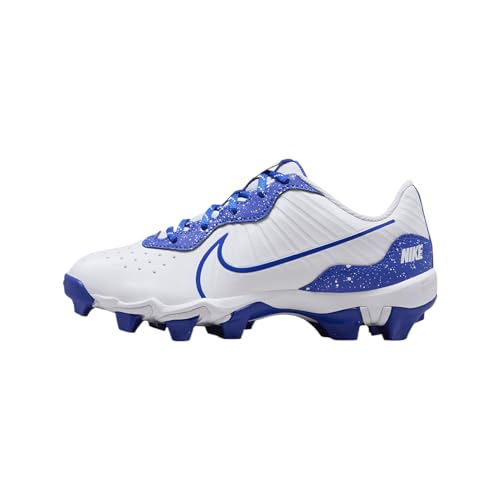
The proven, most-worn youth cleat in the dugout
~$58 price and availability on Amazon
View on Amazon →Key takeaways
- Buy molded rubber, not metal. Metal spikes are illegal in most leagues below 13U (and banned on portable mounds and turf everywhere); molded cleats are the universal youth answer.
- Best overall: the Nike Alpha Huarache 4 Keystone (about $58), the most-worn cleat in youth dugouts for a reason.
- Best value: the Under Armour Leadoff Low RM JR 3.0 (about $30), a legitimate cleat at half the flagship price.
- Fit rule for growing feet: about a thumb's width of room in the toe, no more. Cleats bought two sizes up cause blisters and rolled ankles, not savings.
- Fall ball tip: cleats that ended spring season snug will NOT fit in September. Check before the first practice, not after it.
- Rounding out the bag? See the full fall ball gear checklist for the glove, bat, helmet, and cold-weather layers.
The best youth baseball cleats for 8U-12U are molded rubber cleats from the big four brands, sized with about a thumb's width of growing room and not a size more. The molded-vs-metal question that parents worry about has a simple answer at this age: most rec and travel leagues don't allow metal until roughly 13U, and molded rubber is safer on shared portable mounds, legal on turf, and comfortable everywhere, so molded is the buy.
What actually separates cleats at the youth level is fit and durability against the toe-drag, pop-up-slide abuse kids deal out. Below are five verified molded cleats, Nike, Under Armour, New Balance, and Mizuno, from a $24-30 value tier to the flagship models, plus the sizing rules for feet that grow mid-season. (Shoe listings on Amazon are per size and color, so open the listing and pick your player's size; prices move a few dollars between sizes.)
At a glance
| Pick | Best for | Price* | ||
|---|---|---|---|---|
| Nike Alpha Huarache 4 Keystone (Little/Big Kids) | The proven, most-worn youth cleat in the dugout | ~$58 | View → |
 | Under Armour Leadoff Low RM JR 3.0 | A legit cleat at half the flagship price | ~$30 | View → |
 | New Balance 4040 V8 (Kids, Rubber-Molded) | Wider feet and all-day tournament comfort | ~$49 | View → |
 | Mizuno Cushionrevo Diamond Jr. TPU Cleats | A lighter, quality build from the quiet gear brand | ~$55 | View → |
 | Nike Force Trout 9 Keystone (Youth) | The signature-model pick for the kid who wants Trout's cleat | ~$61 | View → |
*Prices at time of writing — they move; check the listing.
Nike Alpha Huarache 4 Keystone (Little/Big Kids)
~$58
Look down any 10U dugout and half the feet are in Huarache Keystones. Nike's youth molded line has earned that by fitting a wide range of feet, holding up to full seasons of toe-drag, and looking like the pro model kids see on TV. The rubber stud pattern grips real dirt and grass without the pressure points cheap cleats put through thin soles.
At about $58 for the little/big kids' sizing it's flagship-priced but not inflated. Sizes and colorways each have their own listing, so select your player's size and double-check the price on the page.
- The proven fit kids stop complaining in
- Durable through a full season of toe-drag
- Real traction on dirt and grass
- Wide range of kids' sizes and colors
- Flagship price for a growing foot
- Popular sizes sell through in-season
- Price varies a few dollars by size/color
Under Armour Leadoff Low RM JR 3.0
~$30
The Leadoff RM JR is the value answer that doesn't feel like one: a real molded baseball cleat from a major brand at about $30. The synthetic upper wipes clean, the molded plate is properly stiff for a young foot, and UA's junior sizing runs true. For a first pair of cleats, a rec season, or a foot that just jumped a size in July, this is the smart money.
The honest trade at this price is a simpler upper and less cushioning than the flagships, which matters more for a five-games-a-weekend travel kid than a two-practices-a-week rec player. Per-size listings; pick your player's size on the page.
- Real UA cleat at about $30
- True-to-size junior fit
- Easy-clean synthetic upper
- Perfect for fast-growing feet
- Less cushioning than flagship models
- Simpler upper materials
- Heavy travel schedules will wear it faster
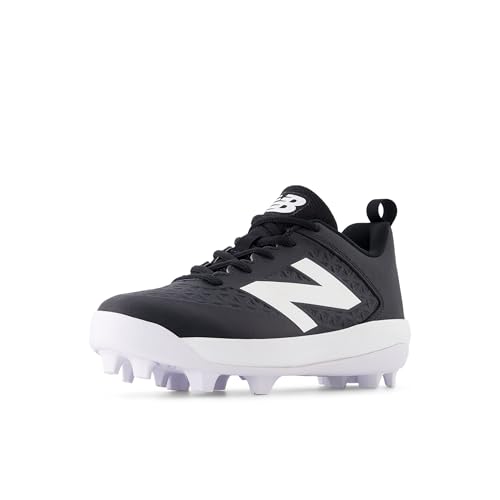
New Balance 4040 V8 (Kids, Rubber-Molded)
~$49
New Balance is the brand parents of wide-footed kids end up at, and the 4040 V8 is why: a roomier toe box than Nike's last, real midsole cushioning, and NB's habit of building kids' shoes like small versions of their adult models rather than cheap lookalikes. For tournament weekends where a kid lives in cleats for ten hours, the comfort difference is real.
At about $49 it sits between the value and flagship tiers. Stock on kids' 4040s runs scarce in-season, and sizes come and go, so if your player's size is listed, don't sit on it.
- Roomier fit for wider feet
- Best-in-class cushioning for the age
- Built like the adult 4040 line
- Tournament-day comfort
- Sizes sell out fast in-season
- Mid-tier price
- Overkill for a casual rec season
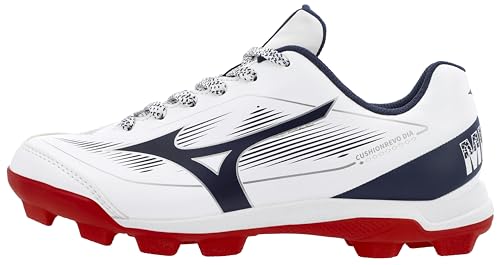
Mizuno Cushionrevo Diamond Jr. TPU Cleats
~$55
Mizuno doesn't spend on billboards, it spends on shoes, and the Cushionrevo Diamond Jr. is the quiet quality pick: a light TPU-studded cleat with genuinely good cushioning and the clean fit Mizuno is known for in the baseball world. TPU studs run slightly firmer than soft rubber, which plays well on the hard-packed infields most youth games are actually played on.
At about $55 it's priced with the flagships and earns it on build. A good pick for the baseball-family kid who appreciates gear, or anyone whose Nike size is sold out. Per-size listings; select your player's size on the page.
- Light with real cushioning
- TPU studs grip hard-packed infields
- Mizuno build quality
- Less common, no dugout twinning
- Fewer colorways than Nike/UA
- TPU is firmer than soft rubber studs
- Flagship-tier price
Nike Force Trout 9 Keystone (Youth)
~$61
Mike Trout's signature line in youth molded form: the Force Trout 9 Keystone is functionally a premium molded cleat with a wider forefoot than the Huarache and the signature styling that, for a certain kind of 10-year-old, is the entire purchase decision. Underneath the branding it's a legitimate Nike molded plate with solid traction and durability.
At about $61 it's the priciest here, and you're paying a few dollars for the name on the side. That's fine. Kids who love their gear practice more. Per-size listings; pick the size and check the price on the page.
- Premium Nike molded build
- Slightly wider forefoot than the Huarache
- The signature model kids actually ask for
- Durable through travel seasons
- Priciest pick in this guide
- Style premium over the Keystone
- Price swings by size and colorway
Molded vs. metal: why molded is the youth answer
Below roughly 13U, molded rubber isn't a preference, it's the rule. Little League prohibits metal spikes through the Major division, and most rec and travel organizations follow the same line: metal becomes legal around 13U-14U when players move to the big field. Even where metal is technically allowed, molded stays the practical choice for youth ball: it's legal on turf fields and portable mounds (where metal is banned outright), safer in the bag and the dugout, more comfortable for all-day tournaments, and cheaper.
The takeaway for 8U-12U: buy molded, don't overthink it, and check your league's rulebook the season your player turns 13. When that day comes, our adult baseball cleats guide covers the metal question properly.
Sizing cleats for feet that grow a size a season
The growing-foot rule: about a thumb's width of space between the longest toe and the front of the cleat, and no more. Half a size of growing room is smart; two full sizes is a sprained ankle waiting on a wet outfield. Cleats sized too big slide inside on every cut, blister heels, and make a slow kid slower.
- Fit in the afternoon with baseball socks on; feet swell during the day and games are played in the afternoon.
- Heel locked, toe free: the heel shouldn't lift when they walk, and toes shouldn't touch the front.
- Re-check every season. Cleats that fit in May will not fit in September. Fall ball is where last spring's cleats go to cause blisters.
- Low-tops are right for youth ball: lighter, cooler, easier to get on. Mids add weight kids notice more than support they don't.
Making cleats last the season (they won't last two)
Accept up front that youth cleats are a consumable: between growth and toe-drag, one season is the realistic lifespan, which is why this guide tops out around $61. To get the full season out of a pair: knock the dirt off after games (dried clay stiffens and cracks synthetic uppers), never leave them baking in the car trunk between weekend games, and don't let them go in the washing machine, a damp cloth does the job. If a toe is wearing through mid-season from pitching drag, that's normal for pitchers, and clear tape or a toe-cap product buys weeks.
The rest of the fall-ball bag
Cleats are usually the September purchase because feet grew over summer, but audit the rest of the bag at the same time: does the glove still fit the hand (see the 8U and 12U glove guides), is the bat still the right length and drop (the 8U, 10U, and 12U bat guides have the charts), and are the October-morning layers in the bag? The one-page audit is the fall ball gear checklist.
Also worth a look
 TELALEO Youth Fleece-Lined Thermal Compression ShirtThe cold-weather baselayer for fall games~$15 · View on Amazon →
 Rawlings | REMIX Backpack Equipment Bag | T-Ball & Youth Baseball / SoftballThe youth equipment bag from our fall checklist~$25 · View on Amazon →
FAQ
What are the best youth baseball cleats?
Our best overall for 8U-12U is the Nike Alpha Huarache 4 Keystone (about $58), the most-worn molded cleat in youth baseball. Best value is the Under Armour Leadoff Low RM JR 3.0 (about $30), and New Balance's 4040 V8 (about $49) is the pick for wide feet.
Should youth baseball players wear metal or molded cleats?
Molded. Metal spikes are prohibited in most leagues below roughly 13U (Little League bans them through the Major division), and molded rubber is legal on every surface including turf and portable mounds. Metal becomes a real question at 13U-14U on the big field.
How much growing room should kids' cleats have?
About a thumb's width between the longest toe and the front of the shoe, roughly half a size. More than that and the foot slides inside the cleat on every cut, causing blisters and ankle rolls. Fit them in the afternoon wearing baseball socks.
Can my kid wear soccer cleats for baseball?
For a first tee-ball or 8U rec season, most leagues allow it and it's fine. Soccer cleats lack the toe stud that helps with batting push-off and pitching, so once a player is past the first season, proper baseball cleats are worth the $30 the value picks cost.
How long do youth baseball cleats last?
Plan on one season. Between growing feet and toe-drag wear, few kids get two seasons from a pair, which is why we cap this guide around $61. Knock dirt off after games, keep them out of hot car trunks, and skip the washing machine to make sure they reach the last game.
Are low-top or mid-top cleats better for youth players?
Low-tops for almost everyone at 8U-12U: they're lighter, cooler, and easier to put on, and the ankle-support benefit of mids is minor at youth speeds. Every pick in this guide is a low.
We're the team behind MAVTRAX — pitch-calling software used by baseball and softball teams from 9U travel ball up. We spend our days around dugouts, gear bags and tournament weekends. Picks are chosen on specs, durability for youth-sports abuse, real-world price, and owner feedback — not on who pays the highest commission. Full criteria on how we pick.