Best Girls' Softball Cleats (2026): Molded Picks for Youth Through High School
Almost every youth and travel softball league requires molded cleats — metal is banned below high school. Here are the molded girls' cleats parents actually buy, from a $24 value pick up to a women's shoe built for older players.
In this guide · 9 sections
Quick picks
Our top recommendations — full reviews below.

The all-around youth pick most parents buy
~$24 price and availability on Amazon
View on Amazon →Key takeaways
- For youth and travel softball, you almost always need molded cleats — metal spikes are banned below high school in most leagues, so check your league rules before buying.
- Cleats run differently than sneakers — they often fit snug and you may need to size up slightly; always try them with game socks.
- Don't buy a size up for "room to grow" — a snug fit keeps the foot stable and prevents blisters on quick lateral moves.
- Molded rubber and TPU studs are both legal for youth; TPU tends to be firmer and grippier, rubber a touch more forgiving on hard ground.
- Our overall youth pick is the Under Armour Glyde Sola RM JR (about $24); the premium youth option is the Mizuno Finch Jr.; older/HS players should look at the New Balance FuelCell Fuse v5.
- Turf shoes are for cages and warmups, not games — they don't grip a dirt-and-grass field the way molded cleats do.
The best all-around girls' softball cleat for most youth players is the molded Under Armour Glyde Sola RM JR — comfortable, proven, and around $24 — with the Mizuno Finch Jr. as the premium youth pick and the New Balance FuelCell Fuse v5 for older and high-school players. The single most important thing to get right is the stud type: youth and travel softball almost always requires molded cleats, and metal spikes are banned below high school in most leagues. Buy molded unless you've confirmed your league allows metal.
Below are the molded cleats worth buying, who each is for, and how to size and fit a kid's cleat so it actually performs and doesn't get left in the bag.
At a glance
| Pick | Best for | Price* | ||
|---|---|---|---|---|
| Under Armour Glyde Sola RM JR (Molded) | The all-around youth pick most parents buy | ~$24 | View → |
 | adidas Adizero Instinct 2.0 Molded (Kids) | A lightweight cleat from a trusted brand | ~$26 | View → |
 | CAMVAVSR Kids Softball Cleats | Cheapest way onto the field for rec or early travel | ~$30 | View → |
 | Mizuno Finch Jr. TPU Softball Cleats | A softball-specific youth cleat with a quality fit | ~$55 | View → |
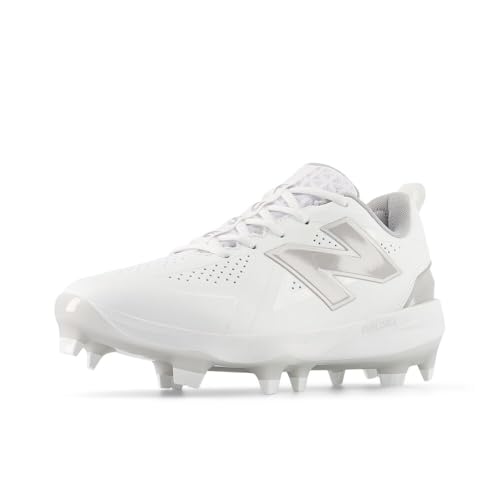 | New Balance FuelCell Fuse v5 (Molded) | Older, bigger players and high schoolers | ~$75 | View → |
*Prices at time of writing — they move; check the listing.
Under Armour Glyde Sola RM JR (Molded)
~$24
The Glyde Sola RM JR is the cleat you see on the most youth fields, and for good reason: it's a comfortable, well-priced molded-rubber softball cleat that covers everything a rec or travel player needs without overcomplicating it. The molded studs are legal for youth ball, the fit is forgiving enough for a range of feet, and the price means you won't wince when your player sizes up next season.
If you just want the safe default — the one most players and coaches already trust at the youth level — this is it. Buy molded, try it with game socks, and you're set.
- The popular, proven youth molded cleat
- Comfortable out of the box
- Excellent value at around $24
- Molded studs are league-legal for youth
- Built for younger players, not high school
- Less premium feel than higher-priced picks
adidas Adizero Instinct 2.0 Molded (Kids)
~$26
The Adizero Instinct 2.0 is a lightweight molded kids' cleat from a brand parents already know. If your player likes a lighter shoe — or you just want a recognizable name without paying premium money — this is a strong value near $26. The molded studs are youth-legal, and the lighter build suits quick base runners and infielders who live on first-step speed.
- Lightweight molded build
- Trusted, recognizable brand
- Good value for a name-brand cleat
- Youth-legal molded studs
- Lighter shoes can wear faster on rough fields
- Sizing can run narrow — try first
CAMVAVSR Kids Softball Cleats
~$30
If the choice is between an inexpensive molded cleat and putting a kid on the dirt in sneakers, buy the cleat. The CAMVAVSR is an affordable molded option that's perfectly fine for rec and early travel ball. It's not as refined as the Under Armour or Mizuno, but the molded studs grip a dirt-and-grass field and it gets a fast-growing player protected and competitive without a big spend.
- Low price for a molded cleat
- Fine for rec and early travel ball
- Molded studs grip better than sneakers
- Easy first pair for a growing kid
- Less refined fit and finish than premium picks
- May not last multiple seasons
Mizuno Finch Jr. TPU Softball Cleats
~$55
The Finch is Mizuno's softball-specific youth line, and the Finch Jr. brings that pedigree to younger players with a quality fit and firm TPU studs. If your player is committed to travel ball and you want a cleat built for softball rather than a general kids' shoe, this is the upgrade. The fit tends to be dialed-in and the TPU spikes grip a dry infield well.
- Softball-specific line with a quality fit
- Firm TPU studs grip a dry infield
- Trusted softball brand
- Built for committed travel players
- Pricier than the youth value picks
- Premium for a shoe a young player outgrows
New Balance FuelCell Fuse v5 (Molded)
~$75
The FuelCell Fuse v5 is a women's molded softball shoe built for older and bigger players — the kind of cleat a high-school athlete will actually want to wear. If a teen finds youth cleats pinch, ride high, or wear out too fast, this is the step up: a properly sized women's shoe with molded studs and the cushioning a longer, more intense season demands.
It costs more than the youth picks, but for a player who's done growing through sizes every few months, paying once for a shoe that fits and lasts makes sense.
- Properly sized for teen/HS players
- Molded studs (confirm if your HS allows metal)
- Cushioned for a longer, intense season
- Built to last beyond a single growth spurt
- Most expensive pick here
- Overkill for younger rec players
Molded vs. metal vs. turf: which can your player wear?
For youth and travel softball you almost always need molded cleats — metal cleats are banned below high school in most leagues, many high-school leagues allow metal, and turf shoes are for cages and warmups, not games. This is the most important decision in the whole purchase, and it's decided by your league's rules, not by preference.
Molded cleats have rubber or TPU studs permanently formed into the sole — they're the standard for youth and travel ball and are legal everywhere youth softball is played. Metal cleats have replaceable or fixed metal spikes that bite harder into a dry field; they're typically allowed only at the high-school level and up, and even then it varies by league. Turf shoes have a flat, nubbed sole for artificial turf and cages — they don't grip a real dirt-and-grass field the way cleats do, so they're a warmup and practice shoe, not a game shoe.
| Type | Where it's used |
|---|---|
| Molded (rubber/TPU) | Youth, travel, and most leagues — the safe default |
| Metal spikes | Many high-school leagues and up — confirm first |
| Turf shoes | Cages, warmups, practice — not games |
How to size kids' softball cleats
A softball cleat should fit snug — not loose with "room to grow" — and because cleats often run differently than sneakers, you may need to size up slightly from your player's everyday shoe. A snug fit keeps the foot stable during the quick lateral cuts, stops, and starts that softball demands; a loose cleat lets the foot slide, which causes blisters and saps that first-step quickness.
Always try cleats on with the same socks your player wears in games — game socks are usually thicker than everyday socks and change the fit noticeably. Have your player stand and do a few quick movements: the heel shouldn't lift, and the toes shouldn't jam the front. The temptation to buy a size up so they "last longer" is understandable but counterproductive — an oversized cleat performs worse and is more likely to cause blisters and rolled ankles than a snug one.
Molded rubber vs. TPU studs
Molded rubber and TPU studs are both legal for youth play; TPU tends to be firmer and grippier on a dry, hard infield, while rubber is a touch more forgiving on hard ground. Neither is "better" across the board — it comes down to the player and the field. TPU (the firmer plastic studs on shoes like the Mizuno Finch) bites a dry infield well and holds up to a committed travel schedule. Molded rubber is comfortable, forgiving, and the reason the value picks here feel good straight out of the box.
For most youth players, either is a fine choice — fit and comfort matter far more than the exact stud material. The key thing is that both are molded and youth-legal, unlike metal.
Low-top vs. mid-top: ankle support
Low-top cleats are lighter and free up the ankle for speed, while mid-top cleats add a bit more ankle support — the right pick depends on the player's position and comfort. Many youth softball cleats are low-cut, which suits the speed and agility most positions demand. A mid-top can give a little extra wraparound support for a player who wants it or who has had ankle tweaks, at a small cost in weight and freedom of movement.
Neither is a safety requirement — let the player's comfort lead. A cleat they like and that fits snug does more for ankle health than a higher cut they fight against.
Break-in and durability
Most molded softball cleats need little break-in, but it's worth wearing a new pair around at practice before a game so any tight spots reveal themselves. A snug, properly sized cleat should feel good quickly; if it's pinching or rubbing after a couple of practices, the size or shape is wrong, not "still breaking in." Lighter cleats can wear faster on rough or rocky fields, so the value picks here are a smart call for young players who'll size up before the shoe wears out anyway.
Knock dried dirt off the studs after games, let cleats air-dry rather than baking them in a hot car or bag, and inspect the studs and seams over a season. Plan to size up as the player grows — a cleat that's gone too small forces the foot forward and undoes everything a snug fit was supposed to do.
Also worth a look
 Youper Youth Padded Sliding ShortsPadded sliding shorts for base runners~$18 · View on Amazon →
 RIP-IT Defense Fielder's Mask (Youth)Fielding mask for infielders~$40 · View on Amazon →
FAQ
What are the best girls' softball cleats?
For most youth players, the molded Under Armour Glyde Sola RM JR (around $24) is the best all-around pick — comfortable, proven, and great value. The Mizuno Finch Jr. is the premium youth option, and older or high-school players should look at the New Balance FuelCell Fuse v5 (around $75).
Do girls' softball cleats need to be molded or metal?
Almost always molded for youth and travel softball — metal cleats are banned below high school in most leagues. Many high-school leagues allow metal, but it varies, so confirm with your specific league before buying. When in doubt, buy molded; it's legal at every youth level.
How should kids' softball cleats fit?
Snug, not loose. Don't buy a size up for "room to grow" — a snug fit keeps the foot stable on quick cuts and prevents blisters. Cleats often run differently than sneakers, so you may need to size up slightly, and you should always try them with game socks.
Can my daughter wear turf shoes in a softball game?
No — turf shoes are for cages, warmups, and practice. Their flat, nubbed soles don't grip a real dirt-and-grass field the way molded cleats do. Use cleats for games and save turf shoes for the cage.
What's the difference between molded rubber and TPU cleats?
Both are molded and youth-legal. TPU studs are firmer and grippier on a dry, hard infield, while molded rubber is a touch more forgiving on hard ground. For most youth players either is fine — fit and comfort matter more than the exact stud material.
Should I buy low-top or mid-top cleats?
Low-tops are lighter and free up the ankle for speed; mid-tops add a bit more ankle support. It's mostly a comfort choice — let the player decide. A snug, well-fitting cleat does more for ankle health than a higher cut they don't like.
How much should I spend on girls' softball cleats?
Between about $24 (Under Armour Glyde Sola RM JR or the CAMVAVSR/adidas budget options) and about $75 (New Balance FuelCell Fuse v5 for older players). The value picks near $24–$30 are right for most quickly-growing youth players.
Do youth players really need softball-specific cleats?
Molded cleats matter far more than the "softball-specific" label for younger players — a quality molded cleat from any of these brands works. Committed travel players benefit from a softball-specific line like the Mizuno Finch for the dialed-in fit, but it's an upgrade, not a requirement.
We're the team behind MAVTRAX — pitch-calling software used by baseball and softball teams from 9U travel ball up. We spend our days around dugouts, gear bags and tournament weekends. Picks are chosen on specs, durability for youth-sports abuse, real-world price, and owner feedback — not on who pays the highest commission. Full criteria on how we pick.