The 5 Best Fastpitch Softball Training Tools (2026)
Fastpitch isn't baseball with a bigger ball — windmill pitching, rise/drop spin and a 43-foot circle demand their own training gear. The five tools that earn their spot in a fastpitch family's garage.
In this guide · 9 sections
Quick picks
Our top recommendations — full reviews below.

Learning correct spin on movement pitches
~$33 price and availability on Amazon
View on Amazon →Key takeaways
- Spin is the skill: fastpitch pitching development lives and dies on learning to spin the ball correctly — train it directly.
- A pitching mat with a powerline fixes more mechanical drift than a month of verbal cues.
- Most 'baseball' training gear works fine for hitters — but pitching tools must be fastpitch-specific.
- Daily solo reps beat weekly lessons: buy gear your athlete can use alone.
- Spinner before speed: chasing velocity before spin is the most common wasted year in fastpitch development.
- The whole home setup — spinner, tee, net — runs about $160, less than two months of private lessons.
Walk a fastpitch tournament and you'll see the most dialed-in training culture in youth sports — and a lot of gear bought twice because the first version was a baseball tool that didn't transfer. Windmill mechanics, underspin/rise spin, and the flat 43-foot circle make pitching development a different sport from baseball's mound work.
This list is fastpitch-first: every pick either trains something unique to the windmill game or earns its place in the hitting cage regardless of ball size. Same rules as our baseball training-aids guide: low-friction reps win, gadgets lose.
At a glance
| Pick | Best for | Price* | ||
|---|---|---|---|---|
| Spin-Trainer Ball (Rise/Drop Spinner) | Learning correct spin on movement pitches | ~$33 | View → |
 | Pitching Mat with Powerline | Mechanics + a consistent home circle | ~$98 | View → |
 | Fastpitch Batting Tee (Tanner-style) | The hitting foundation (same as baseball) | ~$100 | View → |
 | 7x7 Practice Net | Catching everything the tee work throws | ~$50 | View → |
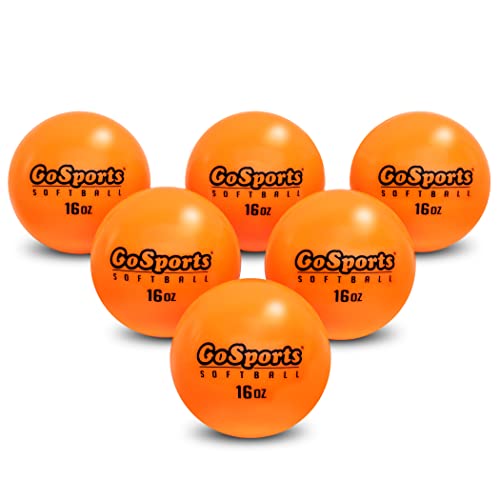 | Weighted Softball Training Set | Arm strength + spin work in one bag | ~$28 | View → |
*Prices at time of writing — they move; check the listing.
Spin-Trainer Ball (Rise/Drop Spinner)
~$33
The single most fastpitch-specific tool ever made: a weighted disc or marked ball that gives instant visual feedback on spin direction and tightness. Rise balls rise (well, fight gravity) because of spin; drops drop because of spin — and a young pitcher can't fix what she can't see.
The reads are simple once you know them: a clean drop shows tight 12-to-6 forward rotation with the seam line stable; a wobbling axis means the fingers are cutting the release. For the rise, the spinner exposes the classic cheat instantly — a "rise" with bullet spin or lazy side-spin is the glorified fastball that gets crushed at 12U and disappears at 14U. The tool makes the difference visible from the first session.
Work it from short distance — 10 to 15 feet against a net or to a parent's glove — because the goal is spin quality, not location. Coaches consistently report the spinner working best as the bullpen opener, when hands are fresh, rather than a tacked-on finisher. It's small, cheap, and works in a living room. If a fastpitch pitcher owns exactly one training tool, this is it.
- Trains THE core fastpitch pitching skill
- Instant visual spin feedback
- Usable indoors, anywhere
- Standard tool among pitching coaches
- Pitching-only — no use for position players
- Needs basic instruction to read the feedback
- Easy to lose in the bag
Pitching Mat with Powerline
~$98
A turf mat with a painted powerline and pitching rubber turns any driveway or gym floor into a regulation circle. The powerline is the quiet hero: drag-line drift and stride direction are the most common windmill flaws, and the line makes them visible on every single pitch — no coach required.
It also protects knees and toes from concrete (drag foot wear is real — ask any pitching parent about shoe budgets) and gives indoor winter work a consistent surface. The consistency is itself a training feature: the same rubber, the same line, the same footing every session means mechanical changes show up as changes, not as noise from a different driveway slope.
Buying notes from mat owners: weight is the quality signal — heavier mats lie flat and stay put, light ones wrinkle into trip hazards and creep backward with every push-off. If the mat will live in a garage gym, pair it with a cheap rug-gripper pad underneath and it stops migrating entirely.
- Makes stride/drag drift visible instantly
- Consistent practice surface year-round
- Saves shoes and knees on concrete
- Rolls up for travel
- Quality mats are pricey
- Heavy to lug
- Cheap mats wrinkle — trip hazard
Fastpitch Batting Tee (Tanner-style)
~$100
Same verdict as our baseball guide: the pro-style stem tee is the highest-value hitting purchase in the sport, and it's identical for softball — just confirm the cup handles an 11"/12" ball (virtually all stem tees do). Tee work is where swing changes actually get grooved.
The fastpitch-specific reason tee work matters even more here: at 43 feet, reaction time is shorter than baseball's 60'6" equivalent, so swing decisions have to be pre-built — there's no adjusting mid-pitch. A grooved, repeatable path built off the tee is what lets a hitter spend her tiny decision window on the pitch read instead of the swing.
Count everything: 10-swing sets, line drives only scored, beat last session's total. Pair with the net below and a bucket and the daily hitting station is complete — and unlike pitching gear, it serves every position player in the house.
- Highest dev-per-dollar in hitting
- Identical utility to the baseball version
- Years of durability
- Enables daily solo reps
- Same price as the baseball one (it is the baseball one)
- Needs a net or open space
- Zero novelty factor
7x7 Practice Net
~$50
The other half of the hitting station: a 7x7 net swallows tee work, soft-toss and front-toss anywhere — backyard, garage, gym. For pitchers it doubles as a throwing target when a catcher isn't available (clip a strike-zone attachment or just aim at the center square).
Buy on frame quality: fiberglass poles and reinforced corner stitching survive; bargain nets fold at the joints by mid-season. Setup should be under two minutes or it won't get used — that two-minute threshold sounds trivial and is actually the single best predictor of whether the station gets daily traffic.
One placement trick for garages: angle the net into the corner rather than flat against the wall, and the rare miss deflects into the corner junk instead of ricocheting back across the floor. Wind is its enemy outdoors, so sandbag the legs and it stops cartwheeling across the yard mid-session.
- Enables hitting AND pitching practice anywhere
- Fast setup/teardown
- Survives years if the frame's good
- Travel-friendly
- Cheap frames buckle — read the reviews
- 7x7 is minimum for full-speed hitting; bigger is safer
- Wind is its enemy
Weighted Softball Training Set
~$28
Heavy/light 12" training balls bring overload/underload arm work to the windmill motion, and the heavy balls double beautifully for catchers' blocking drills and short-box spin practice. Softer-shell versions let pitchers work indoors without drywall casualties.
For the catcher in the family, the soft heavy balls are the blocking-circuit ammunition from our catcher training guide — softball-sized rebounds, no bruises, full-aggression reps. That triple duty (pitcher arm work, spin feedback, catcher blocking) is why one $28 bag outworks most $100 gadgets in a fastpitch garage.
- Serves pitchers, catchers and hitters
- Indoor-friendly soft versions exist
- Cheap, durable, bag-sized
- Legit training principle behind it
- Programs need supervision for young arms
- 12-inch sizing only — don't sub baseball sets
- Boring without drill structure
The 25-minute home session that uses all of it
For a pitcher-hitter (which is most serious fastpitch kids): 5 min spinner work, fresh hands, drop then rise → 10 min pitching off the mat into the net, powerline checked every pitch, last 10 pitches at called zones → 10 min tee stations into the same net, line drives counted. Twenty-five minutes, three or four days a week, and the whole setup tears down in two minutes.
Position players run the back half only and add soft-toss when a parent's free. The structure matters more than the gear: spin before throws, mechanics before location, location before velocity — every session, same order, because each skill feeds the next.
Age ladder: 8U → 14U fastpitch development
What to emphasize (and buy) as she climbs:
- 8U–9U: tee + net only. Windmill basics belong to an instructor; home pitching work this young grooves guesses. The win is a kid who hits every day because the station is ten steps away.
- 10U–11U: first windmill lessons → add the spinner immediately (drop spin first) and the mat once she's pitching weekly at home. Light weighted-ball play, no programs.
- 12U: the separation age. Daily-ish spinner habits, powerline discipline on the mat, and called-zone work into the net. This is when the real drop ball shows up — and when hitters need the low-and-in uppercut tee work, because everyone else's drop is showing up too.
- 13U–14U: mature athletes can add supervised overload/underload arm work; hitters chase exit quality, not contact. By now the home station is maintaining and sharpening what lessons build — which is exactly the job.
How to know it's working
Fastpitch home training has unusually honest checkpoints. On the spinner: the seam line stops wobbling, and drop spin gets visibly tighter month over month. On the mat: the drag foot's finish point clusters on the powerline instead of scattering glove-side. Into the net: called-zone hits climb from roughly 8-of-20 toward 14-of-20. Off the tee: the line-drive count per 10 rises and ground balls stop dominating.
The in-game tells follow about a month behind the garage numbers — strikes on the first pitch, drop balls that finish below the zone instead of in it, and hard contact against the rise. Film five pitches and five swings on the first of each month; the camera roll is the development log, and it settles every "is this working?" debate with footage instead of feelings.
Winter is where fastpitch seasons are won
Every tool on this list is indoor-capable, which is not an accident — fastpitch is a winter-training sport in most of the country, and the spring gap between trained and untrained pitchers is brutal. The garage version: mat against the long wall, net in the corner, spinner work happens literally anywhere. Soft-shell training balls handle the throwing; a clip-on shop light over the net fixes the December-at-6pm problem.
Two indoor adjustments worth making: shorten pitching distance rather than easing effort (full-intent mechanics at 30 feet beat lazy mechanics at 43), and let the tee station run on the days the windmill needs rest. A pitcher who spins and strides all winter shows up to February tryouts with a drop ball nobody else has yet.
The fastpitch edge nobody trains: calling the game
Fastpitch is a pitch-calling sport at every serious level — rise/drop/screw/change sequencing is half the battle, and most youth catchers are decoding wristband cards between every pitch while the other dugout reads the signals. MAVTRAX has fastpitch arsenals built in: the coach taps "rise ball, up & in" and the catcher hears it instantly in an earpiece under the mask. No cards, no stolen signs, faster innings — and young batteries learn real sequencing by hearing a season of called games. It's free — no subscription; see the headset guide for what works under a hockey-style mask.
Also worth a look
GoSports Weighted Training Softballs (3.82")The softball-sized blocking-drill ammunition from our catcher training guide.~$28 · View on Amazon →
 Rawlings GREAT HANDS Pancake Training GloveSoft-hands receiving trainer — works identically for fastpitch catchers and infielders.~$32 · View on Amazon →
 Wilson A700 FPCM 33" Fastpitch MittA true fastpitch catcher's mitt for the battery-mate catching all those bullpens.~$90 · View on Amazon →
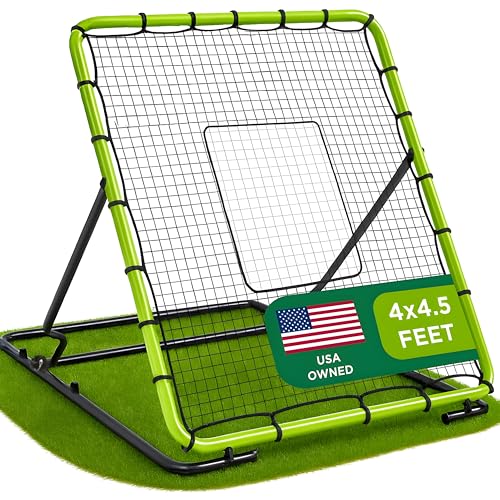 Pitchback Rebounder NetSolo fielding and throwing returns for the position players in the house.~$90 · View on Amazon →
 Agility Ladder + Cone SetFirst-step quickness for slappers, stealers, and middle infielders — whole-team warm-up gear.~$40 · View on Amazon →
 Champro Catcher's Knee Support (Youth)Backyard bullpens add up fast on a young catcher's knees.~$17 · View on Amazon →
FAQ
Can my daughter use baseball training gear?
Hitting gear — tees, nets, ladders — transfers completely. Pitching gear does not: windmill mechanics need fastpitch-specific tools (spinners, powerline mats) and 12-inch training balls. That split is the whole reason this guide exists.
What age should a pitcher start spin training?
As soon as she's throwing movement pitches with an instructor — commonly 10–12. The spinner is low-stress and feedback-driven, so there's no 'too early' the way there is with weighted-ball velocity programs.
Rise ball or drop ball first?
Most instructors build the drop first — it's mechanically closer to the fastball and safer to command. The rise demands the most spin skill, which is exactly why daily spinner work matters before chasing it. (Your pitching coach's plan beats any internet ordering.)
What's the minimum home setup worth buying?
Spinner + tee + net (~$160 total) covers a pitcher-hitter's daily work. Add the powerline mat when winter forces practice into the garage.
How many pitches should a young pitcher throw at home?
Most instructors cap focused home work around 50–75 full pitches per session for 12U and under, two to four sessions a week, with at least one full rest day. Spinner work barely counts against the budget — it's short-distance and low-stress, which is why it can be near-daily.
Do home sessions replace pitching lessons?
No — they multiply them. Lessons install the mechanics; the mat, spinner, and net are what let her rehearse those mechanics 150 times between lessons instead of 15. Families who do both report the same lesson budget producing visibly faster progress, because the instructor stops re-teaching last week.
My daughter pitches AND plays shortstop — what gear order makes sense?
Tee and net first, because hitting serves both jobs every day. Add the spinner with her first movement-pitch lessons, then the mat when home pitching becomes routine. The weighted set comes last and quietly serves all three roles — arm care, spin feedback, and blocking drills if there's a catcher in the house too.
How is fastpitch hitting practice different from baseball's?
The swing fundamentals match, but the tee diet should differ: more low-zone work, because the drop ball and low rise-miss dominate youth fastpitch, and a slight uppercut path to handle rise-ball pitchers up. At 43 feet the decision window is also shorter, so a grooved, no-thought swing path matters even more than it does in baseball.
We're the team behind MAVTRAX — pitch-calling software used by baseball and softball teams from 9U travel ball up. We spend our days around dugouts, gear bags and tournament weekends. Picks are chosen on specs, durability for youth-sports abuse, real-world price, and owner feedback — not on who pays the highest commission. Full criteria on how we pick.