Baseball Field Dimensions by Age (2026 Chart): 8U to 14U Base Paths, Mound and Fences
Setting up a practice field, laying out a scrimmage diamond, or trying to decode a tournament flyer that just says 50/70? Save this chart: base paths, mound distance and height, fence distances, batter's box, and the diagonal check for every age level, with the league each number comes from.
In this guide · 11 sections
- Helmet headset
- The master chart: field dimensions by age
- The mound: height, size, and the rubber
- Bases and base paths: the exact geometry
- Lay out a practice diamond in 10 minutes (the two-tape method)
- Home plate and the batter's box
- Fences and outfield depth: recommendations, not rules
- Backstops, dugouts, and the space nobody budgets
- Why the dimensions ladder exists (and why the jumps hurt)
- Also worth a look
- FAQ
Key takeaways
- Youth baseball is played on three diamonds: the 46/60 field (most kid pitch through age 12), the 50/70 intermediate field, and the full-size 60'6"/90' diamond from about 14U up.
- The names are pitching distance / base path length: a "50/70 tournament" means a 50-foot pitching distance and 70-foot base paths. That one convention decodes nearly every flyer.
- Per Little League's published field specs, the mound rises with the field: 6 inches above home plate on the 60-foot diamond and 10 inches on the 90-foot diamond, with intermediate fields in between. Fence distances are recommendations, not fixed rules.
- The diagonal is the layout cheat code: home plate to second base measures about 84'10" on a 60' diamond, about 99' on 70' bases, and 127'3" on the full field. Two tape pulls and your diamond is square.
- These are league rules, not laws of physics. Little League, USSSA, PONY, and Cal Ripken each publish their own tables. This chart gives the common setups and names its sources; your event's rules are the final word.
- Setting up a practice field takes a 100-foot tape and a throw-down base set. Ten minutes, real dimensions.
Quick answer: most youth baseball through age 12 is played on a 46/60 field (46-foot pitching distance, 60-foot base paths), the 13U transition happens on 50/70 and 54/80 fields, and the full-size diamond is 60 feet 6 inches with 90-foot bases. Everything else on the field scales with those numbers: the mound gets taller, the fences move back, and the throws get longer.
Our pitching distance by age chart covers the mound-distance question in depth, league by league. This page is the rest of the field: base paths, mound height and size, fence distances, the batter's box, and the diagonal measurements that let a volunteer with a tape measure lay out a legal diamond on any open grass. Sources are named per table, because the numbers genuinely differ between sanctioning bodies.
The master chart: field dimensions by age
The common field setups by age band. Pitching and base numbers blend the major organizations (the pitching distance chart has the exact per-league ladders); fence figures are typical builds, not requirements:
| Age / level | Pitching | Base paths | Typical fence | Home to second |
|---|---|---|---|---|
| Tee-ball / 6U (no live pitching) | n/a | 50'-60' | often none | ~70'-85' |
| 8U coach / kid pitch | 40'-46' | 60' | ~150'-200' | ~84'10" |
| 9U-12U (the 46/60 years) | 46' | 60' | ~200' | 84'10" |
| Intermediate / 50-70 (12-13) | 50' | 70' | ~200'-275' | ~99' |
| 13U travel (54/80) | 54' | 80' | ~250'-300' | ~113'2" |
| 14U+ / high school / adult | 60'6" | 90' | ~300'-400'+ | 127'3" |
How to read a tournament flyer: the two numbers are always pitching distance then base path. 46/60, 50/70, 54/80, and 60/90 cover almost everything you will ever see. If the flyer only lists an age, assume the common setup above and confirm with the director.
The mound: height, size, and the rubber
The mound scales with the field, and this is the spec volunteers get wrong most often. Per Little League's published field specifications (confirm your league's current sheet):
| Diamond | Mound height above home plate | Mound diameter | Pitching rubber |
|---|---|---|---|
| 60' bases (46' pitching) | 6" | ~10' | 18" x 4" |
| 70' bases (50' pitching) | ~6"-8" (check spec sheet) | ~10'-12' | 18" x 4" or 24" x 6" |
| 90' bases (60'6" pitching) | 10" | ~18' | 24" x 6" |
Three practical notes. First, the measurement is the rubber's height above home plate, not above the surrounding grass, which is why proper mounds are built with a transit or a string level. Second, the distance is measured from the apex of home plate to the front edge of the rubber; the full measuring method is in the pitching distance guide. Third, most practice fields have no mound at all, which is fine: a portable turf mound or a throw-down rubber at the taped distance beats pitching off bare flat grass at the wrong number, and our portable mound guide covers the options.
Bases and base paths: the exact geometry
The infield is a square standing on its corner, so all four base paths are equal and the diagonals do the layout work for you:
| Base paths | Home to second (diagonal) | First to third | Common levels |
|---|---|---|---|
| 60' | 84'10" | 84'10" | Most 8U-12U |
| 70' | ~99' | ~99' | Intermediate / 50-70 |
| 80' | ~113'2" | ~113'2" | 13U travel |
| 90' | 127'3" | 127'3" | 14U+ through MLB |
Base paths are measured from the back corner of home plate along the foul line to the back corner of the bag, and the bags themselves are 15-inch squares in most youth play (Little League's rulebook allows 14 to 15 inches; MLB moved to 18-inch bases in 2023, and some leagues have followed). A safety note worth checking in your league's rules: many youth organizations use or allow a double first base (the orange-and-white bag) to separate the runner from the fielder.
Lay out a practice diamond in 10 minutes (the two-tape method)
Every coach eventually has to build a diamond on blank grass. The method, for any base length B (60, 70, 80, or 90):
- Place home plate and decide where second base should point (usually at the deepest part of the field).
- Pull the diagonal: run the tape from the back corner of home plate straight toward center and pin second base at the diagonal distance (84'10" for 60' bases, ~99' for 70', ~113'2" for 80', 127'3" for 90').
- Cross the tapes for first and third: hold one tape at home and one at second, both set to B. Where they meet on the right side is first base; where they meet on the left is third. The crossed tapes guarantee a square infield with no protractor and no guessing.
- Set the pitching distance from the apex of home plate (46', 50', 54', or 60'6" per the distance chart).
- Drop the bases. Done.
The whole kit is a 100-foot open-reel tape (a 25-foot carpenter tape will not reach the diagonal) and a rubber throw-down base set. Both live in the equipment bag all season and turn any park into a practice field at the correct dimensions, which matters more than most parents realize: infielders calibrate range and timing to real base paths the same way pitchers calibrate to a real mound distance.
Home plate and the batter's box
Two specs that do NOT change with age, and one that does:
- Home plate is the same at every level: 17 inches wide across the front edge, from tee-ball to the World Series. The strike zone's width never grows; only the players do. (This is also why our pitch locations chart works at every age.)
- The pitching rubber and mound scale (table above).
- The batter's box grows once: on 60-foot diamonds Little League specifies a 3-foot by 6-foot box; on conventional 90-foot fields the box is 4 feet by 6 feet. If you are painting lines for a scrimmage, the box starts 6 inches from the plate's edge.
For backyard and cage work, a hitting mat with a painted batter's box keeps a hitter's setup distance honest between real games.
Fences and outfield depth: recommendations, not rules
Unlike base paths and pitching distances, fence distances are mostly recommendations, and real parks vary enormously. The typical picture: fields built for the 46/60 game usually run about 200 feet down the lines (Little League's guidance for its standard field), intermediate fields commonly sit in the 200-to-275-foot range, and full-size fields open up to 300-to-400-plus feet. USSSA and travel events play younger divisions on whatever park is available, which is why an 11U team sees a 180-foot fence one weekend and 225 the next.
What this means practically: outfield depth is a coaching variable, not a constant. Positioning that works at one park is wrong at the next, home run expectations swing wildly between venues, and a "warning track fly ball" is park-specific information. Walk the field before the first pitch; it is the cheapest scouting available, and it pairs well with the rest of the tournament day routine.
Backstops, dugouts, and the space nobody budgets
If you are scouting a practice venue or helping a league plan a field, the diamond itself is only part of the footprint. Common guidance (published field specs vary by organization, so treat these as planning numbers): the backstop sits roughly 20 to 30 feet behind home plate on youth fields and deeper on big diamonds; foul territory needs enough room for overthrows to die before they reach spectators; and a full 46/60 field with fencing wants roughly an acre. For team-owned practice gear that survives this lifestyle, the tournament gear guide and a strike-zone pitching net (bullpens without a catcher or a backstop) cover the essentials.
Why the dimensions ladder exists (and why the jumps hurt)
The graduated field is a deliberate development tool: it keeps throws makeable, keeps pitchers close enough to throw strikes, and keeps the running game proportional to kids' speed. The cost is the transitions. The move from 46/60 to the bigger diamonds around age 13 is widely considered the hardest year in youth baseball: every infield throw gets longer, the catcher's throw to second jumps from about 85 feet to 99-plus, and pitchers lose the velocity-by-proximity the small field gave them. The pitching distance guide has an 8-week transition plan for exactly this jump, and the pop time by age chart recalibrates expectations for catchers. Rules change along with the dimensions too: leads, pickoffs, and balks arrive with the bigger field, and our rules by age guide maps that ladder.
Also worth a look
 GoSports 5-Piece Rubber Throw-Down Base SetFive rubber throw-down bases: any park becomes a practice diamond.~$15 · View on Amazon →
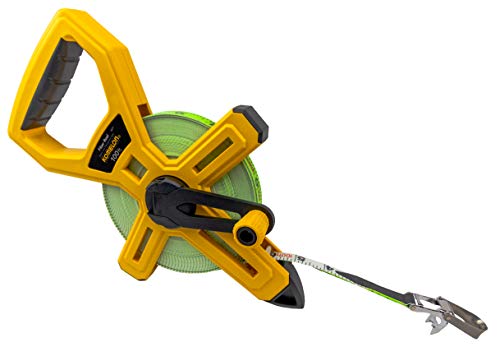 Komelon Open-Reel Fiberglass Tape Measure (100 ft)The 100-foot open-reel tape that reaches every diagonal on this page.~$21 · View on Amazon →
 ZivPlay Portable Pitching Mound (30 in, 4 in height)A portable rubber-and-turf mound for practice fields that have none.~$80 · View on Amazon →
FAQ
What does 50/70 mean in baseball?
A 50-foot pitching distance with 70-foot base paths, the intermediate diamond used between the standard youth field (46/60) and the full-size field (60'6" pitching, 90-foot bases). Little League calls this its Intermediate division; many travel organizations play 13U on the similar 54/80 field.
How far apart are the bases in Little League?
60 feet on the standard Little League field (Majors and below), 70 feet in the Intermediate (50/70) division, and 90 feet in the Junior and Senior divisions, per Little League's published rules.
How far is home plate to second base on a 60-foot diamond?
About 84 feet 10 inches, corner to corner. On 70-foot bases it is roughly 99 feet, on 80-foot bases about 113 feet 2 inches, and on the full 90-foot diamond 127 feet 3 3/8 inches. Pulling this diagonal is the easiest way to lay out a square infield.
How tall is a youth pitching mound?
Per Little League's field specifications, the rubber sits 6 inches above home plate on the standard 60-foot-base field and 10 inches on the 90-foot diamond, with intermediate fields between. Height is measured relative to home plate, not the surrounding grass.
How far are the fences in youth baseball?
Typically around 200 feet for fields built for ages 12 and under (Little League's guidance for its standard field), about 200 to 275 feet for intermediate fields, and 300 to 400-plus feet on full-size diamonds. Unlike base paths, fence distances are recommendations and vary widely from park to park.
What size is home plate in youth baseball?
The same as the big leagues: 17 inches wide. Home plate and the strike zone's width never change with age; the field scales around them.
How do you measure base paths when setting up a field?
From the back corner of home plate along the foul line to the back corner of first base, then base corner to base corner around the diamond. Use the diagonal check to square it: home to second should measure about 84'10" on 60-foot bases, 99' on 70, and 127'3" on 90.
We're the team behind MAVTRAX — pitch-calling software used by baseball and softball teams from 9U travel ball up. We spend our days around dugouts, gear bags and tournament weekends. Picks are chosen on specs, durability for youth-sports abuse, real-world price, and owner feedback — not on who pays the highest commission. Full criteria on how we pick.