Baseball Helmet Size Chart (2026): Batting Helmet Sizing by Head Measurement, Hat Size, and Age
Batting helmets are sized in hat sizes, sold in ranges, and required to meet a safety standard most parents have never heard of. Save this chart: the head-measurement to hat-size conversion, sizing by age, the NOCSAE rule, when a faceguard is required, and verified in-stock picks in every size band.
In this guide · 10 sections
- Helmet headset
- Chart 1: head measurement to hat size
- Chart 2: helmet sizing by age (the starting shelf)
- The NOCSAE rule: what makes a helmet legal
- Faceguards and jaw guards: who needs one
- The fit test: 60 seconds that beats every chart
- One helmet or team helmets? (the hygiene and consistency case)
- When to replace a batting helmet
- Also worth a look
- FAQ
Key takeaways
- Helmet size = head circumference. Wrap a soft tape about an inch above the eyebrows; that number in inches maps to a hat size (22 inches is about a 7), and helmets are sold in hat-size ranges.
- The two ranges that cover most kids: tee-ball shells around 6 1/4 to 6 7/8, and the standard youth/OSFM range of about 6 1/2 to 7 1/2. Fine sizing happens with the included fit pads.
- Every legal helmet carries NOCSAE certification. Little League and essentially every sanctioned youth program require a NOCSAE-stamped helmet with dual ear flaps; a skate-style or single-flap helmet is not legal youth equipment.
- Fastpitch softball batters generally need a facemask on the helmet (required by NFHS high school rules and most youth fastpitch sanctions). In baseball, jaw guards and face guards are optional add-ons and legal nearly everywhere.
- The fit test beats the chart: with the helmet on, the brow pad sits about an inch above the eyebrows, and a firm head shake produces no wobble. A helmet that slides when the player runs is the wrong size, whatever the label says.
- Replace after any serious impact and check the shell yearly. Cracked shells, missing padding, or peeling certification labels mean the helmet is done, whatever its age.
Batting helmets are sized by head circumference expressed as a hat size, and most youth helmets are sold in two ranges: a tee-ball shell around 6 1/4 to 6 7/8 and a one-size-fits-most youth range around 6 1/2 to 7 1/2. That is why helmet shopping feels vaguer than glove or bat shopping: two shells cover most of childhood, and the real fitting happens inside the helmet with pads.
The chart below converts a two-minute tape measurement into a hat size, then maps ages to typical ranges, then covers the part that matters more than fit: the certification and facemask rules your league actually enforces. Sizing is measurement-first here, same as our glove chart and bat size guide: age gets you to the right shelf, the tape makes the decision. One scope note: catcher's helmets are a different piece of equipment with their own sizing, covered in the catcher gear sizing chart.
Chart 1: head measurement to hat size
Wrap a soft tape (or a string you then measure) around the head about one inch above the eyebrows and ears, snug but not tight. Then convert:
| Head circumference | Hat size | Typical helmet label |
|---|---|---|
| ~19 5/8" | 6 1/4 | Tee-ball (6 1/4 - 6 7/8) |
| ~20 3/8" | 6 1/2 | |
| ~21 1/8" | 6 3/4 | |
| ~21 7/8" | 7 | Youth / OSFM (6 1/2 - 7 1/2) |
| ~22 1/4" | 7 1/8 | |
| ~22 5/8" | 7 1/4 | |
| ~23" | 7 3/8 | Senior (7 1/8 - 7 1/2+) |
| ~23 3/8" | 7 1/2 |
Values are approximate (hat size is circumference divided by pi, and brands round differently), which is fine: you are choosing between two or three shell ranges, not a precise number. When a measurement lands on a range boundary, take the larger shell and tighten the fit with pads.
Chart 2: helmet sizing by age (the starting shelf)
Age is a rough proxy; the tape is the decision-maker. But the shelves sort out like this, with verified in-stock picks per band:
| Age | Typical range | Verified pick |
|---|---|---|
| 4-7 (tee-ball / coach pitch) | 6 1/4 - 6 7/8 | Rawlings COOLFLO tee-ball (~$28) |
| 7-12 (the kid-pitch years) | 6 1/2 - 7 1/2 (OSFM) | Rawlings COOLFLO OSFM (~$32) |
| 8-13 wanting jaw protection | Junior 6 1/2 - 7 1/8 | Easton Z5 2.0 Junior with jaw guard (~$59) |
| 13+ / high school | Senior 7 1/8 - 7 1/2 | Easton Z5 2.0 Senior (~$35) |
| Fastpitch (all ages) | Same ranges + facemask | Rawlings COOLFLO with face guard (~$46) |
The OSFM row is bolded because it is where most families land: one 6 1/2 to 7 1/2 shell genuinely covers most of youth baseball, with the fit pads doing the year-to-year adjustment. The full fastpitch lineup (masks pre-installed, youth sizes) is in the fastpitch batting helmet guide.
The NOCSAE rule: what makes a helmet legal
Every sanctioned youth league requires batting helmets that meet the NOCSAE standard (the National Operating Committee on Standards for Athletic Equipment). Little League's rules, for example, require helmets meeting NOCSAE specifications and bearing the certification stamp and warning label. Practical translation for parents:
- Look for the NOCSAE stamp molded into or labeled on the shell. Every helmet on this page carries it; a novelty or skateboard-style helmet does not, and an umpire can and will pull it.
- Youth play means dual ear flaps. Single-flap shells are a high-school-and-up look; youth rules require both ears covered.
- Do not repaint or sticker-bomb a helmet. Little League prohibits altering helmets (paint and adhesives can void the certification) unless done per the manufacturer's instructions. Team decoration goes on the bag, not the shell.
- Hand-me-downs: inspect before trusting. Check for shell cracks, compressed or missing interior padding, and a legible certification label. A helmet that took one big hit or spent five summers in a hot garage owes you nothing.
Faceguards and jaw guards: who needs one
Three different pieces of hardware, three different rule situations:
| Add-on | Rule status | Verified option |
|---|---|---|
| Fastpitch facemask (full cage) | Required for batters in NFHS high school softball and by most youth fastpitch sanctions; check your league | Easton ALPHA youth with mask (~$45) |
| Baseball jaw guard (C-flap style) | Optional, legal in essentially all baseball play; increasingly common after HBP scares | Easton Multi-Adjust jaw guard (~$25) |
| Baseball full face guard | Optional; some local leagues require face protection at coach-pitch ages; brand-matched to the helmet | Rawlings R-EXT for COOLFLO (~$10) |
Two buying rules. Guards are brand-and-model matched: the Rawlings R-EXT bolts to COOLFLO shells, Easton's Multi-Adjust fits Easton helmets and several others, but never assume cross-brand fit without checking the listing. And guards must be installed with the maker's hardware in the maker's holes; a drilled-out helmet is an altered helmet (see the NOCSAE section above).
The fit test: 60 seconds that beats every chart
- Position: the helmet sits level, brow pad about one inch above the eyebrows. Tipped back like a sun hat means too big or worn wrong.
- Shake: a firm head shake side to side and front to back. The helmet moves WITH the head; skin on the forehead should wrinkle when the shell is twisted. Sliding means wrong size or missing pads.
- Ears: ear holes line up with ears, flaps cover both ears fully, and the jaw line of the flap does not block vision toward the pitcher.
- Vision: in a batting stance, the player sees the pitcher with both eyes with no shell edge intruding. This is where oversized helmets fail hardest.
- Comfort check after ten swings: take a round of tee work (tee guide); a helmet that pinches or wobbles in live swings needs a pad change, whatever the static fit said.
Fit pads matter more than parents expect: the OSFM range is honest precisely because the included pad kit takes real slack out of the shell. Keep the unused pads; heads grow, and next season's fit is usually one pad thinner.
One helmet or team helmets? (the hygiene and consistency case)
Most rec leagues keep a rack of shared team helmets, and most families upgrade to a personal one within a season or two. The case for personal: consistent fit every at-bat (shared racks are a lottery of sizes and missing pads), hygiene (lice notes home from the league are a rite of passage nobody enjoys), and the option to add a jaw guard, which only works on a helmet the player keeps. At $28 to $59 verified pricing on this page, the personal helmet is one of the cheapest meaningful upgrades in the bag, and it rides to the field in a bat pack's helmet compartment. The full by-age shopping list, helmet included, lives in our equipment checklist by age.
When to replace a batting helmet
- After any major impact. A serious HBP to the helmet or a hard collision can compress the liner invisibly. Retire it or have it evaluated; do not just check for cracks.
- Visible damage: shell cracks (including hairlines around vent holes), padding that is loose, torn, or missing, or a chin strap snap pulling out of the shell.
- Age: helmets are not lifetime equipment. Padding and shells degrade with UV and heat; most manufacturers and reconditioning programs treat roughly ten years as the outer limit, and a youth helmet rarely fits that long anyway.
- Illegible certification: if the NOCSAE label has worn off, an umpire can reject the helmet regardless of its actual condition.
Storage tip that doubles helmet life: the helmet rides in the bag, not loose in a hot trunk, and air-dries after sweaty games rather than marinating in a closed compartment. The same gear-drying habit that saves catcher gear saves helmet padding.
Also worth a look
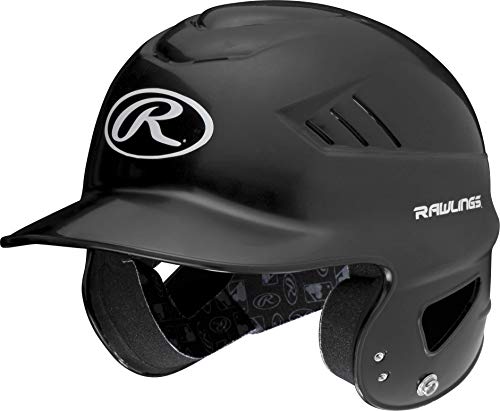 Rawlings COOLFLO Batting Helmet (One Size Fits Most)The one-size-fits-most workhorse that covers most of youth baseball.~$32 · View on Amazon →
 Easton Multi-Adjust Batting Helmet Jaw GuardThe add-on jaw guard for players who want C-flap protection.~$25 · View on Amazon →
 Franklin Youth 'Grow to Pro' Batting GlovesBatting gloves: the other half of the plate-gear kit.~$20 · View on Amazon →
FAQ
How do I measure my kid's head for a batting helmet?
Wrap a soft measuring tape around the head about one inch above the eyebrows and ears, snug but not tight. That circumference in inches converts to hat size (about 22 inches equals a size 7), and batting helmets are labeled in hat-size ranges like 6 1/2 to 7 1/2.
What size batting helmet does a 7-year-old need?
Most 7-year-olds are at the top of the tee-ball range (6 1/4 to 6 7/8) or the bottom of the standard youth range (6 1/2 to 7 1/2). Measure the head: if the circumference is around 20 1/2 to 21 inches, either shell can work, and the youth OSFM shell with extra fit pads leaves growing room.
What does OSFM mean on a batting helmet?
One Size Fits Most: a shell built for a wide hat-size range (typically about 6 1/2 to 7 1/2) with interior fit pads doing the fine sizing. It genuinely covers most players from about age 7 into the early teens, which is why it is the standard youth helmet format.
Are jaw guards legal in youth baseball?
Yes, jaw guards (C-flap style) are optional and legal in essentially all baseball play, provided they are installed per the manufacturer's instructions on a compatible helmet model. They have become common at every level after high-profile facial injuries.
Do softball batting helmets require a facemask?
In fastpitch, generally yes: NFHS high school softball requires batters to wear helmets with facemasks, and most youth fastpitch sanctions require or strongly expect them. Fastpitch helmets are typically sold with the cage pre-installed, which is the easiest route.
What is NOCSAE certification and does my helmet need it?
NOCSAE is the safety standard body for athletic equipment, and sanctioned baseball and softball leagues require batting helmets that meet its standard and carry the certification stamp. Every mainstream batting helmet from the major brands is NOCSAE-certified; novelty and multi-sport helmets are not legal at the plate.
How long does a batting helmet last?
Replace after any serious impact, when the shell or padding shows damage, or when the certification label is illegible. Absent damage, treat roughly ten years as the outer limit, though most youth helmets are outgrown long before that.
We're the team behind MAVTRAX — pitch-calling software used by baseball and softball teams from 9U travel ball up. We spend our days around dugouts, gear bags and tournament weekends. Picks are chosen on specs, durability for youth-sports abuse, real-world price, and owner feedback — not on who pays the highest commission. Full criteria on how we pick.