The 5 Best Catcher's Mitts for Youth Baseball & Fastpitch (2026)
The mitt is the catcher's most personal piece of gear — and the most-misbought. We ranked the youth baseball and fastpitch mitts that actually close for small hands, break in before the season ends, and survive a hundred bullpens.
In this guide · 10 sections
- Helmet headset
- At a glance
- How to size a catcher's mitt (the 60-second version)
- The one-week break-in protocol that actually works
- Baseball vs fastpitch mitts: why they're not interchangeable
- The upgrade ladder: spend in the right order
- Mistakes parents make buying a first mitt
- A great mitt deserves great calls
- Also worth a look
- FAQ
Quick picks
Our top recommendations — full reviews below.

Key takeaways
- Buy the mitt that closes TODAY — a stiff 'grow-into-it' mitt costs your catcher a season of confidence.
- Youth baseball: 31–32.5" covers most 9U–13U catchers. Fastpitch: 33" is the standard.
- Under $90 buys a genuinely game-ready mitt — pro-stiff leather is a liability at this age, not a flex.
- A $12 break-in kit plus a week of catch beats months of 'it'll loosen up eventually.'
- Baseball and fastpitch mitts are not interchangeable — the 12" softball needs its own pocket shape.
- Plan the upgrade ladder: starter mitt at 9U, step-up leather when they commit, premium only when velocity demands it.
Watch a 10U game and you can spot it instantly: the catcher fighting a mitt that's still board-stiff in July, stabbing at balls instead of receiving them. The mitt is the one position-specific glove on the field — round, deep-pocketed, heavily padded — and the difference between the right one and the wrong one shows up on every single pitch.
We ranked these five on what actually matters for youth catchers: how fast the leather breaks in, whether a smaller hand can actually close the pocket, durability against daily bullpens, and honest price. Baseball and fastpitch both covered.
At a glance
| Pick | Best for | Price* | ||
|---|---|---|---|---|
| Rawlings Renegade 32.5" Catcher's Mitt | Best overall for youth baseball | ~$58 | View → |
 | Mizuno Prospect GXC112 31.5" | Best for smaller hands (9U–11U) | ~$64 | View → |
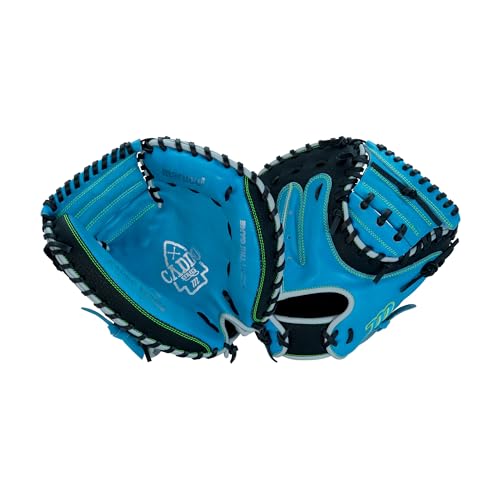 | Marucci Caddo V3 31" | Best leather quality under $100 | ~$80 | View → |
 | Wilson A700 FPCM 33" Fastpitch Mitt | Best fastpitch value | ~$90 | View → |
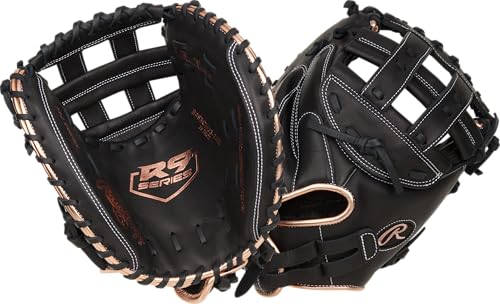 | Rawlings R9 33" Fastpitch Mitt | Premium fastpitch — serious catchers | ~$150 | View → |
 | Rawlings Glove Break-In Kit | Make any mitt game-ready, faster | ~$12 | View → |
*Prices at time of writing — they move; check the listing.
Rawlings Renegade 32.5" Catcher's Mitt
~$58
The Renegade is the classic answer for a first or second mitt, and it earns the spot: a softened leather-shell design that's 80% game-ready out of the box. The one-piece closed web and deep pocket forgive the off-center catches that define youth ball, and the smaller hand opening actually fits a 9–13-year-old instead of swallowing their hand.
Parents consistently report it catching real bullpens within the first week. For a position where confidence is everything, that timeline matters more than premium leather. The break-in shortcut that works on this specific mitt: focus the flex at the thumb-side hinge — squeeze it shut around a ball fifty times while watching TV, and the factory-softened shell does the rest.
What owners report long-term: the laces stretch before the leather wears. A mid-season lace check (tug the web and pocket laces; tighten anything with slack) keeps the pocket defined for the mitt's whole 2–3-season life. When the palm padding finally compresses to the point your catcher mentions sting on hard throwers, that's the natural handoff to a step-up mitt — not a failure, a graduation.
- Game-ready in days, not months
- Deep, forgiving pocket
- Fits real kid hands
- Proven across thousands of youth seasons
- Leather is mid-tier — a heavy-use catcher outgrows it in 2–3 seasons
- Not for high-school velocity
Mizuno Prospect GXC112 31.5"
~$64
Mizuno's youth line is built around one honest insight: small hands can't close big mitts. The Prospect's ParaShock palm pad and PowerClose technology — a hinged heel that helps the mitt snap shut — let an 8-to-11-year-old actually squeeze the ball instead of trapping it against their chest.
That close-ability is the difference between a kid who wants to catch and a kid who's scared back there. If your catcher is on the younger or smaller side, start here, not with something they'll "grow into." The ParaShock padding earns its name on the first cold-morning bullpen — sting is the quiet reason young catchers quit the position, and this mitt addresses it directly.
Expect honest trade-offs: the shallower pocket means a hard breaking ball needs an earlier squeeze, and a fast-growing 11-year-old may move up a size within 18 months. Both are acceptable costs for a mitt the kid can actually operate today — and the Prospect's resale market is healthy precisely because every team has a younger catcher coming up behind yours.
- PowerClose hinge — easiest mitt to squeeze shut
- Palm padding takes the sting out
- Light for its size
- Quality stitching for the price
- Outgrown faster by big kids
- Pocket is shallower than the Renegade's
Marucci Caddo V3 31"
~$80
Marucci built its reputation on pro-grade bats, and the Caddo line brings that same seriousness to youth leather. This is a genuine step up in materials — softer, tighter-grained leather that breaks in fast but holds its shape deep into a second and third season instead of going floppy.
For the travel-ball family already living at the field four days a week, the extra ~$20 over a starter mitt buys noticeably more glove-life. The math is straightforward: a starter mitt that survives two seasons costs about the same per season as a Caddo that survives three and still resells — quality leather here isn't a luxury, it's the cheaper path for high-volume catchers.
Care note that protects the investment: better leather rewards better habits. A thin coat of conditioner every 6–8 weeks in season, a ball wrapped in the pocket between weekends, and never leaving it in a hot trunk — that routine is the difference between a Caddo that looks broken-in and one that looks broken-down by year three. Pair it with daily receiving reps (even fifty soft tosses against a wall) and the pocket molds to your catcher's hand specifically.
- Best leather in this price band
- Holds its shape season after season
- Breaks in quickly anyway
- Looks the part
- 31" runs compact — check your catcher's measurements
- Newer line, less long-term owner history
Wilson A700 FPCM 33" Fastpitch Mitt
~$90
Fastpitch catchers need a different mitt — a bigger 33" profile and a pocket shaped for the larger 12" optic-yellow ball — and the A700 is the value sweet spot. Wilson borrows the pattern DNA from its legendary A2000 fastpitch mitts and builds it in softer, faster-breaking leather at a third of the price.
Rise balls and drop balls move late and arrive heavy; the A700's deep pocket and double-break design let a 12U–16U catcher receive that movement instead of fighting it. Parents coming over from a baseball mitt notice the difference immediately: the bigger ball seats in the pocket instead of rattling around the web, and the pop-outs that plagued the old glove mostly disappear.
The velocity ceiling is real but distant for most families: the A700 handles typical 12U–16U pitching comfortably. When your catcher is receiving genuinely elite 18U arms — the kind being recruited — the A2000's firmer pro leather earns its price. Until then, this is the standard recommendation for a reason.
- True fastpitch pattern, not a relabeled baseball mitt
- Fits the 12" ball properly
- A2000-derived shape at a fraction of the cost
- Quick break-in
- Big mitt for small 10U hands
- Velocity ceiling — elite 18U pitching deserves the A2000
Rawlings R9 33" Fastpitch Mitt
~$150
The R9 sits one tier below Rawlings' pro Heart of the Hide line and it's where "youth gear" ends and "player's gear" begins: full-grain leather, reinforced palm padding rated for real pitching velocity, and pro patterns scaled for fastpitch.
This is the mitt for the catcher who's caught for years and whose pitcher now throws genuinely hard. It asks for a real break-in (use the kit below) and repays it with seasons of service — many R9s outlast the player's high-school career. Owners describe the leather as "stiff for a month, perfect for years" — which is exactly the trade a committed catcher should make and a first-year catcher shouldn't.
One more reason serious families go this route: full-grain leather is repairable in a way starter mitts aren't. Relacing, new padding, even professional pocket reshaping are all worth doing on a $150 mitt — so the R9's real lifespan is measured in re-lacings, not seasons. It also holds resale value better than anything else on this page if your catcher's path changes.
- Full-grain leather, pro-line construction
- Padding handles 55+ mph fastpitch velocity
- Multi-season durability
- Holds resale value
- Real break-in period — start a month before season
- Overkill for rec-league catchers
Rawlings Glove Break-In Kit
~$12
Whichever mitt you choose, the $12 kit — conditioner plus a shaping band — cuts weeks off break-in. Condition lightly, pocket a ball, wrap it overnight, play catch daily. That's the whole protocol, and it works on every mitt on this list.
The kit's second life is maintenance: the same conditioner, applied thin every couple of months in season, keeps broken-in leather from drying out and cracking — especially for teams playing in hot, dry climates where a mitt lives in a trunk-temperature gear bag. One kit covers a family's worth of gloves for a year or more.
Application technique matters more than product: a pea-sized amount worked in with fingers (not poured), focused on the pocket, hinge and laces, then buffed with a rag. If the mitt looks wet, you used triple what it needed — over-oiled leather gets heavy and floppy, the opposite of what a catcher wants.
- Works on every leather mitt
- Cheapest meaningful upgrade on this page
- Prevents the damage DIY methods cause
- Still requires actual catch — no shortcut around reps
- Easy to over-apply; thin coats
How to size a catcher's mitt (the 60-second version)
Mitts are measured by circumference, so the numbers run bigger than fielder's gloves — don't panic at "32.5 inches." Rough guide: ages 8–11 → 31–31.5", ages 11–14 → 32–32.5", high school+ → 33–34". Fastpitch runs 33" from about 12U because of the bigger ball. The real test is the squeeze: in the store or on day one, your catcher should be able to close the mitt one-handed around a ball. If they can't, it's too big or too stiff — today, when it matters.
Two refinements the chart misses. Hand size beats age: a big-handed 10-year-old belongs in the 32–32.5" band, a small 12-year-old in 31.5". And wrist adjustment is half the fit: most youth mitts have a lace or strap closure at the wrist — snugging it so the mitt can't rotate on the hand fixes most "it feels too big" complaints without buying anything.
The one-week break-in protocol that actually works
Modern youth leather doesn't need months — it needs a focused week. Day 1: thin coat of conditioner over pocket, hinge and laces. Every evening: 5 minutes of mallet work (or a hammer wrapped in a sock) into the pocket, then 50 one-handed squeezes around a ball. Every night: ball in the pocket, wrapped with the band. Every day possible: real catch — nothing shapes a pocket like actual receiving.
- Soft-shell mitts (Renegade, Prospect, A700): game-ready in about a week.
- Full-grain leather (Caddo, R9): keep the protocol going 3–4 weeks; buy them a month before season.
- What to never do: oven, microwave, water bucket, steaming-then-game-tomorrow. Heat and soak both shorten leather life.
Baseball vs fastpitch mitts: why they're not interchangeable
It's not marketing — the ball is different. A baseball is 9" around; a fastpitch softball is 12". A fastpitch mitt is built with a wider, shallower-angled pocket and a bigger overall profile (33"+) so the larger ball seats and sticks, plus finger stalls and hand openings sized for the players who actually catch fastpitch. Put a 12" ball into a baseball mitt's pocket and it perches on top, popping out on anything caught off-center — which behind the plate is half the catches.
If your kid plays both (common at 10U–12U), the fastpitch mitt is the safer single glove: a baseball seats fine in the bigger pocket, while the reverse fails. Families with a committed two-sport catcher eventually carry both — but the fastpitch mitt is the one to buy first.
The upgrade ladder: spend in the right order
Mitt money follows commitment, not the other way around. Rung one (first season): a $58–$64 starter — Renegade or Prospect — that closes today. Rung two (the kid sticks): step-up leather like the Caddo at ~$80, when they're catching multiple times a week and the starter's padding flattens. Rung three (committed + velocity): the R9 tier at ~$150, when their pitchers throw hard enough that padding and pocket integrity genuinely matter. Skipping rungs is how families end up with a $150 mitt in a closet.
The budget-vs-premium math over four seasons: two starter mitts ≈ $120 and the second one is being outgrown anyway; starter + step-up ≈ $140 with better gear in years two through four and real resale on both. For any catcher who plays past one season, the ladder is cheaper than re-buying the bottom rung.
Mistakes parents make buying a first mitt
Buying to grow into — the #1 error; an unclosable mitt teaches trapping and costs confidence. Buying dad's old 34" mitt down — adult patterns swallow small hands even when the kid is tall. Confusing stiff with quality — at 9U, board-stiff leather is a defect, not a feature. Skipping break-in entirely — even "game-ready" mitts need a few days of squeezes and catch. Buying a baseball mitt for a fastpitch catcher because it was on sale — see above; the ball doesn't fit. And ignoring the wrist strap, the free fit adjustment that solves most floppiness complaints.
A great mitt deserves great calls
Here's the thing about gear behind the plate: the mitt receives the pitch, but something has to call it first. That's where MAVTRAX comes in — the coach taps the pitch and location on a phone, and the catcher hears it instantly in a cheap Bluetooth earpiece under the helmet. No wristband cards to decode with a runner stealing signs from second. New mitt + audio calls = a catcher who plays fast and confident. The app is completely free — the earpiece is the only purchase.
Also worth a look
 Rawlings GREAT HANDS Pancake Training GloveThe training glove that teaches receiving with the hands — perfect alongside a new mitt's break-in catch sessions.~$32 · View on Amazon →
 EvoShield Catcher's Thumb GuardSaves the catching-hand thumb during heavy bullpen weeks — cheap insurance for the hand inside the new mitt.~$25 · View on Amazon →
 SKLZ Reaction BallA $12 soft-hands trainer for daily receiving reps that shape the pocket and the catcher at the same time.~$12 · View on Amazon →
 Low-Profile IPX7 Clip SpeakerThe $15 earpiece that pairs a new mitt with instant audio pitch calls.~$15 · View on Amazon →
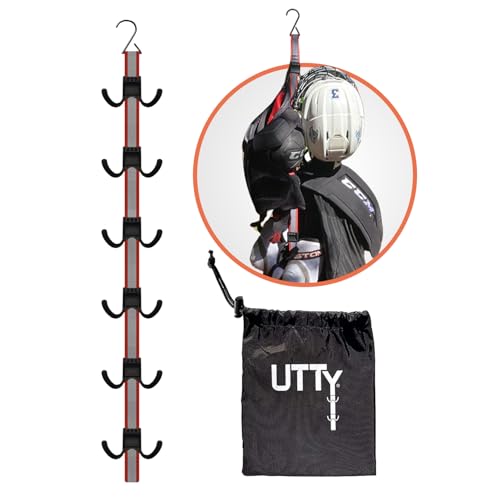 UTTY Portable Gear Drying RackDry leather slowly after wet tournaments — heat and sealed bags are what crack a good mitt.~$30 · View on Amazon →
FAQ
What size catcher's mitt for a 10-year-old?
31 to 31.5 inches for most 10-year-olds. The test that matters: they should be able to close the mitt one-handed around a ball on day one. If they can't squeeze it shut, size down — 'growing into it' costs a season of dropped pitches.
Can my catcher use a baseball mitt for fastpitch softball?
Not well. Fastpitch mitts are larger (33") with a pocket shaped for the 12-inch ball. A baseball mitt will trap and pop out the bigger softball. If your catcher plays both, the fastpitch mitt is the safer crossover.
How long does break-in take?
With a conditioner kit and daily catch: about a week for softened-leather mitts (Renegade, Prospect, A700), and 3–4 weeks for full-grain leather like the R9. Buy premium mitts a month before the season starts.
How long should a youth mitt last?
Starter mitts (Renegade, Prospect): 2–3 seasons of regular use. Step-up leather (Caddo, R9): often 4+ — many R9s survive an entire high-school career. Heavy bullpen catchers wear everything out faster; conditioning a few times a season extends any of them.
Is it OK to buy a used catcher's mitt?
Often a great move — a well-broken-in starter mitt skips the break-in entirely. Check three things: laces with no fraying at the web, padding that still has spring in the palm, and a pocket that holds its shape when squeezed. Pass on anything with cracked or oil-soaked leather; that mitt is at the end of its life, not the middle.
Does my catcher need a backup mitt?
No — one well-broken-in mitt beats a rotation, because the pocket molds to your catcher's hand and habits. The exception is a catcher playing both baseball and fastpitch, who genuinely needs one mitt per ball. Put would-be backup-mitt money toward a break-in kit and lessons instead.
How should we store the mitt between seasons?
Clean it with a barely-damp cloth, apply one thin coat of conditioner, wrap it around a ball with the shaping band, and store it indoors at room temperature — never the garage or car trunk. A mitt stored hot and dry cracks; stored damp it molds. Done right, it comes out of the closet game-ready in spring.
We're the team behind MAVTRAX — pitch-calling software used by baseball and softball teams from 9U travel ball up. We spend our days around dugouts, gear bags and tournament weekends. Picks are chosen on specs, durability for youth-sports abuse, real-world price, and owner feedback — not on who pays the highest commission. Full criteria on how we pick.