Best Softball & Baseball Sunglasses for Kids (2026): Youth Sport Shades
The best youth softball sunglasses are the ones that stay on a kid's face through a sprint: polarized sport wraps sized for young players, starting around $8. A fly ball lost in the sun is the most preventable error in youth ball, and a safety risk when a kid loses a pop-up over their head. Here are the youth shades parents keep buying, from an $8 polarized pair to a sturdier ~$17 sport frame.
In this guide · 10 sections
Quick picks
Our top recommendations — full reviews below.
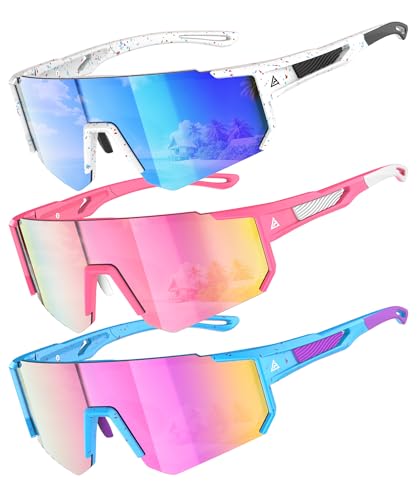
The all-around youth pick most parents buy
~$17 price and availability on Amazon
View on Amazon →Key takeaways
- Sunglasses help outfielders most — losing a fly ball in the sun causes errors and is a real safety risk — but infielders benefit on pop-ups too.
- Polarized lenses cut harsh glare off grass and water and help track the ball; non-polarized tinted shades are cheaper and still reduce brightness.
- Fit is everything for kids — a snug wrap that won't bounce off when they run, ideally with rubber nose and temple grips, and a strap for little ones.
- Look for shatter-resistant lenses and a real sport frame over fashion sunglasses for impact and security on the field.
- Our overall youth pick is the QALLY (about $17); the best value is the Tnnaiko polarized pair near $8; the Kashm is the sturdiest fit.
- Kids lose sunglasses — a cheap-but-decent pair they'll actually wear beats expensive ones left in the dugout. Buy two.
The best all-around youth softball and baseball sunglasses for most kids are the QALLY (around $17) — sport-fit shades built to stay put and cut glare for fielders — with the Tnnaiko polarized pair near $8 as the best-value way to get real glare control, and the Kashm for the most secure fit. The single most preventable error in youth ball is an outfielder losing a fly ball in the sun, and it's a safety issue too: a kid who can't pick up a descending ball can take it off the face. A decent pair of sport sunglasses fixes that — but only if it actually stays on their head while they run.
Below are the youth shades worth buying, who each is for, and how to pick polarized vs. tinted, get the fit right, and keep them from vanishing.
At a glance
| Pick | Best for | Price* | ||
|---|---|---|---|---|
| QALLY Kids Baseball/Softball Sunglasses | The all-around youth pick most parents buy | ~$17 | View → |
 | Tnnaiko Kids Polarized Sport Sunglasses | The cheapest way to get real polarized glare control | ~$8 | View → |
 | SEKKAF Youth Baseball/Softball Sunglasses | An inexpensive "won't-cry-if-lost" pair | ~$10 | View → |
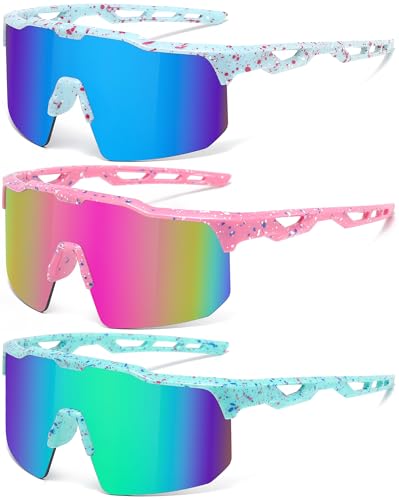 | Kashm Youth Baseball/Softball Sunglasses | The most secure fit for hard-charging players | ~$17 | View → |
*Prices at time of writing — they move; check the listing.
QALLY Kids Baseball/Softball Sunglasses
~$17
The QALLY is the youth sport pair we'd point most parents to first: sport-fit shades designed to stay put on a child's face and cut glare for kids tracking fly balls. The wrap shape and youth sizing are aimed squarely at active play, so they don't slide down or bounce off on a sprint to the warning track. At around $17 it sits in the sweet spot — nice enough to feel like real gear, cheap enough that a lost pair won't ruin your week.
If you want one pair that covers most kids from rec ball through travel ball without overthinking it, start here. Pair them with a bat backpack with a dedicated pocket so they don't get crushed at the bottom of the bag.
- Sport fit built to stay on during active play
- Youth sizing that fits kids' faces
- Cuts glare for fielders tracking the ball
- Priced so a lost pair isn't a disaster
- Not as premium as adult-brand sport shades
- Lens tint/feel can vary unit to unit
Tnnaiko Kids Polarized Sport Sunglasses
~$8
If you want polarized lenses — the kind that actually cut harsh glare off grass and water and help a kid track the ball — the Tnnaiko is the cheapest way there at around $8. Polarization is the upgrade that matters most on a bright field, and getting it at this price is hard to argue with. It's the value pick: real glare control for the cost of a couple of snack-bar trips.
At this price they're not built like premium sport shades, but for a fast-growing kid who'll size up next season anyway, that's exactly the point. Buy a pair, see if your player likes the polarized look, and don't lose sleep when one disappears.
- Polarized lenses at a rock-bottom price
- Cuts glare off grass and water
- Helps kids track the ball on bright days
- Cheap enough to buy multiples
- Budget build won't match premium sport frames
- Some players dislike how polarization interacts with screens/scoreboards
SEKKAF Youth Baseball/Softball Sunglasses
~$10
The SEKKAF is an inexpensive, light youth pair that does the basic job: cut the brightness so a kid can keep their eyes open and find the ball. Around $10, it's the pair you hand a child knowing it might not survive the season — and that's fine. For rec ball, a first pair, or a stash of backups, it's an easy buy.
Don't expect premium polarization or a locked-in sport fit at this price, but as a light, low-stakes pair that protects a kid's eyes on a sunny Saturday, it earns its spot.
- Inexpensive and light on a kid's face
- Fine as a backup or first pair
- Low stakes if it gets lost
- Reduces brightness for easier ball tracking
- Basic build and fit
- Not a long-term "keeper" pair
Kashm Youth Baseball/Softball Sunglasses
~$17
The Kashm is the sturdier pick — a more robust sport frame with a secure fit for active play. If your player is the type who dives for balls, slides headfirst, and treats every pair of sunglasses like a stress test, this frame is built to hold up and stay on better than the budget options. At around $17 it's the same price as the QALLY but leans toward durability and lockdown fit over the absolute lightest feel.
Good for older or more aggressive youth players, or any kid who keeps shaking lighter shades loose. Combine it with a dedicated bag pocket and you've got eyewear that survives the season.
- Sturdier sport frame than budget pairs
- Secure fit that holds up during hard play
- Good for aggressive, hard-charging players
- Reasonable price for the durability
- A touch heavier than the lightest youth shades
- Sturdier build can feel like more on smaller kids
Why young players — especially outfielders — need sunglasses
Outfielders need sunglasses most, because the most preventable error in youth ball is losing a fly ball in the sun — and it's a safety issue, not just a missed catch. A kid camped under a pop-up who suddenly can't see the ball can take it off the face, and that's how freak injuries happen. A pair of shades that cuts the glare lets them keep their eyes open and stay on the ball all the way into the glove.
Infielders benefit too. Pop-ups on the infield go straight up into the brightest part of the sky, and a third baseman or shortstop reading a towering foul ball faces the same glare an outfielder does. Even players who only field grounders appreciate not squinting through a sunny afternoon. Sunglasses aren't pampering — they're the cheapest way to turn a sun-blinded error into a routine out.
Polarized vs. non-polarized: which to buy
Polarized lenses cut the harsh glare bouncing off grass, dirt, and water and help kids track the ball cleanly; non-polarized tinted lenses simply darken everything and cost less. On a bright field, polarization is the upgrade that makes the most difference — it kills the blinding shine off a wet outfield or a sun-struck infield and lets a player pick the ball up against the sky. The one common complaint is that polarization can interact oddly with certain screens (phones, some scoreboards and LCDs), making them look dark or rainbow-tinted — but on the field, where it counts, polarization helps.
Non-polarized tinted shades are the budget path: they reduce overall brightness and protect the eyes, just without the targeted glare-cutting. For a young, fast-growing kid, a cheap tinted pair is a perfectly reasonable start; step up to polarized once you know they'll keep them on.
| Polarized | Non-polarized tinted | |
|---|---|---|
| Glare off grass/water | Cuts it noticeably | Just darkens it |
| Tracking the ball | Helps most | Helps a little |
| Cost | Higher | Lower |
| Screens/scoreboards | Can look odd | Normal |
| Best for | Bright fields, keeper pairs | Budget, first/backup pairs |
Fit for kids: making them stay on
For a child, fit beats every other feature — you want a snug wrap that won't bounce off when they run, ideally with rubber nose and temple grips, and a strap for little kids. A pair that slides down the nose or flies off on a sprint gets pushed onto the cap brim and forgotten; a snug wrap stays put through a dive and a slide. Rubberized nose pads and temple tips grab the skin and keep the frame locked even when a kid is sweaty.
For the youngest players, an adjustable strap or croakies turns "constantly falling off" into "stays on all game." Buy to fit the child's face now — kids' sport shades are sized for smaller heads for a reason, and an adult pair will never sit right no matter how cheap it was.
| Age | What matters most |
|---|---|
| Little kids (rec/tee-ball) | Snug youth fit + a strap so they can't fall off |
| 8U–12U | Youth wrap with rubber nose/temple grips |
| Older / aggressive players | Secure, sturdier frame that won't shake loose |
Lens and impact safety
Choose shatter-resistant lenses and UV protection, and pick a real sport frame over fashion sunglasses. A field is a place where a ball or an elbow can hit a kid's face, so lenses that resist shattering matter more than they would off the field, and a wraparound sport frame holds the lenses and protects the sides better than thin fashion frames. Sport shades are also built to flex and grip rather than snap, which helps them survive both impacts and the bottom of a gear bag.
Manufacturers describe their own lens and UV ratings, so check each product's listing for the specifics rather than assuming a number — but as a rule, a purpose-built youth sport pair is the right tool, and a pair of fashion sunglasses borrowed from the house is not.
The price reality: kids lose sunglasses
Kids lose sunglasses, so a cheap-but-decent pair they'll actually wear beats an expensive pair left in the dugout — and the smart move is to buy two. There's no point spending big on premium shades that get sat on, dropped in the dirt, or left on a bench three towns away. The pairs here run roughly $8 to $17 on purpose: that's the range where the gear is good enough to do its job but cheap enough that losing one isn't a crisis.
Buying two — one to wear and one in the bag — means a sunny game is never ruined by a missing pair, and you're not tempted to skip protection because "we can't find them." For a fast-growing player who'll need a bigger size next year anyway, spending less and replacing often is simply the rational play.
When a strap or croakies makes sense
Add a strap or croakies whenever the player is young, hard-charging, or keeps losing pairs — it converts sunglasses from "constantly falling off" into "stays on all game." For little kids especially, a strap is the difference between shades that help and shades that spend the game on the dugout floor. It also keeps the pair from flying off on a dive or a hard turn, and lets a kid drop them to their chest between innings instead of setting them down (and forgetting them).
Many youth sport sunglasses either include a strap or accept a standard one. If your player is the type who's already lost a pair, add the strap before the next game — it's a couple of dollars that protects a $17 investment and, more importantly, keeps their eyes covered when the sun's in play.
Also worth a look
 RIP-IT Defense Fielder's Mask (Youth)A fielding mask for infielders~$40 · View on Amazon →
 Rawlings REMIX Backpack Equipment BagA bag to keep them from getting lost~$20 · View on Amazon →
FAQ
What are the best softball or baseball sunglasses for kids?
For most kids, the QALLY (around $17) is the best all-around youth pick — sport-fit shades built to stay put and cut glare for fielders. The Tnnaiko polarized pair (around $8) is the best value for real glare control, and the Kashm is the sturdiest, most secure fit for hard-charging players.
Do kids really need sunglasses for softball or baseball?
Yes, especially outfielders. Losing a fly ball in the sun is the most preventable error in youth ball and a real safety risk — a kid who can't see a descending ball can take it off the face. Infielders benefit on pop-ups too, which go straight up into the brightest part of the sky.
Are polarized sunglasses better for baseball and softball?
On the field, yes — polarized lenses cut the harsh glare off grass and water and help kids track the ball. The main downside is that polarization can make some screens and scoreboards look odd. Non-polarized tinted shades are cheaper and still reduce brightness, which is fine as a first or backup pair.
How should kids' sport sunglasses fit?
Snug, like a wrap that won't bounce off when they run, ideally with rubber nose and temple grips that hold even when a kid is sweaty. For little kids, add a strap or croakies. Buy to fit the child's face now rather than sizing up — an adult pair won't sit right.
What lens features matter for safety?
Look for shatter-resistant lenses and UV protection, and choose a real sport frame over fashion sunglasses — a wraparound sport frame holds the lenses and protects the sides better, and is built to flex and grip rather than snap. Check each product's listing for its specific lens and UV ratings.
How much should I spend on kids' baseball sunglasses?
Roughly $8 to $17. Because kids lose and sit on sunglasses, a cheap-but-decent pair they'll actually wear beats expensive ones left in the dugout. The smart move is to buy two — one to wear and one in the bag.
Should I get a strap for my kid's sunglasses?
If your player is young, hard-charging, or keeps losing pairs, yes. A strap or croakies turns sunglasses from "constantly falling off" into "stays on all game," keeps them from flying off on a dive, and lets a kid drop them to their chest between innings instead of misplacing them.
Can the same sunglasses be used for softball and baseball?
Yes — the function is the same in both sports, and all the picks here work for either. Buy to fit the player's face and the kind of glare control you want, not the sport label.
We're the team behind MAVTRAX — pitch-calling software used by baseball and softball teams from 9U travel ball up. We spend our days around dugouts, gear bags and tournament weekends. Picks are chosen on specs, durability for youth-sports abuse, real-world price, and owner feedback — not on who pays the highest commission. Full criteria on how we pick.