Best Fastpitch Softball Outfield Gloves (2026): 12.5"+ Picks by Budget
Outfielders need reach, a deep pocket, and a glove that shields the sun on fly balls — which means a bigger 12.5"-plus mitt than the infield uses. Here are the fastpitch outfield gloves worth buying, from a $35 first glove to a game-ready step-up.
In this guide · 10 sections
Quick picks
Our top recommendations — full reviews below.
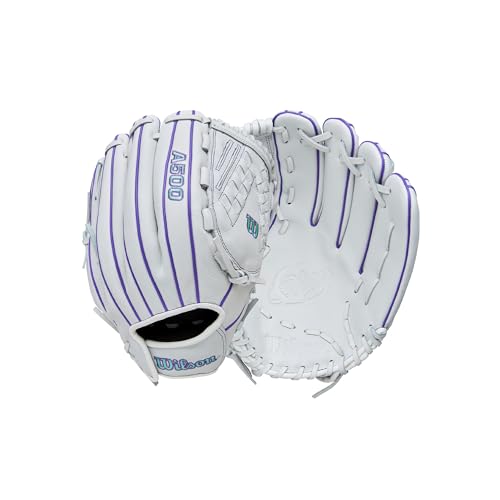
The all-around pick most players buy
~$80 price and availability on Amazon
View on Amazon →Key takeaways
- Outfielders use a bigger glove than infielders — roughly 12" to 12.5"-plus in fastpitch — because the extra length means extra reach on fly balls and gap shots.
- A deeper pocket and a closed, H-web, or trapeze web suit the outfield: they hold the ball on a long run and let a player shield the sun on high flies.
- Get the throwing hand right: the glove goes on the non-throwing hand, so a right-handed thrower buys a "RHT" (right-hand-throw) glove and wears it on the left hand.
- Leather gloves last and form a better pocket but need breaking in; synthetic gloves are game-ready out of the box and cost less, but wear out faster.
- Our overall pick is the Wilson A500 Siren (about $80); the budget pick is the Franklin Fastpitch Pro (about $35); the step-up is the Wilson A700 (about $109).
- Size by age and level, not by wish — a glove too big for a young player's hand won't close, and a glove they can't close drops fly balls.
The best all-around fastpitch outfield glove for most players is the Wilson A500 Siren at 12.5" — light, popular, and around $80 — with the Franklin Fastpitch Pro near $35 as a genuine budget first glove and the Wilson A700 (about $109) as the game-ready step-up for serious or older outfielders. The outfield is its own job: balls hang in the air, players cover ground, and the glove has to reach, hold a long throw or gap shot, and block the sun on a high fly. That's why outfielders go bigger than infielders — a longer mitt with a deeper pocket — instead of the small, quick-transfer glove a second baseman wants.
Below are the gloves worth buying ranked by value, who each is for, and how to size, web, and break one in so it's ready by opening day.
At a glance
| Pick | Best for | Price* | ||
|---|---|---|---|---|
| Wilson A500 Siren 12.5" Outfield Glove | The all-around pick most players buy | ~$80 | View → |
 | Rawlings Sure Catch Fastpitch Glove | Younger players and smaller hands | ~$53 | View → |
 | Franklin Fastpitch Pro Glove (12.5") | Cheapest way into the outfield today | ~$35 | View → |
 | Easton Fundamental 12.5" Fastpitch Glove | A real step up in leather quality | ~$92 | View → |
 | Wilson A700 12.5" Outfield Glove | Serious and older outfielders | ~$109 | View → |
*Prices at time of writing — they move; check the listing.
Wilson A500 Siren 12.5" Outfield Glove
~$80
The Wilson A500 Siren is the outfield glove you see on the most fields, and it's an easy default: a light 12.5" mitt that gives a young or developing outfielder real reach without feeling heavy at the end of a long arm. The 12.5" length is right in the outfield sweet spot for fastpitch — enough glove to run something down in the gap, still manageable for a player who's growing into the position.
It's a popular, well-rounded pick rather than a specialist's tool, which is exactly what most families want: one glove that covers the outfield from 10U up through travel ball without overthinking it. If you just want the safe choice that coaches and players already trust, this is it. You can check the current price here.
- Light for its size — stays comfortable over a long game
- 12.5" length hits the outfield sweet spot
- Popular, proven, easy to find replacements/sizes
- Good all-around pick from youth up through travel ball
- Not a specialist's high-end gamer
- A truly serious HS outfielder may want stiffer leather
Rawlings Sure Catch Fastpitch Glove
~$53
The Rawlings Sure Catch is built around one idea: helping a young player actually close the glove. Smaller hands struggle to squeeze a stiff adult-style mitt shut, and a glove that won't close drops the ball. The Sure Catch is designed to be easy to close, with colorful styling kids like and sizing aimed at smaller hands — the kind of glove that builds confidence instead of frustration.
It's the pick for the youngest outfielders and anyone moving up from tee-ball-era gear who isn't ready for a big, stiff 12.5" leather mitt yet. As the player grows and their hand strength catches up, you'll size them into something like the A500 Siren — but for early years, easy-to-close beats big-and-impressive every time.
- Designed to be easy for small hands to close
- Colorful, kid-friendly styling
- Sized for younger players
- Builds confidence catching
- Players outgrow it as their hands and reach develop
- Not a long-term outfield gamer
Franklin Fastpitch Pro Glove (12.5")
~$35
If the choice is "this $35 glove or no glove," buy the glove. The Franklin Fastpitch Pro is the lowest-priced pick here and a perfectly fine first outfield glove for rec ball — a 12.5" mitt that gives a player the outfield length they need without the sticker shock of a premium leather glove. It's not built to last five seasons or form the broken-in pocket a serious player wants, but it gets a kid into the outfield protected and catching today.
This is the smart buy for a fast-growing young player who'll size up next year anyway, or for a rec-league family who doesn't want to spend big on a position the kid may only play occasionally. Spend the money you save on a good break-in session and a tub of glove conditioner.
- Lowest price here — outfield length without the cost
- Fine for rec ball and a first outfield glove
- 12.5" gives real reach for the money
- Easy, low-risk first purchase
- Won't last as long as quality leather
- Pocket and fit less refined than mid-tier picks
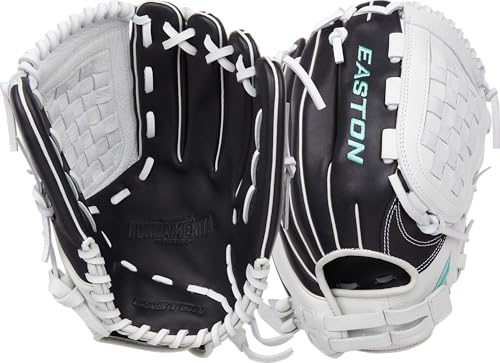
Easton Fundamental 12.5" Fastpitch Glove
~$92
The Easton Fundamental sits between the everyday A500 and the game-ready A700: a 12.5" outfield glove with better leather that breaks in to a reliable, repeatable pocket. The payoff of nicer leather is a glove that holds its shape, closes the same way every time, and lasts more seasons — which matters once a player is committed to the outfield and catching a lot of fly balls.
It needs a proper break-in to reach that point (see the break-in guide below), but once it's there you get a pocket you can trust on a dead run. This is the right call for a developing travel-ball outfielder who's outgrown a beginner glove and wants something that'll grow with their game rather than something to replace next season.
- Better leather than entry gloves — forms a reliable pocket
- 12.5" outfield length
- Holds shape and lasts multiple seasons
- Good middle ground on price and quality
- Needs breaking in before it plays its best
- More than a beginner needs to spend
Wilson A700 12.5" Outfield Glove
~$109
The Wilson A700 is the step-up gamer here: game-ready leather in a 12.5" outfield pattern for a serious or older player who wants a glove that performs and lasts. It's a clear move up from the A500 Siren in materials and feel — the kind of glove a dedicated high-school outfielder or a travel-ball regular will appreciate every time they snag a liner in the gap or run down a deep fly.
It's the most you'd reasonably spend before crossing into true premium gloves like the Mizuno Prime (in Also worth a look). For a younger or occasional outfielder it's more glove than they need; for a player who lives in the outfield and is hard on gear, it's worth the jump. See current pricing.
- Game-ready leather that performs and lasts
- 12.5" outfield pattern
- Right glove for serious/older players
- A clear step up from entry gloves
- More glove than a young/occasional player needs
- Highest price among the everyday picks
What size glove does an outfielder need?
Outfielders use a bigger glove than infielders — roughly 12" to 12.5"-plus in fastpitch — because the extra length means extra reach on fly balls and gap shots. The math is simple: an outfielder's job is to cover ground and run things down, so a longer glove that adds a few inches of reach helps. An infielder's job is the opposite — field a grounder and transfer it to the throwing hand fast — so they want a smaller, shallower glove. Buying an outfielder an infield-sized glove gives away reach; buying an infielder an outfield mitt slows their transfer.
The catch is hand strength. A 12.5" glove only helps if the player can close it; for a young or smaller player, a slightly shorter glove they can actually squeeze shut beats a big one they can't. That's the whole logic behind sizing by age below.
| Position | Typical fastpitch glove size | Why |
|---|---|---|
| Outfield | ~12"–12.5"+ | Reach and a deep pocket for fly balls |
| Middle infield | ~11.5"–12" | Quick transfer, fast hands |
| Corner infield (1B/3B) | ~12"–13" (1B mitt differs) | Reach, but quicker than outfield |
Which web type is best for the outfield?
Closed, H-web, and trapeze webs all suit the outfield because they create a deeper pocket and let a player shield the sun on a high fly ball. An outfielder catching a towering pop in the afternoon sun needs to be able to put the glove between their eyes and the ball — a closed or trapeze web does that, where an open shallow web doesn't. The deeper pocket also helps secure a ball on a long run when the player can't always squeeze it cleanly.
Infielders, by contrast, often prefer an open I-web or H-web that lets dirt fall through and the ball pop out fast for the transfer. For the outfield, lean toward the deeper, more enclosed webs. Most of the gloves above ship in outfield-appropriate web patterns out of the box, so you don't have to overthink it — but it's worth knowing why an outfield glove looks different from your shortstop's.
Leather vs. synthetic — and breaking it in
Leather gloves last longer and form a better, custom pocket, but they need breaking in; synthetic gloves are game-ready out of the box and cheaper, but they wear out faster and never break in to the same fit. A leather glove like the Easton Fundamental or Wilson A700 rewards a player who'll use it for years — once it's broken in, the pocket is shaped to their hand and catch. The trade is that it's stiff at first and has to be worked in before it plays its best.
Synthetic and lower-cost gloves (think the budget Franklin) skip the break-in — they're soft and ready on day one — which is exactly why they're good for the youngest players and rec ball. They just won't last as long or close as crisply over time. The rule of thumb: buy synthetic or entry-level for a young, fast-growing player, and step up to real leather once the player is committed and their hand has stopped growing every season.
Sizing by age and level
Size the glove to the player's age, hand strength, and level — not to the biggest glove you can buy. The single most common mistake is buying "room to grow": a glove too big for a young player's hand simply won't close, and a glove that won't close drops fly balls and kills confidence. It's better to fit the player now and size up in a year or two than to hand a 9-year-old a stiff 12.5" adult mitt.
| Level | Rough outfield glove size | Good fit from above |
|---|---|---|
| 8U–10U (younger) | ~11.5"–12", easy-close | Rawlings Sure Catch |
| 10U–12U / rec | ~12"–12.5" | Franklin Fastpitch Pro (budget), Wilson A500 Siren |
| 12U–14U travel | 12.5", real leather | Easton Fundamental |
| High school / serious | 12.5"+, game leather | Wilson A700 |
These are starting points, not hard rules — a strong, tall 11-year-old may handle a 12.5" glove fine, while a smaller 13-year-old may want to try both. When in doubt, have the player close the glove in the store or on the porch before committing.
Right-hand-throw vs. left: which to buy
The glove goes on the non-throwing hand, so a right-handed thrower buys a "RHT" (right-hand-throw) glove and wears it on the left hand; a left-handed thrower buys "LHT" and wears it on the right. This trips up first-time buyers constantly, because the labeling describes the throwing hand, not the hand the glove goes on. If your player throws with their right hand, they catch with the glove on their left hand — and you want the glove labeled right-hand throw / RHT.
Get this wrong and the glove is unusable — there's no adjusting around it, so it's the first thing to confirm before you check size or web. If you're not sure which hand your young player throws with yet, watch them throw a few balls naturally before buying; whichever hand they reach back and throw with is their throwing hand, and the glove goes on the other one.
How to break in an outfield glove
Break a new leather glove in by working it open and closed repeatedly, conditioning it lightly, and shaping the pocket around a ball — not by baking or microwaving it. A fresh leather outfield glove is stiff, and a stiff glove won't form the deep pocket the outfield needs. The goal is to soften and shape it until it closes naturally around a ball and holds one on a run.
A simple, glove-safe routine:
1. Apply a thin coat of glove conditioner or leather oil — go light; too much makes the glove heavy and soggy.
2. Work the glove open and closed by hand, flexing the hinge and the web, for several sessions over a few days.
3. Play catch with it as much as possible — real reps are the best break-in there is.
4. Shape the pocket by placing a ball in it, closing the glove around the ball, and tying or wrapping it shut overnight; repeat until the pocket holds the ball naturally.
Avoid the shortcuts people swear by online — microwaving, baking in the oven, or soaking the glove can dry out, scorch, or warp the leather and shorten its life. Patience over a couple of weeks beats a heat shortcut that ruins a $90 glove. Entry-level and synthetic gloves like the Franklin need little or none of this — they're soft enough to play right away.
Also worth a look
 Mizuno Prime Elite 12.5" Pitcher/OF GlovePremium (~$190) pitcher/outfield glove~$190 · View on Amazon →
 RIP-IT Defense Fielder's Mask (Youth)Add a fielding mask for infielders~$40 · View on Amazon →
FAQ
What is the best fastpitch softball outfield glove?
For most players, the Wilson A500 Siren at 12.5" (around $80) is the best all-around pick — light, popular, and a good fit from youth up through travel ball. The Franklin Fastpitch Pro (around $35) is the budget choice and the Wilson A700 (around $109) is the step-up for serious or older outfielders.
What size glove should an outfielder use in fastpitch?
Roughly 12" to 12.5"-plus. Outfielders use a bigger glove than infielders because the extra length adds reach on fly balls and gap shots, and the deeper pocket holds the ball on a long run. The exact size should still match the player's age and hand strength.
What web type is best for an outfield glove?
Closed, H-web, or trapeze webs are best for the outfield — they create a deeper pocket and let a player shield the sun on high fly balls. Infielders, by contrast, often prefer a more open web for faster transfers.
How do I know whether to buy a right-hand-throw or left-hand-throw glove?
The glove goes on the non-throwing hand. A right-handed thrower buys a 'RHT' (right-hand-throw) glove and wears it on the left hand; a left-handed thrower buys 'LHT' and wears it on the right. Confirm this before size or web — a glove on the wrong hand is unusable.
Should I buy leather or synthetic?
Leather lasts longer and forms a custom pocket but needs breaking in; synthetic is game-ready out of the box and cheaper but wears out faster. Buy synthetic or entry-level for young, fast-growing players, and step up to leather once the player is committed and their hand has stopped growing each season.
How do I break in a new outfield glove?
Apply a light coat of conditioner, work the glove open and closed over several days, play lots of catch, and shape the pocket by closing the glove around a ball and tying it shut overnight. Avoid microwaving, baking, or soaking — heat shortcuts can ruin the leather.
Can a younger player use a 12.5-inch glove?
Only if they can close it. A 12.5" glove adds reach, but if a young player can't squeeze it shut they'll drop fly balls. For the youngest players, an easier-to-close glove like the Rawlings Sure Catch is the better choice until their hand strength catches up.
How much should I spend on a fastpitch outfield glove?
Between about $35 (Franklin Fastpitch Pro) and $109 (Wilson A700), with the ~$80 Wilson A500 Siren as the value sweet spot for most players. Premium options like the Mizuno Prime run closer to $190 for committed, serious outfielders.
We're the team behind MAVTRAX — pitch-calling software used by baseball and softball teams from 9U travel ball up. We spend our days around dugouts, gear bags and tournament weekends. Picks are chosen on specs, durability for youth-sports abuse, real-world price, and owner feedback — not on who pays the highest commission. Full criteria on how we pick.