Best Catcher's Mitt for High School Baseball (2026): 8 Mitts for Varsity Velocity
A high school catcher needs a 33 to 34 inch catcher's mitt (32.5 for a freshman or smaller hand), and our #1 pick is the Wilson A2000 CM33SS 33 inch (about $250). Pitchers sit in the 70s and 80s and the best touch 90, and a soft 32.5 inch youth mitt with a shallow pocket starts bending the thumb back. Here are eight mitts built for that, from the $95 Mizuno Franchise and the $150 Rawlings R9 to the $450 All-Star CM3000, with the sizing answer first.
What fits High School
In this guide · 13 sections
- Helmet headset
- At a glance
- What size catcher's mitt for high school?
- Why a youth mitt fails at high school velocity
- How to choose a high school catcher's mitt
- High school catcher's mitts compared
- Break-in: how long each one actually takes
- Pocket, web and the thumb
- Rules a high school catcher should know
- Common mistakes buying a high school catcher's mitt
- The pitch call, in the helmet
- Also worth a look
- FAQ
Quick picks
Our top recommendations, full reviews below.

Best overall for a starting high school catcher: Pro Stock leather, the CM33 pattern, SuperSkin back
~$250 price and availability on Amazon
View on Amazon →Key takeaways
- Size: 33 to 34 inches for high school. 33 fits most; 32.5 works for a freshman or a smaller hand; 34 is for a big-handed senior or a program that sees a lot of velocity. Mitts are measured around the circumference.
- Best overall: Wilson A2000 CM33SS 33" (~$250). Pro Stock leather, the pattern many high school and college catchers use, and a SuperSkin back that keeps weight down.
- Best value: Rawlings R9 Series 32.5" (~$150). Pre-oiled, mostly game-ready in two weeks, stiff enough for JV velocity. Under $100: Mizuno Franchise 33.5" (~$95).
- Best pro-grade: All-Star Pro Elite CM3000 33.5" (~$450) for the recruited catcher; Rawlings Heart of the Hide R2G 33" (~$330) for pro leather that is ready sooner.
- Expect a real break-in. Pro-leather mitts take one to three months of steady work. Buy in the fall for the spring season, or buy the R9 or R2G and start catching in two weeks.
- Get the rest of the kit legal. NFHS rules require a NOCSAE-certified chest protector for catchers since 2025; see our high school catcher's gear guide.
For a high school catcher who will start, buy the Wilson A2000 CM33SS 33 inch (about $250). For a freshman, a JV catcher or a family not ready to spend $250, buy the Rawlings R9 32.5 inch (about $150). For the catcher who is being recruited, the All-Star Pro Elite CM3000 (about $450) is the mitt college coaches expect to see. Everything here is 32.5 to 34 inches from Wilson, Rawlings, All-Star, Marucci or Mizuno, with leather stiff enough that an 85 mph fastball stays in the pocket instead of folding the mitt.
The sizing answer most people came for: 33 inches for most high school catchers, 32.5 for a freshman or a smaller hand, 34 for a big-handed senior. We ranked on leather and pocket first (the thing that separates a high school mitt from a youth one), break-in time second, price third. Every mitt was re-checked in stock on September 30, 2026. Coming up from travel ball? The 14U catcher's mitt guide covers the 33 inch step for 13 and 14 year olds, and our catcher gear sizing chart covers every piece.
At a glance
| Pick | Best for | Price* | ||
|---|---|---|---|---|
| Wilson A2000 CM33SS 33" Baseball Catcher's Mitt | Best overall for a starting high school catcher: Pro Stock leather, the CM33 pattern, SuperSkin back | ~$250 | View → |
 | Rawlings R9 Series 32.5" Catcher's Mitt | Best value: pre-oiled, game-ready in two weeks, stiff enough for JV and varsity | ~$150 | View → |
 | Rawlings Heart of the Hide R2G 33" Catcher's Mitt | Pro leather with a short break-in: Heart of the Hide, 'Ready to Go' treated | ~$330 | View → |
 | Wilson A2K M23 33.5" Baseball Catcher's Mitt (Fall 2024) | Best top-tier Wilson: A2K leather on the modern M23 catcher's pattern | ~$280 | View → |
 | Marucci Cypress V4 235C1 33.5" Catcher's Mitt | The Marucci pick: Cypress leather, 33.5 inches, for the catcher who wants something other than Wilson or Rawlings | ~$300 | View → |
 | Mizuno MVP Prime 34" Baseball Catcher's Mitt | The 34 inch value pick for a big-handed catcher: soft leather, easy close | ~$140 | View → |
 | Mizuno Franchise Series Catcher's Mitt GXC90B5, 33.5" | Best under $100: a 33.5 inch baseball catcher's mitt for a backup or bullpen catcher | ~$95 | View → |
 | All-Star Pro Elite CM3000 33.5" Catcher's Mitt | The recruiting mitt: the pro-grade All-Star catchers and college coaches know on sight | ~$450 | View → |
*Prices at time of writing, they move; check the listing.
Wilson A2000 CM33SS 33" Baseball Catcher's Mitt
~$250
The CM33 is one of the most common mitts behind high school and college plates for a reason. Wilson's Pro Stock leather is stiff out of the box and holds a firm, defined pocket for years, the 33 inch pattern is the size most varsity catchers want, and the SuperSkin back cuts weight so a nine-inning doubleheader does not wear the hand out. This listing is a prior-season colorway (Fall 2024), which is why it sits below current-season A2000 pricing; the leather and pattern are the same.
The cons are price and that break-in. It is also more mitt than a freshman who may not start needs; that catcher is better served by the R9 below and an A2000 as a junior.
- Pro Stock leather; holds a pocket for years
- The 33 inch pattern most varsity catchers use
- SuperSkin back keeps weight down
- Prior colorway saves money
- Four to eight weeks of break-in
- About $250
- More mitt than a JV catcher needs
Rawlings R9 Series 32.5" Catcher's Mitt
~$150
The R9 is the mitt we recommend to every freshman catcher. It is pre-oiled full-grain leather that is mostly game-ready out of the box and fully there in about two weeks, the pocket is deep and the shell is stiff enough to hold 80 mph without folding, and at about $150 it is the cheapest mitt on this page we would trust behind a varsity plate every day. The 32.5 inch size is a half inch under the high school standard, which suits a freshman hand and still holds a fastball.
The cons are what the price implies. The leather is a step below Pro Stock or Heart of the Hide, so a catcher doing daily bullpens will have it soft by the end of year two. That is the right timeline: by then he knows whether he is the starter, and the A2000 is the next mitt.
- Game-ready in about two weeks
- Stiff enough for varsity velocity
- About $100 less than the A2000
- 32.5 inches suits a freshman hand
- Mid-tier leather; a two-season mitt for a busy catcher
- Half an inch under the 33 inch standard
Rawlings Heart of the Hide R2G 33" Catcher's Mitt
~$330
Heart of the Hide is Rawlings' pro leather, and R2G ("Ready to Go") is the factory break-in treatment that takes the usual two-month timeline down to a couple of weeks. For a catcher who needs a pro-grade mitt for a season that starts next month, this is the answer. The 33 inch pattern is the high school standard, the pocket is deep and defined, and the leather holds its shape for years once it is in.
The con is price: at about $330 (scarce) it is roughly $80 more than the A2000 colorway above, and the R2G treatment softens the leather slightly compared with an untreated Heart of the Hide. For most catchers the faster break-in is worth it; for the one who wants the stiffest possible pocket, the CM3000 below is the pick.
- Heart of the Hide pro leather
- R2G treatment: weeks of break-in, not months
- 33 inch high school standard
- Holds shape for years
- About $330 and often scarce
- Slightly softer than untreated pro leather
Wilson A2K M23 33.5" Baseball Catcher's Mitt (Fall 2024)
~$280
A2K is Wilson's top glove line, a step above the A2000 in leather selection and hand-finishing, and the M23 is Wilson's modern 33.5 inch catcher's pattern. This prior-season colorway was about $280 when we checked, which is unusually close to A2000 money for A2K leather. The M23 pocket is built for a quick transfer, and the 33.5 inch size suits a catcher with a bigger hand or one who sees a lot of velocity.
The cons: a long break-in like the A2000, a colorway (navy and flamingo) that some programs may not love, and more mitt than a JV catcher needs.
- A2K leather, Wilson's top line
- M23 33.5 inch pattern for a quick transfer
- Prior colorway price near A2000 money
- One to two months of break-in
- Bold colorway
- About $280
Marucci Cypress V4 235C1 33.5" Catcher's Mitt
~$300
Marucci's Cypress line is its pro-grade glove series, and the 235C1 catcher's mitt has become a common sight behind varsity plates. The leather is firm, the 33.5 inch pattern splits the difference between the 33 standard and the 34 big-hand size, and the solid web and deep pocket are built for velocity. Break-in is similar to an A2000, a month or two of real work.
Cons: about $300 with no R2G-style shortcut, and Marucci's glove line is younger than Wilson's or Rawlings', so resale and familiarity are lower. For the catcher who already swings Marucci and wants the matching mitt, it earns the spot.
- Pro-grade Cypress leather
- 33.5 inch pattern for a bigger hand
- Deep pocket, solid web
- About $300 with a full break-in
- Less common than A2000 or Heart of the Hide
- Often scarce
Mizuno MVP Prime 34" Baseball Catcher's Mitt
~$140
The MVP Prime is the mitt for the high school catcher with big hands who wants 34 inches without paying pro-leather money. Mizuno's soft leather breaks in fast, the pocket is deep, and the heel closes easily. At about $140 it is the cheapest 34 inch mitt here from a major brand.
The cons: it is softer than the A2000 or Heart of the Hide, so a catcher seeing a lot of 85 plus mph will feel the mitt give by year two, and 34 inches is more mitt than a freshman wants. Make sure the listing is the baseball version (GXC50PB); the fastpitch twin looks identical.
- Cheapest major-brand 34 inch mitt
- Fast break-in, easy close
- Deep pocket
- Softer than pro leather; gives by year two at high velocity
- Too big for most freshmen
- Fastpitch version looks identical
Mizuno Franchise Series Catcher's Mitt GXC90B5, 33.5"
~$95
Not every high school catcher needs a $250 mitt. The Franchise is Mizuno's value catcher's mitt, at 33.5 inches with a center pocket design that helps receive cleanly and transfer quickly. At about $95 it is the right buy for a backup catcher, a bullpen catcher, or a pitcher who catches his own bullpens. Confirm you are on the baseball version (GXC90B5), since Mizuno lists a fastpitch Franchise alongside it.
The cons are the obvious ones: mid-grade leather that softens faster than the R9, and a pocket that will not stand up to a full varsity workload for years.
- About $95
- 33.5 inch high school size
- Center pocket for quick transfers
- Mid-grade leather
- Not an everyday varsity mitt
- Fastpitch version listed alongside
All-Star Pro Elite CM3000 33.5" Catcher's Mitt
~$450
The CM3000 is the mitt of a company that makes catcher's gear and nothing else, and it is what a lot of college and pro catchers use. Japanese tanned steerhide, a 33.5 inch pattern, a pocket that stays defined for years and a break-in that takes months and is worth every week. It is the mitt for the catcher who is being recruited or the one whose family has decided this is the last mitt until college.
The obvious con is $450. The less obvious one is that a CM3000 in the hands of a freshman is a long, frustrating break-in for a kid who may switch positions. For a junior or senior with a real future behind the plate, it is the best mitt on Amazon we found.
- Pro-grade steerhide; a college standard
- Pocket stays defined for years
- All-Star catcher's-gear pedigree
- About $450
- Months of break-in
- Wasted on a catcher who may not stay at the position
What size catcher's mitt for high school?
33 inches for most high school catchers. 32.5 for a freshman or a smaller hand; 33.5 to 34 for a big-handed senior or a program that sees a lot of velocity. Catcher's mitts are measured around the circumference, so a 33 is not "bigger than a 12.75 outfield glove" in any meaningful sense; it is the standard adult catcher size. Bigger is not better: a 34 in small hands closes slowly and a slow close is a passed ball.
| Catcher | Mitt size | Picks above |
|---|---|---|
| Freshman, JV, smaller hand | 32.5 in | Rawlings R9 |
| Most varsity catchers | 33 in | A2000 CM33, Heart of the Hide R2G |
| Big hand, lots of velocity | 33.5 to 34 in | A2K M23, Marucci Cypress, CM3000, Mizuno Franchise, MVP Prime 34 |
These match our catcher gear sizing chart (33 to 34.5 inches for high school and adult). The rulebook maximum under the Official Baseball Rules is 38 inches around, so size is a fit question, not a legality one.
Why a youth mitt fails at high school velocity
Leather stiffness, not size, is the difference. A youth mitt is built soft so a 10 year old can close it; at 80 mph that softness lets the ball drive the thumb back and the pocket collapse, which is a sore hand by the third inning and a bruised thumb by the third week. High school mitts use stiffer leather (Pro Stock, A2K, Heart of the Hide, Cypress, steerhide) that holds a defined pocket and absorbs the ball instead of folding around it. The trade is break-in: stiff leather takes weeks to months to shape. The R9 and R2G are the shortcuts; the A2000, A2K, Cypress and CM3000 are the long road with the longer payoff.
How to choose a high school catcher's mitt
- Role first. Starter: pro leather (A2000, R2G, A2K, CM3000). JV or freshman: the R9. Backup or bullpen: the Franchise or MVP Prime.
- Hand size second. 32.5 for a freshman hand, 33 for most, 33.5 to 34 for a big hand. Run the close test: the catcher squeezes a ball shut one-handed, quickly, low and to the glove side.
- Calendar third. Season in a month? R9, R2G or MVP Prime. Season in four months? A2000, A2K, Cypress or CM3000.
- Budget last. $95 to $150 buys a legitimate high school mitt; $250 to $450 buys one that lasts through graduation.
High school catcher's mitts compared
| Mitt | Size | Approx. price | Break-in | Best for |
|---|---|---|---|---|
| Wilson A2000 CM33SS | 33 in | ~$250 | 4 to 8 weeks | Starting catchers |
| Rawlings R9 | 32.5 in | ~$150 | About 2 weeks | Freshmen, JV |
| Rawlings Heart of the Hide R2G | 33 in | ~$330 | About 2 weeks | Pro leather, season is close |
| Wilson A2K M23 | 33.5 in | ~$280 | 1 to 2 months | Big hand, top Wilson leather |
| Marucci Cypress 235C1 | 33.5 in | ~$300 | 1 to 2 months | Marucci fans |
| Mizuno MVP Prime | 34 in | ~$140 | Fast | Big hands, budget |
| Mizuno Franchise | 33.5 in | ~$95 | 2 to 3 weeks | Backups, bullpen |
| All-Star CM3000 | 33.5 in | ~$450 | 2 to 3 months | Recruited catchers |
Break-in: how long each one actually takes
Two weeks for the R9 and Heart of the Hide R2G; a few weeks for the Franchise and MVP Prime; one to two months for the A2000, A2K and Cypress; two to three months for the CM3000. Those are steady-work timelines: a mallet every evening, a ball in the pocket overnight, bullpens twice a week. No oven, no microwave, no steaming unless a glove shop does it. Our glove break-in guide covers the method and the care kits that speed it up. Buy a long break-in mitt in the fall for a spring season; buy a short break-in mitt if the season is close.
Pocket, web and the thumb
Every mitt here has a closed or solid web and a deep pocket; the differences are in the thumb and heel. The A2000 and CM3000 have the stiffest thumb stalls, which is what keeps a 90 mph fastball from bending the thumb back, and the reason they take longest to break in. Whatever the mitt, a thumb guard is the accessory every high school catcher ends up buying after the first bruise; the EvoShield thumb guard fits all of these. Our catcher safety gear guide has the rest.
Rules a high school catcher should know
The mitt itself is rarely a rules problem: the Official Baseball Rules cap a catcher's mitt at 38 inches around, and no high school mitt comes close. The rest of the kit is where catchers get stopped at the plate meeting. NFHS rules require a NOCSAE-certified helmet and mask and, since 2025, a chest protector that meets the NOCSAE standard; state associations can add requirements. Our high school catcher's gear guide lists NOCSAE sets and protectors. Some programs also restrict bright mitt colorways, so check with the coach before buying a bold one like the A2K listed above.
Common mistakes buying a high school catcher's mitt
- Keeping the 12U mitt. A soft 32 inch youth mitt folds at high school velocity; the thumb pays for it.
- Buying pro leather two weeks before tryouts. An A2000 or CM3000 will not be ready. Buy the R9 or R2G if the season is close.
- Going 34 inches on a freshman. It closes too slowly. 32.5 or 33 is right until the hand fills it.
- Ordering the fastpitch twin. Mizuno lists baseball and fastpitch versions of the MVP Prime and Franchise side by side. Read the model code.
- Neglecting the rest of the kit. A $450 mitt with a non-NOCSAE chest protector still does not get you on the field.
The pitch call, in the helmet
One more piece of high school gear that is not leather: the pitch call. NFHS baseball has allowed a coach in the dugout to call pitches to the catcher with a one-way electronic device since 2024, with state variations. A helmet-mount Bluetooth headset (about $13) turns the catcher's helmet into a pitch-call receiver for the free MAVTRAX app, instead of the $999 hardware kit; the install takes about a minute. Our electronic pitch calling in high school guide covers the rules.
Also worth a look
 Rawlings Glove Break-In KitMallet and conditioner cut a pro-leather break-in noticeably~$12 · View on Amazon →
 EvoShield Catcher's Thumb GuardThe thumb guard every high school catcher ends up buying~$25 · View on Amazon →
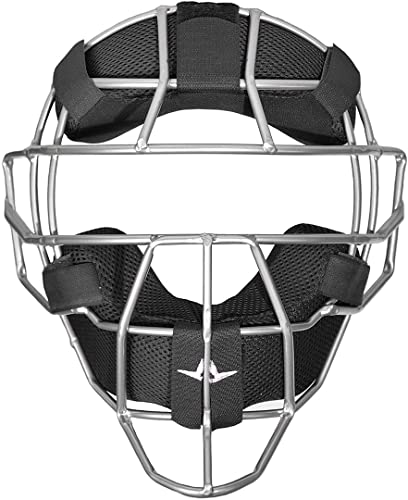 All Star FM4000 Traditional Baseball Catcher's FacemaskThe All-Star mask to match the CM3000~$130 · View on Amazon →
FAQ
What size catcher's mitt should a high school catcher use?
33 inches for most. A freshman or a catcher with smaller hands does well at 32.5; a big-handed senior or a catcher who sees a lot of velocity can go to 33.5 or 34. Sizes are measured around the mitt's circumference.
What catcher's mitt do most high school catchers use?
The Wilson A2000 CM33 is one of the most common mitts behind high school and college plates, along with the Rawlings Heart of the Hide and, at the top end, the All-Star CM3000.
What is the best catcher's mitt for high school baseball?
The Wilson A2000 CM33SS 33 inch (about $250) is our #1 for a starting catcher. The Rawlings R9 32.5 inch (about $150) is the value pick and the All-Star CM3000 (about $450) is the pro-grade choice.
Is the Rawlings R9 good enough for high school?
Yes for JV and for most varsity programs. It is stiff enough to hold 80 mph, game-ready in about two weeks, and about $150. A catcher facing a lot of 85 plus mph velocity will want pro leather by junior year.
How long does it take to break in a high school catcher's mitt?
About two weeks for pre-oiled mitts like the Rawlings R9 and Heart of the Hide R2G; one to two months for the Wilson A2000, A2K and Marucci Cypress; two to three months for the All-Star CM3000. Buy long break-in mitts in the fall.
Is the All-Star CM3000 worth $450 for high school?
Only for a junior or senior who is being recruited and will take the mitt to college. For everyone else the A2000 or Heart of the Hide R2G is pro leather for less.
Can a high school catcher use a 32.5 inch mitt?
Yes. 32.5 is common for freshmen and catchers with smaller hands, and the Rawlings R9 32.5 holds varsity velocity fine. Move to 33 when the hand fills the mitt.
What is the best cheap catcher's mitt for high school?
The Mizuno Franchise 33.5 inch (about $95) is the best under $100 for a backup or bullpen catcher. For an everyday catcher on a budget, the Rawlings R9 (about $150) or Mizuno MVP Prime 34 (about $140) hold up better.
Are electronic pitch calls legal in high school baseball?
NFHS baseball has allowed one-way coach-to-catcher electronic pitch calling since 2024, with state variations. Our electronic pitch calling in high school guide covers the details.
We're the team behind MAVTRAX, a free pitch-calling app. This is a research guide: picks are chosen on manufacturer specs, league rules, build quality and real-world price, checked against live listings, not on who pays the highest commission. We haven't hands-on tested every product. Full criteria on how we pick.