Best Catcher's Leg Guards (2026): Sizing & Top Picks
Catcher's leg guards live or die on one number: the length from the player's ankle to mid-knee. Get that right and everything else — blocking, throwing, comfort — follows. Here are four leg guards worth buying across the budget range, plus a plain-English sizing guide so the pair you order actually fits behind the plate.
In this guide · 10 sections
- Helmet headset
- At a glance
- How to size catcher's leg guards — the one measurement that matters
- Double-knee and knee savers — why they're worth it
- Wing coverage — protecting the inside of the leg
- Hinge points — how the guard moves with the catcher
- Straps, weight, and durability
- When to upgrade or replace leg guards
- Also worth a look
- FAQ
Quick picks
Our top recommendations — full reviews below.

A protective, double-knee guard on a budget
$78.35 price and availability on Amazon
View on Amazon →Key takeaways
- Size first, brand second. Measure from the top of the player's foot (at the ankle) to the middle of the kneecap; that length in inches is your leg-guard size — get this wrong and nothing else matters.
- Rough length ranges: youth ~13–14", intermediate ~15–15.5", adult ~16–17". A guard that's too long jams into the thigh in the squat; too short leaves the shin exposed.
- Double-knee / knee-savers add a wedge behind the knee that takes pressure off the joints over a long game and helps a catcher pop up faster — worth it for anyone catching real innings.
- Look for wing coverage on the inside of the knee and lower leg; that's the area an inside pitch in the dirt finds, and cheaper guards skimp on it.
- Hinge points (usually at the knee and ankle) let the guard flex when the catcher drops to block and rotate to throw — more hinges generally means more mobility.
- Our value pick is the Champro Optimus MVP (about $78); the all-around picks are the Rawlings VELO (about $110) and Easton Phenom (about $115); the premium pick is the All-Star MVP-PRO (about $250).
The best catcher's leg guards are the ones that fit the player's leg length, cover the inside of the knee, and flex enough to block and throw — and for most families that means measuring ankle-to-mid-knee first, then choosing among the Champro Optimus MVP (around $78) as the value pick, the Rawlings VELO or Easton Phenom (around $110–115) as proven all-around guards, and the All-Star MVP-PRO (around $250) for a serious catcher who wants premium protection and mobility. Leg guards are the one piece of catcher's gear where fit beats everything: a $250 set that's the wrong length is worse than a $78 set that fits, because a guard that's too long digs into the thigh in the squat and one that's too short leaves a strip of shin bare for every foul tip and blocked ball.
Below are four leg guards worth buying across the full budget range, who each is for, and a plain-English guide to sizing by length, double-knee comfort, wing coverage, hinge points, and what actually matters behind the plate.
At a glance
| Pick | Best for | Price* | ||
|---|---|---|---|---|
| Champro Optimus MVP Double Knee Leg Guards (16.5") | A protective, double-knee guard on a budget | $78.35 | View → |
 | Rawlings VELO Catcher's Leg Guards (Intermediate 15.5") | A proven all-around intermediate guard | $109.95 | View → |
 | Easton Phenom Catcher's Leg Guards (Intermediate) | A mobility-focused intermediate alternative | $114.99 | View → |
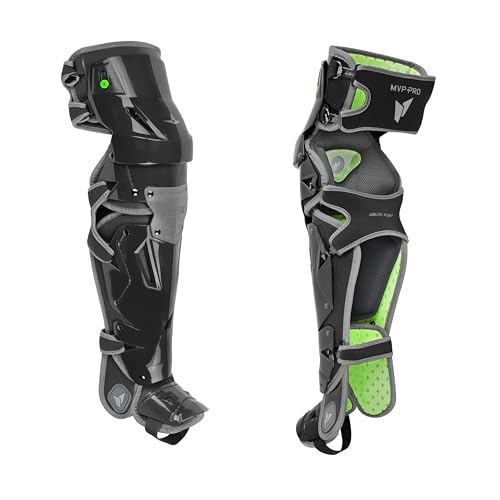 | All-Star MVP-PRO Catcher Leg Guards (Medium) | A serious catcher who wants premium protection and mobility | $249.95 | View → |
*Prices at time of writing — they move; check the listing.
Champro Optimus MVP Double Knee Leg Guards (16.5")
$78.35
The Optimus MVP is the leg guard we'd point most families toward first. It's a 16.5" adult-length double-knee guard at a price that undercuts the name-brand sets by a wide margin, and the double-knee design is exactly what you want for a player catching real innings — that extra padded wedge behind the knee takes pressure off the joints over a long game and helps the catcher pop up faster to throw.
You're not getting the lightest shell or the most refined hinges here, but the coverage is honest and the protection is real. For a rec-league or developing travel-ball catcher who needs solid, double-knee guards without spending $100-plus, the Optimus MVP is the smart buy. Pair it with a matching value chest protector and you've got an affordable, complete kit.
- Double-knee design at a budget price
- Adult 16.5" length with full coverage
- Honest protection for rec and travel ball
- Easy to pair with a value chest protector
- Heavier and less refined than premium sets
- Adult length only — confirm the fit before buying
Rawlings VELO Catcher's Leg Guards (Intermediate 15.5")
$109.95
The VELO is one of the most recognized lines in catcher's gear, and the intermediate 15.5" length makes it the safe all-around pick for a growing catcher who's outgrown youth sizing but isn't adult-sized yet. If you want the guard that's already in half the dugouts at the 12U–14U level — the proven, "you can't really go wrong" choice — this is it.
Rawlings builds the VELO to be light and mobile, with hinge points that flex when the catcher drops to block and rotate to throw. At around $110 it sits in the sweet spot between a budget guard and a true premium set: a real step up in feel and fit over an entry guard without the top-tier sticker price. For a player catching regularly at the intermediate level, the VELO grows with them through the season.
- Trusted, widely used catcher's gear line
- Intermediate 15.5" length for growing catchers
- Light and mobile with good hinge flex
- Strong value for a name-brand guard
- Intermediate length — confirm your player isn't adult-sized
- Not as protective as a premium adult set
Easton Phenom Catcher's Leg Guards (Intermediate)
$114.99
The Phenom is Easton's answer in the same intermediate, all-around lane as the VELO, and it's an easy alternative for a family that prefers the Easton fit or finds a better price on it. It's a clean, mobile guard built to flex through the block-and-throw motion, with the kind of lightweight shell that lets a catcher stay quick over a full game behind the plate.
At around $115 it's priced right alongside the VELO, so the choice between them often comes down to which fits your player's leg better and which you can get for less. If your catcher is intermediate-sized and you want a quality, no-drama guard from a trusted name, the Phenom is a sensible buy.
- Lightweight, mobility-focused build
- Intermediate sizing for growing catchers
- Trusted Easton construction
- A direct, comparable alternative to the VELO
- Priced slightly above the VELO
- Intermediate length — confirm it's not too short for an adult-sized leg
All-Star MVP-PRO Catcher Leg Guards (Medium)
$249.95
All-Star is the brand serious catchers and coaches reach for, and the MVP-PRO is the splurge in this lineup: a premium guard built for a dedicated player catching a heavy schedule. You're paying for the things you feel over nine innings — lighter weight, refined hinge points that move with the leg, secure wraparound straps that don't shift, and the kind of inside-knee and wing coverage that takes the sting out of a ball blocked in the dirt.
This isn't the guard for an occasional or first-year catcher — at around $250 it's a real investment that only pays off for a player who's behind the plate often and competing at a higher level. But for that catcher, the MVP-PRO is as good as protection and mobility get in this group.
- Premium protection with top-tier inside-knee and wing coverage
- Light weight and refined hinges for serious mobility
- Secure straps that stay put through a full game
- Built for a heavy catching schedule
- By far the most expensive here
- Sized by fit class — verify Medium matches your player
- Overkill for occasional or first-year catchers
How to size catcher's leg guards — the one measurement that matters
Leg-guard size is set by the length from the top of the player's foot (at the ankle) to the middle of the kneecap, measured with the leg bent in a slight squat — that length in inches is the size you order. Have the catcher sit or take a half-squat so the knee bends naturally, then run a tape from the ankle bone up to the center of the kneecap. That number is what manufacturers mean by leg-guard "length," and it's the single most important spec on the page.
Get it wrong in either direction and the guard fights the player. Too long, and the top of the guard jams into the thigh every time the catcher drops into the squat, pushing the kneecap out of the knee cup. Too short, and a strip of shin sits exposed above the foot or below the knee — exactly where a foul tip or a ball in the dirt will find it. When a player is between sizes, size to the squat: the bent-knee measurement is what counts, not standing height.
| Size | Ankle-to-mid-knee length | Rough age / level |
|---|---|---|
| Youth | ~13"–14" | ~7–10 (younger / smaller) |
| Intermediate | ~15"–15.5" | ~11–14 (12U–14U) |
| Adult | ~16"–17" | ~15+ (full-sized) |
These ranges are a starting point — always check the specific brand's chart, because a few makers (like All-Star) size by a fit class such as "Medium" rather than a flat inch number. When a listing gives a length in inches (the Champro is 16.5", the Rawlings VELO is 15.5"), match it directly to your catcher's measurement.
Double-knee and knee savers — why they're worth it
A double-knee design (often paired with knee savers) adds a padded wedge behind the knee that takes pressure off the joint in the deep squat, reduces fatigue over a long game, and helps the catcher pop up faster to throw. A single-knee guard protects the front of the knee; a double-knee guard wraps coverage around to the back and inside and gives the catcher something to rest against between pitches. For anyone catching real innings, that's not a luxury — it's the difference between fresh legs in the seventh and a catcher who's slow out of the squat.
Knee savers are the foam wedges that sit behind the calf and thigh; some guards build them in, others let you add or remove them. They cushion the deep crouch and reduce strain on the knees and ankles over a full game. A few coaches prefer to remove them for an older catcher who needs to spring out of the squat instantly, but for most youth and developing catchers, the comfort and the faster pop-up are worth it. The Champro Optimus MVP here is a double-knee guard out of the box.
Wing coverage — protecting the inside of the leg
"Wings" are the extra flaps of padding that wrap around the inside of the knee and lower leg, and they protect the one area an inside pitch in the dirt is most likely to find — so don't skimp on them. When a catcher squats with knees apart, the inside of each leg faces the plate and the dirt in front of it. A ball that skips inside, or a foul tip that ricochets down, heads straight for that gap. Cheaper guards trim the wings to save weight and cost; better guards keep generous inside coverage.
Check the inside edge of any guard before you buy: there should be solid, padded coverage from the knee down toward the ankle, not bare strapping. The premium All-Star MVP-PRO is built specifically to keep that inside-knee and wing coverage full, which is a real part of what you're paying for. On a budget guard, make sure the wings at least cover the inside of the knee, the most-exposed spot.
Hinge points — how the guard moves with the catcher
Hinge points are the flex joints built into a leg guard — typically at the knee and the ankle — and they let the guard bend when the catcher drops to block and rotate to throw, so more (and better-placed) hinges generally means more mobility. A leg guard is a rigid shell strapped to a joint that has to move constantly: squat, drop, spring up, rotate to second. Without hinges the guard would fight every one of those motions. With them, the shell folds where the leg folds.
A good knee hinge lets the catcher drop into a block without the guard riding up or twisting; a good ankle hinge keeps the foot free to push off for the throw. When you compare guards, look at how the panels are jointed and whether the straps keep everything aligned through the motion. The Rawlings VELO and Easton Phenom are both built around mobility for the block-and-throw motion; the premium All-Star refines those hinges further for a catcher who lives in the squat.
Straps, weight, and durability
Look for straps that stay put through a full game, the lightest weight you can get at your protection level, and a shell built to survive a season of blocked balls — these are the details that separate a guard you forget you're wearing from one you fight all game. Leg guards attach with a set of elastic straps behind the calf and thigh; cheap straps stretch out and let the guard rotate or slide down, which means the player is constantly re-seating it instead of catching. Quality straps with secure clips keep the guard aligned over the shin where it belongs.
Weight matters more than it sounds: a catcher squats and stands dozens of times a game, and ounces on each leg add up to real fatigue. Premium guards like the All-Star spend their budget partly on shedding weight without losing protection. Durability is the third leg — the shell takes direct hits from blocked balls and foul tips all season, so look for a shell and strapping that won't crack or fray. A well-built guard should outlast a growing player's fit before it wears out.
When to upgrade or replace leg guards
Replace leg guards when the player has outgrown the length, when the straps no longer hold the guard in place, or when the shell has cracked from a season of blocked balls — and step up to a premium guard when a serious catcher is behind the plate often enough to feel the difference in weight and coverage. The clearest sign it's time is fit: if the bent-knee, ankle-to-mid-knee measurement has moved up a size, the guard is now too short and leaving the shin exposed. Outgrowing the length is the most common reason a youth or intermediate guard retires.
The other signs are wear: straps that have stretched and won't keep the guard from sliding, or a shell that's cracked where it's been taking hits. For a catcher getting serious — catching most of every game, competing at a higher level — that's the natural moment to move from a value or all-around guard into a premium set like the All-Star MVP-PRO, where the lighter weight and fuller coverage actually pay off. Until then, a guard that fits and stays put beats an expensive one that doesn't.
Also worth a look
 Champro Optimus MVP Chest Protector - 12"" Length, Black (CP104B)A matching value chest protector$45.00 · View on Amazon →
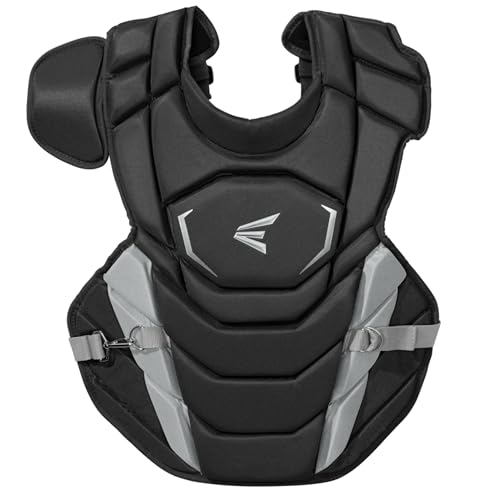 Easton | Phenom Catcher’s Chest Protector | Adult | BlackA chest protector to complete the kit$109.99 · View on Amazon →
FAQ
How do I size catcher's leg guards?
Measure from the top of the foot (at the ankle) to the middle of the kneecap with the leg in a slight squat. That length in inches is your size: youth runs about 13–14", intermediate about 15–15.5", and adult about 16–17". Always check the specific brand's chart, since some makers size by a fit class like 'Medium' instead of a flat inch number.
What size leg guards does my catcher need?
Match the ankle-to-mid-knee measurement to the size ranges: youth (~13–14") for younger and smaller players, intermediate (~15–15.5") for most 12U–14U catchers, and adult (~16–17") for full-sized players. When between sizes, size to the bent-knee squat measurement rather than standing height.
What are double-knee leg guards and do I need them?
Double-knee guards add a padded wedge behind the knee that takes pressure off the joint in the deep squat, cuts fatigue over a long game, and helps the catcher pop up faster to throw. For anyone catching real innings, they're worth it — the Champro Optimus MVP here is a double-knee guard.
What are knee savers?
Knee savers are foam wedges that sit behind the calf and thigh to cushion the deep crouch and reduce strain on the knees and ankles over a full game. Some guards build them in; others let you add or remove them. Most youth and developing catchers benefit from them, though some older catchers remove them to spring out of the squat faster.
What is wing coverage on a leg guard?
Wings are the extra padding that wraps around the inside of the knee and lower leg — the area an inside pitch in the dirt is most likely to find. Cheaper guards trim the wings to save weight, so check that the inside of the knee, at minimum, is fully padded before buying.
Why do leg guards have hinge points?
Hinge points, usually at the knee and ankle, let the rigid guard flex when the catcher drops to block and rotates to throw. Without them the guard would fight every squat and throw. More and better-placed hinges generally mean more mobility behind the plate.
How much should I spend on catcher's leg guards?
Anywhere from about $78 for a protective double-knee value set (the Champro Optimus MVP) to about $250 for a premium guard (the All-Star MVP-PRO). For most growing catchers, an intermediate all-around guard like the Rawlings VELO or Easton Phenom at around $110–115 is the sweet spot — and there's no need to overspend on an occasional catcher.
We're the team behind MAVTRAX — pitch-calling software used by baseball and softball teams from 9U travel ball up. We spend our days around dugouts, gear bags and tournament weekends. Picks are chosen on specs, durability for youth-sports abuse, real-world price, and owner feedback — not on who pays the highest commission. Full criteria on how we pick.