Best Catcher's Chest Protectors (2026): Youth to Adult
The right chest protector is the one that actually fits your catcher's torso — too long and it rides up into the throat, too short and it leaves the gut exposed. Here are the picks that matter from youth to adult, plus a sizing chart, the protection features that count, and how to read the one number that decides everything.
In this guide · 10 sections
Quick picks
Our top recommendations — full reviews below.

A first chest protector for a younger catcher
$45.00 price and availability on Amazon
View on Amazon →Key takeaways
- Sizing is the #1 decision, and it's based on torso length, not age or weight. Youth runs about 12–14.5", intermediate 15–16", and adult 16.5–18"+. A protector that doesn't fit can't protect.
- Measure from the base of the throat to the top of the belt line — that distance, in inches, is the chest-protector length you want. Round to the nearest available size.
- Look for sternum and heart protection (a reinforced center pad or removable hard plate) — it's the area that matters most for the rare but serious risk of a ball impact over the chest (commotio cordis).
- Wing and shoulder coverage protects the collarbones and sides; removable wings and adjustable straps let one shell fit a growing player and move freely on pop-ups and throws.
- Our value pick is the Champro Optimus MVP (about $45) for younger catchers; the most popular all-around adult pick is the Rawlings VELO 2.0 (about $93); the Easton Phenom (about $110) is the lightweight mobility choice; and the Rawlings MACH (about $127) is the premium adult protector.
- Lighter and lower-profile helps a catcher pop up and throw — but never trade away coverage your player needs just to shave a few ounces.
For most catchers, the best chest protector is the one that matches their torso length and carries enough sternum coverage to protect the chest — and for the majority of families that means the Rawlings VELO 2.0 (around $93) as the safe all-around adult pick, the Champro Optimus MVP (around $45) as the best-value youth option, the Easton Phenom (around $110) for a player who prizes light, mobile gear, and the Rawlings MACH (around $127) for a serious catcher who wants premium protection. Get the size right first: a protector that's too long rides up under the chin and exposes the throat, while one that's too short leaves the lower abdomen unguarded. Fit comes before brand, before price, before everything.
Below are four chest protectors worth buying from youth to adult, who each is for, a plain-English sizing chart, and a guide to the protection and mobility features that actually matter behind the plate.
At a glance
| Pick | Best for | Price* | ||
|---|---|---|---|---|
| Champro Optimus MVP Chest Protector (12") | A first chest protector for a younger catcher | $45.00 | View → |
 | Rawlings VELO 2.0 Chest Protector (Adult 17") | The all-around adult pick most catchers buy | $93.24 | View → |
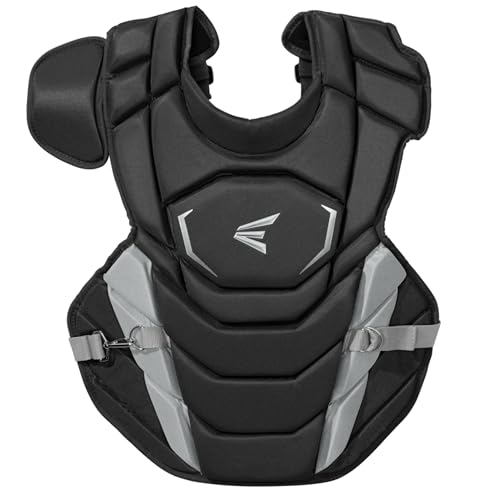 | Easton Phenom Chest Protector (Adult) | A catcher who wants light, mobile gear | $109.99 | View → |
 | Rawlings MACH Chest Protector (Adult) | A serious catcher who wants premium protection | $126.80 | View → |
*Prices at time of writing — they move; check the listing.
Champro Optimus MVP Chest Protector (12")
$45.00
The Optimus MVP is the protector we'd point a new catching family toward first. At a 12" length it's built for a younger player — the kind just learning to receive and block — and at around $45 it costs a fraction of an adult shell. For a kid who's still growing and may not catch full-time next season, that's an easy yes: real, padded protection without sinking premium money into gear they'll size out of.
It covers the essentials — chest, abdomen, and shoulder caps — with adjustable straps so it stays put through blocking and pop-ups. It won't have the contoured, low-profile feel of a high-end adult protector, but for a developing youth catcher at this price, the Optimus MVP is the smart, no-drama buy. Pair it with matching leg guards for a complete set.
- Lowest price here — easy first protector
- Youth 12" length suits smaller, developing catchers
- Adjustable straps keep it in place when blocking
- Covers chest, abdomen, and shoulders
- Built for youth — too small for a teen or adult catcher
- Less contoured and low-profile than premium shells
Rawlings VELO 2.0 Chest Protector (Adult 17")
$93.24
The VELO line is one of the most recognized names behind the plate, and the 2.0 brings that pedigree to a 17" adult length at a price that makes sense for a high-school or travel-ball catcher. If you want the protector that's already in half the dugouts — the proven, "you can't really go wrong" choice — this is it. It's the default we'd recommend to a family that doesn't want to overthink it.
At around $93 it sits in the sweet spot: a true adult shell with solid chest, sternum, and shoulder coverage and adjustable harness straps, without stepping all the way up to premium money. The 17" length fits a wide range of teen and adult torsos — measure your catcher, but for many players this is the size and the bat-tested protector that simply works.
- The popular, widely trusted adult choice
- 17" adult length fits a broad range of teen/adult torsos
- Solid chest, sternum, and shoulder coverage
- Adjustable harness for a secure fit
- Adult length is too long for younger players
- Confirm the 17" length matches your catcher's torso
Easton Phenom Chest Protector (Adult)
$109.99
The Phenom is Easton's answer for a catcher who lives and dies by getting out of the crouch fast. The appeal here is mobility: a lower-profile adult shell designed to stay light and out of the way so the player can pop up on bunts and steals and get the throw off cleanly. For an active, athletic catcher who feels boxed in by bulkier gear, that freedom of movement is worth a lot.
At around $110 it's a step up from the all-around VELO 2.0, and you're paying for that contoured, mobile feel and Easton's build. It still covers the chest, sternum, and shoulders — the point isn't less protection, it's the same job in a package that moves with the player. If your catcher's game is built on quick feet and a quick release, the Phenom is the one to try.
- Lower-profile, mobile design for quick pop-ups and throws
- Lightweight adult feel that stays out of the way
- Covers chest, sternum, and shoulders
- Trusted Easton build
- Pricier than the all-around VELO 2.0
- Adult sizing — not for younger players
Rawlings MACH Chest Protector (Adult)
$126.80
The MACH is the splurge: Rawlings' high-end adult protector built for a dedicated, full-time catcher who wants the most protection and the most refined fit. This is the upgrade for a player who's behind the plate every inning — the contoured padding, layered chest and sternum protection, and dialed-in harness are what you're paying for, and they earn their keep over a long season of foul tips and blocked balls.
At around $127 it's the most expensive protector here, and that's the catch: it's overkill for a part-time or younger catcher. But for a serious 14U-and-up player who catches as their primary position, the MACH is as good as protection gets in this lineup.
- Premium, layered chest and sternum protection
- Contoured padding and a refined, secure harness
- Built for full-time, serious catchers
- Durable season-after-season build
- By far the most expensive here
- Overkill for part-time or younger catchers
How to size a chest protector — the #1 decision
Chest-protector sizing is based on torso length, not age or weight: measure from the base of the throat to the top of the belt line, and that distance in inches is the protector length you want. Youth protectors generally run about 12–14.5", intermediate 15–16", and adult 16.5–18" and up. Get this number right and most of the buying decision is already made; get it wrong and even the best shell can't do its job.
Why it matters so much: a protector that's too long rides up into the throat and chin when the catcher crouches, leaving the neck exposed and the gear uncomfortable; one that's too short leaves the lower abdomen and ribs unguarded. When a player is between two sizes, the better-fitting (usually slightly shorter) option that doesn't ride up is the safer pick. Round your measurement to the nearest available length and confirm the fit in the crouch.
| Catcher | Rough age | Torso (throat → belt) | Chest protector length |
|---|---|---|---|
| Tee-ball / youngest | ~5–7 | under 12" | ~12" (smallest youth) |
| Youth | ~7–12 | 12"–14.5" | 12"–14.5" |
| Intermediate | ~12–15 | 15"–16" | 15"–16" |
| Adult / teen+ | ~15+ | 16.5"+ | 16.5"–18"+ |
Protection that matters — sternum, heart, and the chest
The most important protection on a chest protector is over the sternum and center of the chest, because that's the area tied to the rare but serious risk of commotio cordis — a dangerous heart-rhythm disruption that can follow a ball impact over the heart at a vulnerable instant. No chest protector eliminates that risk, but more padding over the sternum and center chest is meaningfully better, and it's where a quality shell concentrates its layered foam or a removable hard plate (sometimes branded as a sternum guard or "heart guard").
Beyond the center chest, look at overall coverage: the protector should guard the chest, the lower abdomen down to the belt, and the ribs on each side. Premium shells like the MACH layer thicker, contoured padding exactly where foul tips and blocked balls land most. When you compare two protectors, look past the marketing and check that the center-chest area is genuinely reinforced — that's the spot you least want to skimp on.
Wing and shoulder coverage
Wings and shoulder caps protect the collarbones, the tops of the shoulders, and the sides of the torso — the areas a center chest pad alone leaves exposed — and the best designs make those wings adjustable or removable. When a catcher reaches to frame an outside pitch or twists to throw, the shoulders and collarbones are squarely in the line of fire of a foul tip; padded shoulder caps and side wings cover them.
Adjustable or removable wings do two useful things. First, they let one shell fit a growing player or a range of body types. Second, a catcher who wants maximum throwing freedom can trim the bulk on the throwing-arm side, while a younger or more protection-focused player keeps full coverage. It's a small feature that has a real effect on both fit and how freely the player can move.
Weight, mobility, and the throw
A lighter, lower-profile chest protector helps a catcher pop up on bunts and steals and get the throw off cleanly — but the goal is mobility without giving up the coverage the player actually needs. Catching is athletic: the player is constantly dropping into the crouch, springing up, and rotating to throw. Gear that's bulky or sits too far off the chest fights every one of those movements and slows the release to second.
That's the whole pitch behind a mobility-first protector like the Easton Phenom — a contoured, lighter build that stays close to the body and out of the way of the throwing motion. The trade-off to watch is that "light" should never mean "thin where it counts." A good protector keeps full sternum and chest coverage while trimming bulk elsewhere. For a quick, active catcher the mobility is worth chasing; just don't sacrifice center-chest protection to get it.
Strap systems and removable pads
The harness is what keeps a chest protector in position through blocking and throwing, so look for adjustable, easy-to-reach straps — and removable or adjustable pads add fit range and let you customize coverage. Most protectors use an over-the-shoulder harness with side straps; the better ones make those straps simple to adjust and resistant to loosening mid-inning. A protector that slides out of place after a few blocks isn't protecting much.
Removable pads and wings are a bonus worth having. They let a single shell adapt as a player grows, allow a catcher to tune coverage versus mobility, and make the gear easier to air out and clean over a sweaty season. When comparing two protectors at a similar price, the one with a more adjustable harness and removable pads will usually fit better and last across more of a growing player's seasons.
When to upgrade or size up
Upgrade or size up when the protector rides up into the throat in the crouch, leaves the lower abdomen exposed, or when a part-time catcher becomes a full-time one who needs more protection. Kids grow fast, and a chest protector that fit last spring can sit too high by fall — the clearest sign is the top edge creeping toward the chin or the bottom no longer reaching the belt line. Re-measure the torso (throat to belt) each season and compare it to the chart above.
The other reason to upgrade is role: a player who's now catching every inning at 14U and up is a candidate to move from a value or all-around shell into a premium protector like the MACH, where the extra layered coverage and refined fit pay off over a long season. Until a catcher is full-time, though, there's no rush — a well-fitting affordable protector beats an expensive one that doesn't sit right. Whenever you do replace it, re-check the fit in the crouch before the first game.
Also worth a look
 Rawlings | VELO Catcher's Leg Gaurds | Baseball | Intermediate 15.5" | BlackMatching catcher's leg guards$109.95 · View on Amazon →
 Champro Optimus MVP Double Knee Baseball Catcher’s Leg Guards, 16.5" Length,Value leg guards for a youth catcher$78.35 · View on Amazon →
FAQ
How do I size a catcher's chest protector?
Measure from the base of the throat to the top of the belt line; that distance in inches is the protector length you want. Youth protectors run about 12–14.5", intermediate 15–16", and adult 16.5–18"+. Sizing is based on torso length, not age or weight, and round your measurement to the nearest available size.
What is the best catcher's chest protector?
For most catchers, the Rawlings VELO 2.0 (around $93) is the best all-around adult pick — popular, proven, and well-priced. The Champro Optimus MVP (around $45) is the best-value youth option, the Easton Phenom (around $110) is the lightweight mobility choice, and the Rawlings MACH (around $127) is the premium adult protector.
What size chest protector does a youth catcher need?
Most youth catchers use a 12–14.5" length, but go by the player's torso, not their age. Measure from the throat to the belt line and match that number; a smaller, just-starting catcher often fits a 12" protector like the Champro Optimus MVP, while a bigger pre-teen may need 14"+.
What protects against commotio cordis?
Commotio cordis is a rare but serious heart-rhythm disruption that can follow a ball impact over the heart at a vulnerable moment. A chest protector with good sternum and center-chest coverage — layered padding or a reinforced plate over the heart — reduces but does not eliminate the risk. Good fit plus solid center-chest protection is the goal, and many leagues keep an AED on site.
Should a catcher's chest protector be lightweight?
A lighter, lower-profile protector helps a catcher pop up and throw quickly, which is why mobility-first shells like the Easton Phenom are popular with active players. But never trade away center-chest and sternum coverage just to save weight — the goal is mobility without giving up the protection the player needs.
What are the wings on a chest protector for?
Wings and shoulder caps protect the collarbones, the tops of the shoulders, and the sides of the torso — areas a center chest pad alone leaves exposed when a catcher reaches to frame a pitch or twists to throw. Adjustable or removable wings let one shell fit a growing player and let a catcher tune coverage versus throwing freedom.
How much should I spend on a catcher's chest protector?
Anywhere from about $45 for a solid youth protector (the Champro Optimus MVP) to about $127 for a premium adult shell (the Rawlings MACH). For most teen and adult catchers, the ~$93 Rawlings VELO 2.0 is the value sweet spot — there's no need to overspend on a player who isn't catching full-time.
We're the team behind MAVTRAX — pitch-calling software used by baseball and softball teams from 9U travel ball up. We spend our days around dugouts, gear bags and tournament weekends. Picks are chosen on specs, durability for youth-sports abuse, real-world price, and owner feedback — not on who pays the highest commission. Full criteria on how we pick.