Hockey-Style vs. Traditional Catcher's Mask: Which Is Right?
A hockey-style helmet wraps the whole head in one piece and never moves — but it can't come off for a pop-up. A traditional two-piece mask flips off in a heartbeat to track a foul ball, but it's two pieces to fit and manage. Here's the real decision, who each style is for, and a head-to-head you can actually use to choose.
In this guide · 11 sections
- Helmet headset
- At a glance
- The core trade-off: stays on vs. comes off
- Head-to-head: hockey-style vs. traditional
- Fielding pop-ups — the deciding factor for advanced catchers
- Coverage, weight, visibility, and ventilation
- Fit — getting each style right
- Safety — both meet the standard when they fit
- The verdict — who each style is for
- Also worth a look
- FAQ
Quick picks
Our top recommendations — full reviews below.

Younger players, beginners, and anyone who wants one-piece, no-fuss protection
~$92 price and availability on Amazon
View on Amazon →Key takeaways
- Hockey-style is a single full-coverage helmet-and-mask unit that stays on through every play — including a collision at the plate — which is why it's the default for most youth and many high-school catchers.
- Traditional is a two-piece system (a wire facemask worn over a separate skull cap or under a fitted cap) that flips off in one motion so the catcher can find and field pop-ups — the single biggest reason advanced catchers prefer it.
- Both styles meet the same safety expectations when they fit correctly; for hardball play, look for the NOCSAE-compliant mark. Neither is "safer" in a blanket sense — they protect differently.
- The traditional mask generally gives better airflow, lighter weight on the face, and a wider field of view; the hockey-style gives more consistent rear/side coverage and zero fuss — nothing to flip, drop, or lose track of.
- Our reference picks are the Rawlings Renegade 2.0 hockey-style helmet (about $92) and the All-Star FM4000 traditional facemask (about $130) — note the FM4000 is the mask only and needs a separate skull cap.
- Rule of thumb: hockey-style for younger players, beginners, and anyone who wants set-it-and-forget-it protection; traditional for older, experienced catchers who reliably get out from behind the plate to field pop-ups and want maximum visibility and ventilation.
For most younger and developing catchers, a hockey-style helmet is the right call — it covers the whole head in one piece, never shifts, and stays on through a play at the plate, so the catcher has nothing to think about but the ball. For an older, experienced catcher who consistently pops up out of the crouch to chase foul balls, the traditional two-piece mask wins, because it flips off in a single motion and gives better visibility and airflow. That's the entire decision in two sentences, and it comes down to one trade-off: the hockey-style stays put, and the traditional comes off.
Below we put the two styles head-to-head on the things that actually matter behind the plate — pop-up fielding, coverage, weight, visibility, ventilation, fit, and safety — using the Rawlings Renegade 2.0 hockey-style helmet (about $92) and the All-Star FM4000 traditional facemask (about $130) as our reference for each style. One important note before you shop: a traditional facemask like the FM4000 is the mask only, and it needs a separate skull cap to complete the setup; a hockey-style helmet is a single complete unit.
At a glance
| Pick | Best for | Price* | ||
|---|---|---|---|---|
| Rawlings Renegade 2.0 Catcher's Helmet (Hockey-Style) | Younger players, beginners, and anyone who wants one-piece, no-fuss protection | ~$92 | View → |
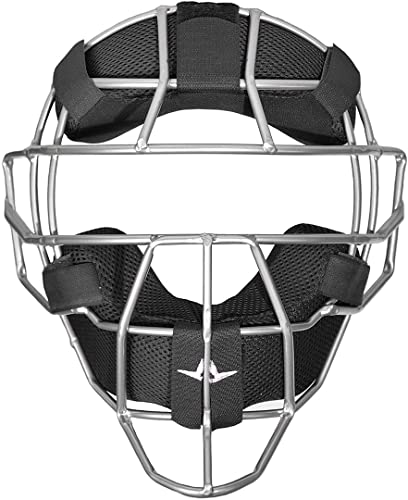 | All-Star FM4000 Traditional Catcher's Facemask | Experienced catchers who field pop-ups and want maximum visibility and airflow | ~$130 | View → |
*Prices at time of writing — they move; check the listing.
Rawlings Renegade 2.0 Catcher's Helmet (Hockey-Style)
~$92
The Renegade 2.0 is the style most youth catchers wear today, and for good reason: it's a single, full-coverage helmet-and-cage unit that goes on like a hockey or batting helmet and stays exactly where you put it. There's nothing to flip up, nothing to knock loose, and nothing to lose track of mid-play — the catcher just catches. For a beginner who's still learning footwork, blocking, and where the ball is, that simplicity is a real advantage, because the gear gets out of the way of learning the position.
This style covers the back and sides of the head as part of one shell, so coverage is consistent no matter how the catcher moves. The trade-off is the flip side of its strength: because it's one piece, it doesn't come off in a hurry, so it's harder to spin around and pick up a high pop-up the way a traditional mask lets you. It also tends to run a touch warmer and a touch heavier on the face than a bare wire mask. At around $92 as a complete unit, it's an easy, well-priced starting point for most catchers.
- One complete piece — nothing separate to buy, fit, or lose
- Stays on through plays at the plate and collisions
- Consistent full coverage of the back and sides of the head
- Simple and beginner-friendly — just put it on and catch
- Popular default for youth and many high-school catchers
- Can't be flipped off quickly to track and field pop-ups
- Generally a bit warmer and heavier on the face than a wire mask
- Field of view is slightly more enclosed than an open frame
All-Star FM4000 Traditional Catcher's Facemask
~$130
The FM4000 is a traditional two-piece mask — a wire facemask that straps on over a separate skull cap — and it's the choice of many older, advanced catchers for one decisive reason: it comes off fast. When a foul ball goes straight up, the catcher rips the mask off in a single motion, throws it clear, and tracks the ball into open air with an unobstructed view. A catcher who reliably gets out from behind the plate to field pop-ups will field more of them cleanly with a traditional mask than with a one-piece helmet they can't remove in time.
Beyond pop-ups, the open-frame design breathes better and sits lighter on the face than an enclosed helmet, and the wide-open sightlines make it easier to track the ball off the bat and read plays around the diamond. That's why you see it more as catchers get older, stronger, and more skilled at the defensive side of the position.
The trade-offs are the inverse of the hockey-style's: it's two pieces to fit and manage, and because it's removable it can be knocked askew or come off in a hard collision at the plate, which is exactly the situation the one-piece helmet is built for. At about $130 for the mask alone, a complete traditional setup also lands a bit higher than a one-piece helmet. For the right catcher, that's a price worth paying for the visibility, the airflow, and the ability to flip off and make the play.
- Flips off in one motion to find and field pop-ups
- Open frame breathes better — cooler on hot days
- Lighter on the face than an enclosed helmet
- Wider, less-obstructed field of view
- Preferred by many older, advanced catchers
- Mask only — needs a separate skull cap to complete the setup
- Two pieces to fit and manage
- Can be dislodged or come off in a collision at the plate
- Complete setup costs more than a one-piece helmet
The core trade-off: stays on vs. comes off
The entire choice between hockey-style and traditional comes down to one thing — the hockey-style helmet stays on through every play, and the traditional mask comes off in one motion — and almost every other difference flows from that. A hockey-style is a single helmet-and-cage unit, so there's nothing to remove; a traditional mask straps on over a skull cap and is built to be ripped off the instant the catcher needs to look up.
That single design difference cascades. Because the hockey-style is one piece, it covers the head consistently, never shifts, and survives a collision at the plate — but it can't be flipped off to chase a pop-up. Because the traditional mask comes off, it's lighter and airier on the face and lets the catcher track foul balls instantly — but it's two pieces to manage and can be dislodged in a hard play. Neither is universally "better." The right answer depends entirely on who's wearing it and how they play the position.
Head-to-head: hockey-style vs. traditional
| Factor | Hockey-Style Helmet (Renegade 2.0) | Traditional Mask (FM4000) |
|---|---|---|
| Design | One-piece helmet + cage | Two pieces: wire mask + separate skull cap |
| Stays on during plays | Yes — never comes off | No — flips off (by design) |
| Fielding pop-ups | Hard — can't flip off quickly | Easy — flips off in one motion |
| Coverage | Consistent full back/side coverage | Face protected; rear depends on the skull cap |
| Weight on the face | A bit heavier (enclosed shell) | Lighter (open wire frame) |
| Ventilation | Warmer, more enclosed | Better airflow, cooler |
| Field of view | Slightly more enclosed | Wide, open sightlines |
| Best for | Youth, beginners, simplicity | Older, advanced, pop-up fielders |
| Reference price | ~$92 (complete) | ~$130 (mask only) |
Read the table as a set of paired trade-offs, not a winner's column. Every place the hockey-style is stronger (coverage, staying on, simplicity), the traditional is weaker — and vice versa (pop-ups, weight, airflow, visibility). The job is to figure out which column matches your catcher.
Fielding pop-ups — the deciding factor for advanced catchers
The biggest reason experienced catchers choose a traditional mask is that it flips off in a single motion, letting them track and field pop-ups with a clear, unobstructed view — something a one-piece hockey-style helmet simply can't do quickly. When a foul ball goes straight up behind the plate, a catcher in a traditional mask rips it off, throws it clear of where the ball will land, and follows the ball into open air. A catcher in a hockey-style helmet has to make that play looking up through the cage, with no way to get the bars out of their sightline in time.
For a beginner who mostly stays low to receive and block, this barely matters — they're not the one ranging back for foul pops yet, and the helmet's stay-on coverage serves them better. But as a catcher matures into the defensive side of the position and becomes the player expected to catch every catchable foul ball, the ability to flip off and see clearly becomes a genuine performance edge. That's the moment many catchers switch from a helmet to a traditional mask.
Coverage, weight, visibility, and ventilation
The hockey-style helmet wins on consistent coverage and staying put; the traditional mask wins on weight, airflow, and field of view. The one-piece shell wraps the back and sides of the head as a single unit, so coverage never depends on a second piece staying in place — and it stays exactly where you set it through a full game. The cost is that an enclosed shell sits a little heavier on the face and runs warmer, especially on hot afternoons.
The traditional mask is the inverse. An open wire frame is lighter on the face and breathes far better, and the open design gives wide, clean sightlines for tracking the ball off the bat and reading plays. But the rear and top of the head are only covered if the catcher is wearing a proper skull cap, and the mask can be knocked askew or dislodged in contact. If your catcher overheats easily or values the widest possible view, those traditional-mask advantages are real; if they want the most coverage with the least fuss, the helmet's edge is just as real.
Fit — getting each style right
A hockey-style helmet fits like a batting or hockey helmet — snug all around with no rocking — while a traditional mask must sit firmly against the face with the chin and forehead pads in solid contact and the harness snug enough that it won't shift. Fit is what makes either style protective, and it's also where a poorly fitted mask gets dangerous: a loose mask can rotate or ride up on impact.
For the hockey-style, check that the helmet doesn't slide front-to-back or rock side-to-side when the catcher shakes their head, and that the cage gives clear sightlines to the pitcher. For the traditional setup, fit the skull cap first, then strap the mask so the forehead and chin pads make even contact and the cage sits far enough off the face that a ball can't push the bars into it. With the traditional mask you're fitting two pieces that have to work together — one more reason beginners often start with the simpler one-piece helmet.
Safety — both meet the standard when they fit
Both styles can be equally protective when they fit correctly and carry the appropriate certification — neither is blanket-"safer" than the other; they simply protect differently. For hardball play, the meaningful thing to look for is compliance with the NOCSAE standard (the body that sets performance standards for catcher's gear). A certified, well-fitted mask of either style is built to do its job.
The practical safety differences are situational. The hockey-style's edge is the play at the plate and the fact that it never comes off, so the head stays covered in a collision. The traditional mask's edge is everywhere visibility matters — and a mask that flips off cleanly is a mask the catcher isn't fighting. The wrong move with either style is the same: a poor fit. A loose hockey helmet that rocks, or a traditional mask strapped on crooked, undoes the protection the gear is designed to give. Fit it right, keep the certification mark, and replace anything that's cracked or damaged.
The verdict — who each style is for
Choose the hockey-style helmet (like the Renegade 2.0, ~$92) for younger players, beginners, and any catcher who wants one-piece, stays-on, no-fuss protection. Choose the traditional mask (like the FM4000, ~$130 plus a skull cap) for older, experienced catchers who reliably field pop-ups and want the best visibility and airflow. Both are good gear; they're built for different catchers.
If you're buying for a kid just learning the position, don't overthink it — the hockey-style helmet keeps the gear simple and the head covered while they focus on receiving, blocking, and footwork. If you're an advanced catcher who lives for popping up to snag foul balls and wants the lightest, coolest, clearest setup, the traditional mask is worth the extra piece and the extra cost. And if you genuinely fall in the middle — solid but not yet ranging back for every pop-up — the one-piece helmet's stays-on coverage is the safer default until pop-up fielding becomes a regular part of your game.
Also worth a look
Hockey-Style Catcher's HelmetThe one-piece hockey-style helmet, if you want set-it-and-forget-it~$92 · View on Amazon →
All Star FM4000 Traditional Baseball Catcher's FacemaskThe traditional flip-off mask, if you field a lot of pop-ups$129.95 · View on Amazon →
FAQ
Is a hockey-style or traditional catcher's mask better?
Neither is universally better — they're built for different catchers. A hockey-style helmet stays on through every play and is simpler, which suits younger players and beginners. A traditional mask flips off in one motion to field pop-ups and offers better visibility and airflow, which is why many older, advanced catchers prefer it.
Why do advanced catchers use a traditional mask?
Mainly so they can flip it off in a single motion to track and field pop-ups with a clear, unobstructed view — something a one-piece helmet can't do quickly. The open frame is also lighter on the face, breathes better, and gives wider sightlines, all of which matter more as a catcher becomes more defensively active.
Can you flip off a hockey-style catcher's helmet for a pop-up?
Not quickly. A hockey-style helmet is a single piece designed to stay on, so the catcher has to look up through the cage rather than removing it. If your catcher routinely chases foul pop-ups, a traditional flip-off mask makes that play much easier.
Does the All-Star FM4000 come with a skull cap?
No. The FM4000 is the facemask only — the traditional two-piece setup requires a separate skull cap (often worn over a backwards fitted cap). Budget and shop for that second piece when you buy a traditional mask.
Is a hockey-style helmet safer than a traditional mask?
Neither is blanket-safer; they protect differently. Both can be equally protective when they fit correctly and carry the right certification (look for the NOCSAE mark for hardball). The hockey-style's edge is staying on through a collision at the plate; the traditional mask's edge is visibility. A poor fit undermines either one.
Which catcher's mask is best for a youth or beginner catcher?
Usually the hockey-style helmet, like the Rawlings Renegade 2.0 (about $92). It's one complete piece that stays on and keeps the gear simple, so a young catcher can focus on learning to receive, block, and move — without managing a two-piece setup or worrying about the mask coming off.
How much does each style cost?
A complete one-piece hockey-style helmet like the Renegade 2.0 runs around $92. A traditional mask like the FM4000 is about $130 for the mask alone, so a full traditional setup costs more once you add a separate skull cap. The hockey-style is generally the more economical all-in-one choice.
We're the team behind MAVTRAX — pitch-calling software used by baseball and softball teams from 9U travel ball up. We spend our days around dugouts, gear bags and tournament weekends. Picks are chosen on specs, durability for youth-sports abuse, real-world price, and owner feedback — not on who pays the highest commission. Full criteria on how we pick.