Best Fastpitch Softball Bats for 10U–12U (2026): Youth Picks by Budget
The right youth fastpitch bat is the one your player can actually swing fast — and the one your league will let her use. Here are the picks that matter for 10U–12U, from a $40 first bat to a premium composite, plus how to read the drop weight and the all-important certification stamp.
In this guide · 10 sections
- Helmet headset
- At a glance
- Drop weight, explained — and why lighter wins for youth players
- The certification stamp — check this before you buy anything
- How to size a youth bat by height and age
- One-piece alloy vs. two-piece composite
- Barrel size — why it's usually not the deciding factor
- When to upgrade
- Also worth a look
- FAQ
Quick picks
Our top recommendations — full reviews below.

A first real fastpitch bat for younger players
~$40 price and availability on Amazon
View on Amazon →Key takeaways
- For a younger 10U player, a lighter bat (a bigger drop like -11 or -12) almost always beats a heavier one — bat speed matters more than mass at this age.
- Before you buy anything, check the certification stamp your league requires (USA Softball/ASA, USSSA, NSA, ISA); a bat that's legal in one league can be illegal in another.
- Most fastpitch bats use the standard 2¼-inch barrel, so barrel diameter is rarely the deciding factor — drop weight and length are.
- One-piece alloy bats are durable, cheaper, and ready to swing out of the wrapper; two-piece composite bats flex for more pop and less sting but cost more and may need a short break-in.
- Our value pick and best first bat is the Louisville Slugger Diva (about $40); the most popular all-around pick is the Easton Ghost Youth (about $60); the premium composite is the Louisville Slugger Kryo (about $300).
- Size the bat to the player, not the price tag — she should be able to hold it out level at arm's length for several seconds without the barrel dragging her swing.
For most 10U–12U players, the best fastpitch bat is the one that's light enough to swing fast and carries your league's required certification stamp — and for the majority of families that means the Easton Ghost Youth (around $60) as the safe all-around pick, the Louisville Slugger Diva (around $40) as the best-value first bat, and the Louisville Slugger Kryo (around $300) for a serious hitter who wants premium composite pop. At the youth level, a bat that's too heavy quietly wrecks a swing: the player drops her hands, gets late, and pops everything up. A lighter bat she can whip through the zone does more for contact and confidence than any marketing claim about "pop."
Below are four bats worth buying across the full budget range, who each is for, and a plain-English guide to drop weight, the certification stamp, and how to size a bat so it actually helps your player.
At a glance
| Pick | Best for | Price* | ||
|---|---|---|---|---|
| Louisville Slugger Diva (-11.5) Fastpitch Bat | A first real fastpitch bat for younger players | ~$40 | View → |
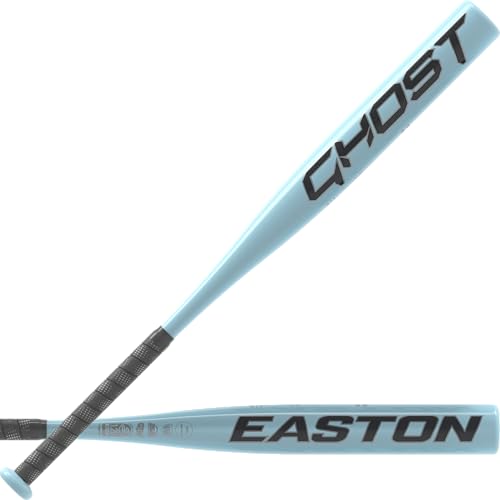 | Easton Ghost Youth Fastpitch Bat | The all-around pick most families buy | ~$60 | View → |
 | Easton Amethyst Fastpitch Bat | A dependable mid-tier alloy | ~$70 | View → |
 | Louisville Slugger Kryo (-11) Fastpitch Bat | A serious 12U+ hitter who wants the most pop | ~$300 | View → |
*Prices at time of writing — they move; check the listing.
Louisville Slugger Diva (-11.5) Fastpitch Bat
~$40
The Diva is the bat most coaches point new families toward, and it's the one we'd buy first for a younger 10U player. It's a light one-piece alloy bat with a big drop, which is exactly what a smaller hitter needs — she can actually get the barrel through the zone instead of being dragged late by the weight. At around $40 it costs a fraction of a premium composite, so it's an easy yes for a player who's still growing and learning the swing.
Because it's a single piece of alloy, the Diva is durable and ready to hit the moment it's out of the wrapper — no break-in, no babying it in cold weather. It's not going to feel like a $300 composite, but for the age and the price it's the smart buy. Pair it with a pair of youth batting gloves and you've got a complete, affordable setup.
- Light, big-drop swing weight that's easy for younger players
- Lowest price here — easy first bat
- Durable one-piece alloy, ready to hit immediately
- No break-in needed
- Not as much pop or flex as a composite
- A bigger/stronger 12U player may want to size up soon
Easton Ghost Youth Fastpitch Bat
~$60
The Ghost is one of the most recognized names in fastpitch, and the youth version brings that pedigree down to a price and a swing weight that make sense for 10U–12U. If you want the bat that's already in half the dugout — the safe, proven, "you can't really go wrong" choice — this is it. It's the default we'd recommend to a family that doesn't want to overthink it.
At around $60 it sits in the sweet spot between the bargain Diva and a true premium composite: a step up in feel and performance over an entry bat, without the sticker shock. For a player who's past her very first season and starting to make consistent contact, the Ghost Youth is the bat that grows with her swing.
- The most popular, widely trusted youth fastpitch line
- Strong feel and performance for the price
- Good step-up bat from a first alloy
- Easy to find and resell
- Pricier than an entry alloy
- Confirm the exact model carries your league's stamp
Easton Amethyst Fastpitch Bat
~$70
The Amethyst is a dependable alloy bat that's ready to swing right out of the wrapper — no break-in, no fuss. It slots in just above the Ghost Youth on price and is a good pick for a family that wants a quality, no-drama bat without stepping all the way up to composite money. Alloy bats like this one are the workhorses of youth fastpitch: durable, consistent, and forgiving of the cold-weather games that can be hard on composite.
If your player is a solid, steady hitter who doesn't need the absolute most flex and pop a composite offers, the Amethyst is an easy, sensible buy at around $70.
- Quality alloy, ready out of the wrapper
- No break-in and durable in cold weather
- Sensible step up from entry bats
- Trusted Easton build
- Less flex/pop than a two-piece composite
- Priced above the most popular Ghost Youth
Louisville Slugger Kryo (-11) Fastpitch Bat
~$300
The Kryo is the splurge: a high-end two-piece composite built for a serious hitter who's ready for a real performance bat. The two-piece composite design flexes through contact, which is what delivers the trampoline-like pop and the smoother, lower-sting feel that players notice — especially on a slight mishit. For a dedicated 12U-and-up player who's outgrowing her alloy and competing at a higher level, this is the upgrade that earns its price.
This is not the bat for a beginner or a fast-growing younger player — at around $300 it's a real investment, and the performance only pays off for a hitter with a developed swing. But for the right player, the Kryo is as good as it gets in this lineup.
- High-end two-piece composite with the most pop and flex
- Smoother feel and less sting on mishits
- Built for serious 12U+ competitive players
- Premium, season-after-season build
- By far the most expensive here
- May need a break-in and shouldn't be used in cold weather
- Overkill for beginners and younger players
Drop weight, explained — and why lighter wins for youth players
A bat's "drop" is its length in inches minus its weight in ounces, so a bigger drop number (like -11 or -12) means a lighter bat — and younger, smaller players almost always swing better with more drop. A 30-inch bat that weighs 19 ounces is a -11; the same length at 20 ounces is a -10. The bigger the drop, the lighter the bat for its length, and the easier it is for a young hitter to whip the barrel through the zone on time.
This is the single most common mistake parents make: buying "more bat" — heavier, lower drop — in the belief it adds power. At the youth level it usually does the opposite. A bat that's too heavy makes a player late and forces her to muscle the swing, killing both contact and bat speed. As a player gets older and stronger she'll naturally move toward smaller drops (a -10, then a -9 in high school), but for 10U–12U, err on the side of lighter.
| Player level | Typical drop | Why |
|---|---|---|
| Younger / smaller (10U) | -11 to -13 | Lightest swing weight for developing bat speed |
| 11U–12U | -10 to -12 | Balance of speed and a little more mass |
| 13U–14U | -10 | Stronger players can carry more weight |
| High school / 16U+ | -9 to -10 | Strength supports a heavier, lower-drop bat |
The certification stamp — check this before you buy anything
A fastpitch bat must carry the certification stamp your league requires, and a bat that's legal in one league can be flatly illegal in another — so confirm your league's required stamp before you spend a dollar. The major certifying bodies are USA Softball (formerly ASA), USSSA, NSA, and ISA. Each prints its own stamp or logo on legal bats, usually right on the barrel or just above the handle.
This trips up more families than anything else on this list. A player can show up to a tournament with a perfectly good, expensive bat and be turned away at the plate because it carries the wrong stamp — or no stamp the umpire recognizes. Some leagues accept multiple certifications; some require exactly one. The only way to know is to ask your specific league or read its rulebook, then look for that exact stamp printed on any bat before you buy.
How to size a youth bat by height and age
Bat length should match the player's height and age, and the simplest fit test is whether she can hold the bat straight out at arm's length, level to the ground, for several seconds without the barrel sagging. If the end of the bat drops, it's too heavy or too long for her right now. The chart below is a starting point — use it to pick a length, then confirm the fit with that arm's-length test in the store or driveway.
| Player height | Rough age | Typical bat length |
|---|---|---|
| 3'5"–3'8" | ~7–8 | 27" |
| 3'9"–4'0" | ~9–10 | 28"–29" |
| 4'1"–4'8" | ~10–12 | 29"–30" |
| 4'9"–5'2" | ~12–14 | 30"–31" |
| 5'3"+ | ~14+ | 31"–32" |
A second quick check: stand the bat upright next to the player's leg — if the knob reaches roughly the middle of her palm when her arm hangs down, the length is in the ballpark. When you're between two lengths for a growing kid, the shorter, lighter option is the safer bet for keeping her swing quick.
One-piece alloy vs. two-piece composite
One-piece alloy bats are durable, affordable, and ready to swing immediately; two-piece composite bats flex for more pop and less sting but cost more, may need a short break-in, and can crack in very cold weather. This is the core trade-off across this list. The Diva and Amethyst are alloy; the Kryo is premium composite; the Ghost Youth gives you a strong middle-ground feel at a moderate price.
Alloy is the practical choice for most youth players: it's cheaper, it's tough, it doesn't care about a cold morning tournament, and it performs the moment you open it. Composite is the performance choice — the flex through contact gives that lively pop and a softer feel on mishits — but you pay for it, you may need to break it in over a few dozen hits, and you should keep it out of freezing conditions to avoid cracking. For a developing 10U–12U player, alloy is rarely the wrong answer; composite earns its keep for a dedicated, older hitter.
Barrel size — why it's usually not the deciding factor
The standard fastpitch barrel is 2¼ inches in diameter, and nearly every youth fastpitch bat — including all four here — uses it, so barrel size is rarely what you're choosing between. Unlike some youth baseball categories where barrel diameter is a real decision, fastpitch is largely standardized at 2¼", which keeps the choice focused where it belongs: on drop weight, length, and material. If a listing ever shows a different barrel size, double-check it's actually a fastpitch bat and that it carries your league's stamp.
When to upgrade
Upgrade when the player has clearly outgrown the bat's length or weight, when her swing has developed enough to use a composite's performance, or when she moves to a league with a different stamp requirement. A good entry bat like the Diva can last a season or two; the signs it's time to move on are the player choking up unusually far to manage the weight, the bat being noticeably short next to her, or her swing simply outpacing what the bat can return.
For a player getting serious around 12U and up, that's also the natural moment to step from alloy into a composite like the Kryo — when a developed swing can actually take advantage of the flex and pop. Until then, there's no rush: a lighter bat she swings well beats an expensive bat she swings late. And whenever you do upgrade, re-confirm the new bat carries your league's required stamp before her first game.
Also worth a look
 Franklin Youth 'Grow to Pro' Batting GlovesBatting gloves to go with the bat~$20 · View on Amazon →
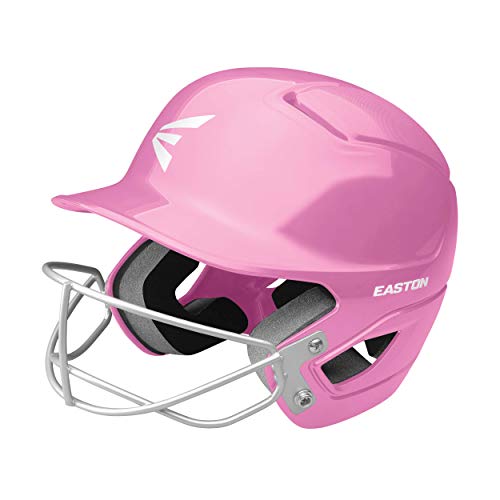 Easton ALPHA Fastpitch Helmet w/ FacemaskA batting helmet with face guard~$53 · View on Amazon →
FAQ
What is the best fastpitch softball bat for a 10U–12U player?
For most families, the Easton Ghost Youth (around $60) is the best all-around pick — popular, proven, and well-priced. The Louisville Slugger Diva (around $40) is the best-value first bat for younger players, and the Louisville Slugger Kryo (around $300) is the premium composite for a serious 12U+ hitter.
What does the 'drop' number on a bat mean?
Drop is the bat's length in inches minus its weight in ounces. A bigger drop (like -11 or -12) means a lighter bat for its length. Younger and smaller players almost always swing better with a bigger drop because it's easier to get the barrel through the zone on time.
How do I know if a bat is legal for my league?
Check the certification stamp your league requires — USA Softball (ASA), USSSA, NSA, or ISA — and look for that exact stamp printed on the bat, usually on the barrel. A bat legal in one league can be illegal in another, so always confirm your league's required stamp before buying.
What size bat should my daughter use?
Match length to her height and age (roughly 28–30 inches for most 10U–12U players), then confirm the fit: she should be able to hold the bat straight out at arm's length, level to the ground, for several seconds without the barrel sagging. If it drops, it's too heavy or long.
Is alloy or composite better for a youth player?
For most youth players, a one-piece alloy bat is the practical choice — it's cheaper, durable, and ready to hit immediately. A two-piece composite flexes for more pop and less sting but costs more, may need a break-in, and can crack in very cold weather. Composite mainly pays off for a dedicated, older hitter.
Should I buy a heavier bat so my player hits with more power?
Usually no. At the youth level a bat that's too heavy makes a player late and forces her to muscle the swing, hurting both contact and bat speed. A lighter bat she can whip through the zone does more for real hitting than added weight.
What barrel size are fastpitch bats?
The standard fastpitch barrel is 2¼ inches in diameter, and nearly all youth fastpitch bats use it. Because it's standardized, barrel size is rarely the deciding factor — focus on drop weight, length, and material instead.
How much should I spend on a youth fastpitch bat?
Anywhere from about $40 for a great first alloy bat (the Diva) to about $300 for a premium composite (the Kryo). For most 10U–12U players, the ~$60 Easton Ghost Youth is the value sweet spot — and there's no need to overspend on a player who's still growing.
We're the team behind MAVTRAX — pitch-calling software used by baseball and softball teams from 9U travel ball up. We spend our days around dugouts, gear bags and tournament weekends. Picks are chosen on specs, durability for youth-sports abuse, real-world price, and owner feedback — not on who pays the highest commission. Full criteria on how we pick.