Baseball Catching & Battery Glossary: 45+ Terms, Clearly Defined
Every term a catcher, pitcher, coach, or baseball parent needs — the battery, framing, pop time, the five-hole, indicators and more — defined in plain English, grouped so you can actually find them.
In this guide · 8 sections
Key takeaways
- The battery = pitcher + catcher; in scorekeeping the pitcher is 1 and the catcher is 2.
- Framing = receiving borderline pitches for strikes; a called strike is worth ~0.13 runs.
- Pop time = glove-to-glove time to second base; ~2.0s is the MLB average.
- The five-hole = the gap between a catcher's knees, plugged by the glove on a block.
- Indicator = a pre-set sign that tells the pitcher which following sign is live (anti-sign-stealing).
- Pop time = transfer + footwork + arm — and the transfer is the most coachable piece.
- The standard pitching distance is 60'6" (46' in Little League majors); home plate is 17" wide.
The language of the position, in one place. These are the terms you'll hear around the plate and the dugout — defined plainly, grouped by topic, and linked to the deep dives where there's more to know. Bookmark it for the next time a broadcaster, coach, or 12-year-old uses a word you'd rather not nod along to.
The glossary is organized the way a catcher actually learns the position: who's who, then receiving and the zone, then blocking and throwing, then the mental game of calling pitches, plus the equipment and the field measurements that frame all of it. Every cross-link points to a full breakdown if you want more than a one-line definition.
People & roles
| Term | Definition |
|---|---|
| Battery | The pitcher and catcher considered as one unit — scored separately (1 and 2) but coached as one. See what a battery is. |
| Tools of ignorance | Old nickname for the catcher's protective gear (mask, chest protector, shin guards) — ironic, since catching is the thinking position. |
| Handling a staff | A catcher's skill at managing pitchers — calling games, sequencing, keeping them calm — valued separately from hitting. |
| The slot | The catcher's setup position relative to the hitter and umpire, giving the ump a clean look at the pitch. |
| Personal catcher | A catcher paired with one specific pitcher who throws measurably better to him — common with knuckleballers and quirky veterans. |
| Backstop | Slang for a catcher (also the screen behind home plate that stops errant pitches). |
| Bullpen catcher | A staff member who catches relievers warming up and starters' side sessions — a key, often-unsung role in building a pitcher's feel. |
Receiving & the strike zone
| Term | Definition |
|---|---|
| Receiving | Catching the pitch cleanly and quietly — the foundation skill behind framing. See catching fundamentals. |
| Framing | Receiving borderline pitches so they're called strikes. Worth ~0.13 runs each — see pitch framing. |
| Shadow zone | Statcast's term for the band of pitches straddling the edge of the zone, where framing actually matters most. |
| One-knee stance | A modern setup with one knee down (used mainly with no runners on), lowering the catcher to receive and frame the bottom of the zone and easing wear over a season. |
| Primary / secondary stance | Primary = relaxed setup with no one on; secondary = the athletic, ready stance with runners on, so the catcher can block and throw. |
| Target | Where the catcher's glove is set to ask for the pitch — the spot on the 17-inch plate the battery is aiming at. |
| Stick it / quiet hands | Receiving a pitch and freezing the glove on the edge — no stabbing — so the call holds. |
| Beat the ball to the spot | Getting the glove to the catch point early so you receive moving toward the zone, not reaching back into it. |
| Giving with the pitch | Softening the hands on contact so a hard pitch settles quietly instead of recoiling out of the zone. |
| Pancake glove | A flat, pocketless training mitt that forces soft, give-and-stick hands — balls pop out if the hands are loud. |
Blocking, throwing & defense
| Term | Definition |
|---|---|
| Block | Smothering a pitch in the dirt with the body so it stays in front (not catching it — deadening it). See how to block pitches. |
| Five-hole | The gap between the catcher's knees; the glove drops to fill (plug) it on a block so a pitch in the dirt can't skip through. |
| Pop time | Glove-to-glove time on a throw to second base; ~2.0s is MLB average. See pop time by age. |
| Exchange (transfer) | Getting the ball from the mitt to the throwing hand and gone; the most coachable part of pop time. See throwing fundamentals. |
| Footwork (replace / jab step) | The lower-half move that turns a catch into a throw to second; efficient footwork shaves more off pop time than arm strength. |
| Passed ball vs. wild pitch | A passed ball is scored as the catcher's miss on a catchable pitch; a wild pitch is the pitcher's fault. Both let runners advance, but they're charged to different players. |
| Pitchout | A fastball thrown intentionally off the plate so the catcher can stand and throw on a suspected steal. |
| Backpick | A snap throw from the catcher to a base behind a runner who's leaning, trying to pick him off. |
| Blocking the plate / the tag | Catching a throw and applying the tag on a runner trying to score — now governed by collision rules that protect the catcher. |
| Pop-up priority | The catcher fields foul pop-ups near the plate; the spin carries them back toward the infield, so he turns his back to the diamond to track them. |
Calling the game
| Term | Definition |
|---|---|
| Signs / signals | The finger code calling pitch and location (1 = fastball, 2 = curve…). See catcher signs. |
| Indicator | A pre-set sign that tells the pitcher which of the following signs is live — used with a runner on second to beat sign-stealing. |
| Sequence / hot number | A running rule (e.g., outs-plus-one) that determines which flashed sign is the live one. |
| Cross-up | Pitcher and catcher on different signs — the catcher expects one pitch and gets another. Dangerous and avoidable. See the battery. |
| Working the count | Sequencing pitches to stay ahead; hitters are far better in counts like 2-0 and 3-1 than 0-2. See calling a game. |
| Ahead / behind in the count | Ahead = more strikes than balls (the pitcher's count); behind = more balls (the hitter's count). Drives every pitch choice. |
| The chase | A two-strike pitch deliberately off the plate, meant to be swung at — not a strike. |
| Put-away pitch | The pitch a battery trusts to finish a hitter with two strikes — usually their best swing-and-miss offering. |
| Setting up a hitter | Using earlier pitches to make the put-away pitch more effective (e.g., climbing the ladder, then a low breaking ball). |
| Tunneling | Two different pitches that look identical out of the hand and diverge late, so the hitter can't tell them apart. |
| Eye level | Moving pitches up and down to disrupt a hitter's timing — a core game-calling tool. |
| Painting / dotting | Hitting the very edge of the zone with precision. |
| Establishing the fastball | Throwing fastballs early to set a baseline of timing that off-speed pitches then disrupt. |
Want these in action rather than in a list? Start with the five catching fundamentals and work outward through the cluster.
Pitch types the battery calls
Game-calling means choosing between pitches, so here are the ones a catcher puts down most often. The exact movement varies by pitcher, but the families are standard.
| Pitch | What it does |
|---|---|
| Four-seam fastball | The straightest, hardest pitch — thrown for velocity and to attack the top of the zone. |
| Two-seam / sinker | A fastball with arm-side run and sink, used to induce ground balls and weak contact. |
| Cutter | A fastball that breaks slightly to the glove side late — bridges fastball velocity and slider movement. |
| Slider | A breaking ball with tight, lateral, glove-side break — a common two-strike put-away pitch. |
| Curveball | A slower breaking ball with bigger top-to-bottom break; used to change eye level and steal early strikes. |
| Changeup | An off-speed pitch thrown with fastball arm action but lower velocity, disrupting a hitter's timing. |
| Splitter | An off-speed pitch that tumbles down out of the zone late — a swing-and-miss weapon. |
| Knuckleball | A nearly spinless pitch that flutters unpredictably — so hard to catch that it often calls for a personal catcher and an oversized mitt. |
Gear, the field & rules
The equipment a catcher wears and the measurements that define his job. A complete youth catcher's set covers the protective basics below.
| Term | Definition |
|---|---|
| Catcher's mitt | A round, heavily padded glove with no individual finger slots, built to absorb fastballs all game. |
| Chest protector | Padded armor over the torso — the surface a catcher blocks balls into. |
| Shin guards / leg guards | Protective gear over the knees and shins, hinged so the catcher can drop into a block. |
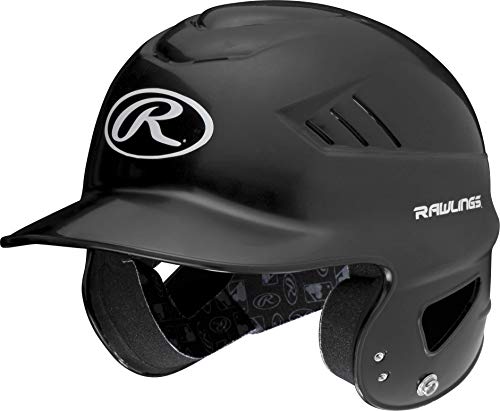
| Catcher's helmet / mask | Head and face protection — either a hockey-style helmet or a traditional mask over a skull cap. |
| Pitching distance | 60 feet 6 inches in MLB, high school, and most adult ball; 46 feet in Little League majors. |
| Home plate | The 17-inch-wide five-sided slab that defines the strike zone's width. |
| Home to second base | 127 feet 3⅜ inches in MLB — the throw that defines a catcher's pop time. |
| Strike zone | The volume over home plate from the hitter's knees to the midpoint of the torso — what framing and game-calling are fought over. |
| Dropped third strike | If the catcher fails to cleanly catch strike three (with first base open or two outs), the batter can try to reach first. |
FAQ
What is the battery in baseball?
The pitcher and catcher considered as one unit. In scorekeeping the pitcher is position 1 and the catcher is position 2 — every play starts with them. See our full explainer on what a battery is.
What is the five-hole in catching?
The gap between a catcher's knees. On a block, the catcher drops the glove down to fill (plug) the five-hole so a pitch in the dirt can't skip through underneath.
What's the difference between a passed ball and a wild pitch?
A passed ball is the catcher's error on a pitch he should have handled; a wild pitch is charged to the pitcher for a ball too errant to catch. Both allow runners to advance, but they're scored against different players.
What does it mean to frame a pitch?
To receive a borderline pitch with quiet hands so the umpire is more likely to call it a strike. A called strike is worth roughly 0.13 runs, so consistent framing adds up to real value over a season.
What is an indicator in catcher signs?
A pre-set sign that tells the pitcher which of the signs that follow is the live one. It's used with a runner on second base (who can see the catcher's hand) to prevent sign-stealing.
What is pop time, and what's a good number?
Pop time is the glove-to-glove time on a catcher's throw to second base, measured from the instant the pitch hits the mitt to when the middle infielder catches it. The MLB average is about 2.0 seconds. The exchange and footwork matter more than raw arm strength — see our pop-time-by-age breakdown.
What is a one-knee catching stance?
A modern setup with one knee on the ground, used mainly with no runners on base. It lowers the catcher's center of gravity, makes the bottom of the zone easier to receive and frame, and reduces wear on the legs over a long season.
What does 'handling a staff' mean?
A catcher's ability to manage pitchers — calling smart games, sequencing pitches, and keeping a rattled pitcher calm. It's valued independent of a catcher's hitting, because a good game-caller can make an entire pitching staff better.
What is a cross-up?
When the pitcher and catcher are on different signs — the catcher sets up for one pitch and gets another. It often results in a passed ball and is exactly what indicators and electronic pitch-calling are designed to prevent.
How far is the pitcher from the catcher?
60 feet 6 inches in MLB, high school, and most adult baseball; 46 feet in Little League's major division. Home plate, the target between them, is 17 inches wide.
We're the team behind MAVTRAX — pitch-calling software used by baseball and softball teams from 9U travel ball up. We spend our days around dugouts, gear bags and tournament weekends. Picks are chosen on specs, durability for youth-sports abuse, real-world price, and owner feedback — not on who pays the highest commission. Full criteria on how we pick.
The gear every player actually needs
The core kit from our gear checklist. Live price on Amazon.