What Is a Battery in Baseball? The Pitcher–Catcher Duo, Explained
In baseball, the battery is the pitcher and the catcher working as one unit. It's the only pair on the field that touches the ball on every single pitch — and the only relationship that decides what happens before the batter ever swings.
In this guide · 9 sections
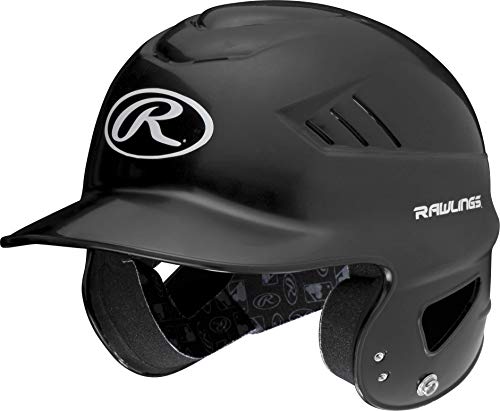
- Helmet headset
- Why is it called a “battery”?
- Who is in the battery — and what does each do?
- How does the battery actually communicate?
- Why does the battery matter more than any other pairing?
- How is a battery built — and does it stay together?
- Where does the battery stand? The geometry of the duo
- Battery vs. other baseball pairings (quick reference)
- FAQ
Key takeaways
- The battery = the pitcher and catcher, treated as a single combined unit.
- In the scorebook the pitcher is always position 1 and the catcher is position 2 — the first two numbers in the game.
- The term is commonly credited to writer Henry Chadwick in the 1860s, borrowed from the military sense of a “battery” of artillery.
- The battery is the only pairing involved in 100% of pitches — every play in baseball starts with their decision.
- A strong battery isn't about talent stacking — it's shared information: the catcher knows the hitter, the pitcher trusts the call.
- The catcher, not the pitcher, is usually the one aiming the battery — he calls the pitch and the location.
- Standard pitcher–catcher distance is 60 feet 6 inches in MLB (and 46 feet in Little League majors); home plate is 17 inches wide.
A battery in baseball is the pitcher and the catcher, considered together as one unit. When announcers say “tonight's battery is Smith and Jones,” they mean Smith is pitching and Jones is catching. It is the single most important partnership on the field: every pitch begins with the two of them agreeing on what to throw and where, and no other pair of players is involved in all 250-plus decisions of a typical game.
The word sounds odd until you know where it comes from — and once you understand the battery as a relationship rather than two positions, the entire strategic layer of baseball opens up. The catcher and pitcher stand a regulation 60 feet 6 inches apart in the major leagues, but functionally they operate as one mind: one player sees the field and decides, the other delivers. Below is the full picture — the definition, the origin of the term, how the two players actually talk to each other, why the pairing matters more than any other on the diamond, and how a battery is built over a season rather than assembled on a lineup card.
Why is it called a “battery”?
The term is commonly credited to the 19th-century sportswriter Henry Chadwick, the man who also gave baseball the box score and the scorecard. The most widely cited explanation: Chadwick borrowed the military meaning of battery — a grouped unit of artillery that delivers firepower — and applied it to the pitcher and catcher, the pair who “deliver” the ball. The metaphor is apt. An artillery battery isn't one cannon; it's a coordinated group whose value comes from working in concert, aiming together, and firing on a shared plan. That is exactly what a pitcher and catcher do.
A second theory points to the electrical sense of the word — a battery as the source of stored energy that powers everything downstream. That reading fits just as neatly: the battery is where every play gets its spark, the originating charge that the rest of the defense reacts to. Both interpretations have circulated for over a century, and you'll see baseball historians cite either one. What's not in dispute is the era and the man most associated with popularizing the term in print.
Either way, the usage stuck for more than 150 years because it captures something true: the pitcher and catcher aren't two individuals who happen to stand near each other. They're a single firing unit, and the catcher — not the pitcher — is usually the one aiming it. No other word in baseball's vocabulary fuses two players into one noun like this. You'll hear “the keystone combo” for the middle infield, but that's a nickname for two distinct fielders; “battery” is treated grammatically as a single thing.
Who is in the battery — and what does each do?
The battery is exactly two players: the pitcher and the catcher. Despite the catcher wearing the “tools of ignorance,” he is typically the brains of the operation — he faces the field, sees the whole defense, knows the hitter's weakness, and calls the pitch. The pitcher executes. That sounds like a clean split, but in practice the roles overlap and shift by inning, by count, and by which of the two has the stronger read on a given hitter. Here's the division of labor:
| Role | Scorebook # | Owns |
|---|---|---|
| Pitcher | 1 | Velocity, movement, command, holding runners, executing the call |
| Catcher | 2 | Pitch selection & location, framing, blocking, the running game, managing the pitcher's emotions |
The scorebook ordering is not an accident. When baseball's numbering system was standardized, the pitcher and catcher were assigned 1 and 2 — literally the first two numbers in the game — because every play flows through them first. The rest of the field follows: first base is 3, second base 4, third base 5, shortstop 6, and the outfielders are 7 (left), 8 (center), and 9 (right). So a 6-4-3 double play is shortstop-to-second-to-first; a strikeout-and-throw-out is scored involving the battery's 1 and 2 plus whoever covers the bag.
A useful way to think about it: the pitcher is the instrument and the catcher is the player of the instrument. A starter might throw five different pitches with varying command on a given night; it's the catcher's job to figure out, in real time, which three of those five are working and to lean on them. That's why a veteran catcher can make a struggling pitcher look better than his stuff — and why a poor game-caller can waste an ace's best night. For the full breakdown of how a catcher reads counts and hitters, see how to call a baseball game.
How does the battery actually communicate?
The battery communicates through signs: the catcher proposes a pitch and location, and the pitcher accepts it or “shakes” to ask for another. Traditionally this is done with finger signals between the catcher's legs (one finger = fastball, and so on), plus a glove tap or target to set location — many catchers carry the system on a pitch-call wristband so nothing gets forgotten. The catcher flashes the pitch type with his fingers, then taps a knee or shifts his glove to indicate inside or outside, up or down. The pitcher nods to accept, or shakes his head — “shaking off” the sign — to ask for a different pitch until they land on one they both believe in.
With a runner on second base — who is staring straight in at the catcher's hand and can relay the sign to the hitter — batteries switch to a sequence or indicator system so the live sign is hidden. Instead of one finger meaning fastball, the catcher flashes several signs, and a pre-agreed rule (the indicator, or a "hot number" like outs-plus-one) tells the pitcher which sign in the string is the real one. The whole anti-theft layer is why catcher signs look so complicated from the stands. We break the entire system down in our guides to catcher signs and signals and calling a game.
Since 2022, many teams at the professional and college level use electronic pitch-calling, where the catcher (or a coach in the dugout) presses a button and the pitcher hears the call spoken in an earpiece — eliminating sign-stealing, reducing cross-ups, and speeding up the game by cutting out the shake-off dance. The principle is identical to the 1870s, though: the catcher decides, the pitcher confirms. The technology just hardens the signal so it can't be intercepted or misread.
Why does the battery matter more than any other pairing?
Because the battery is the only unit involved in 100% of pitches. A shortstop–second-base double-play combo is beautiful, but it comes up a few times a game. An outfielder might field three balls all night. The battery, by contrast, makes a decision every single pitch — and in a typical nine-inning game that's roughly 250–300 pitches, each one a small negotiation about what the hitter is looking for and what the pitcher can execute right now.
That's why coaches talk about “a catcher who handles a staff” as a separate skill from hitting or throwing. A catcher who knows the lineup, remembers what beat a hitter last time, sequences pitches to set up the put-away, and keeps a rattled pitcher calm is worth more than his batting average suggests. The best batteries function like a quarterback and a play-caller fused into one: shared memory, shared plan, zero hesitation. When a battery is in rhythm, the pitcher barely shakes — he trusts that whatever the catcher puts down is the right call, and that trust shaves precious time and doubt off every delivery.
The flip side is just as real. A battery that's out of sync produces cross-ups (where the catcher expects a fastball and gets a curve, often resulting in a passed ball), wasted pitches, and a pitcher who's thinking instead of throwing. Because the pairing touches every pitch, a small inefficiency compounds across hundreds of decisions in a way that a single misplayed grounder never could.
How is a battery built — and does it stay together?
A battery is built through reps and shared memory, not assigned by talent — which is why teams pair specific catchers with specific pitchers, sometimes for years. The phrase “personal catcher” describes exactly this: a starting pitcher (often a knuckleballer or a veteran with a quirky repertoire) who throws best to one particular catcher, even if that catcher isn't the everyday starter. The pairing works because the catcher has internalized the pitcher's tendencies — how his slider moves when he's tired, which pitch he reaches for under pressure, what calms him after a walk.
At the youth and high school levels, a battery often forms naturally between the two best athletes on a team and grows over a season of bullpens. The bullpen session — not the game — is where a battery is actually built. That's where the catcher learns the shape of each pitch, where the pitcher learns to trust the target, and where both calibrate their silent language. A battery that has thrown a hundred bullpens together barely needs to talk in a game.
| What builds a battery | Why it matters |
|---|---|
| Bullpen reps together | The catcher learns each pitch's shape and the pitcher learns to trust the target — before it counts. |
| Shared scouting memory | The catcher remembers what beat each hitter last time, so the plan carries over at-bat to at-bat. |
| A "personal catcher" | Some pitchers throw measurably better to one specific catcher who knows their quirks cold. |
| Trust under stress | A pitcher who doesn't second-guess the call throws with conviction; conviction is half of command. |
This is also why a mid-game catcher change can subtly rattle a pitcher: the new battery hasn't built the same shorthand. The fundamentals behind a catcher who can earn that trust — receiving, framing, blocking, throwing, and calling — are laid out in our guide to the five catching fundamentals.
Where does the battery stand? The geometry of the duo
The pitcher and catcher are separated by a fixed, regulated distance, and that distance defines how much time the battery has to operate. In Major League Baseball and most adult and high school play, the pitching rubber is 60 feet 6 inches from the back of home plate. In Little League's major division (typically ages 10–12), it's 46 feet. Home plate itself is 17 inches wide, and that 17-inch slab is the canvas the battery paints on — the catcher sets a target on its edges, and the pitcher tries to hit it.
Why does the distance matter to the battery specifically? Because it sets the reaction window. At 60 feet 6 inches, a mid-90s fastball reaches the plate in a fraction of a second, which is why the catcher's pitch selection has to be decided before the wind-up — there's no time to react and re-call. The shorter Little League distance is one reason youth catchers can get away with simpler sign systems early on, though the strategic principles are identical.
| Measurement | Regulation |
|---|---|
| Pitching distance (MLB / HS / adult) | 60 feet 6 inches |
| Pitching distance (Little League majors) | 46 feet |
| Home plate width | 17 inches |
| Distance between bases | 90 feet (MLB) |
| Home to second base | 127 feet 3⅜ inches (MLB) |
That last number — home to second — is the catcher's other key dimension: it's the throw he makes to nail a base stealer, and the time it takes glove-to-glove is his pop time. So the battery's geometry runs in two directions: the pitcher delivers across 60 feet 6 inches, and the catcher answers by throwing 127-plus feet to the keystone.
Battery vs. other baseball pairings (quick reference)
“Battery” is specific. Don't confuse it with the other named groupings on the field:
| Term | Who it means |
|---|---|
| Battery | Pitcher + catcher |
| Keystone combo | Shortstop + second baseman (the double-play pair) |
| The infield | 1B, 2B, SS, 3B (plus the battery and pitcher physically) |
| The outfield | Left, center, right fielders |
| Bullpen | The relief pitchers (and the area they warm up in) |
| The cutoff/relay | The infielder who takes an outfielder's throw and relays it home or to a base |
| The corners | The first and third basemen, together |
The cleanest test: a battery is the only one of these that is scored as two separate positions (1 and 2) but spoken of as one. You'd never say “tonight's keystone combo is Reyes,” but “tonight's battery is Reyes and Wells” is perfectly natural — because the pairing is treated as a unit even in casual talk.
FAQ
What is a battery in baseball in simple terms?
It's the pitcher and the catcher, talked about as one combined unit. If a broadcaster says the battery is 'Garcia and Lopez,' Garcia is pitching and Lopez is catching.
Why are the pitcher and catcher called a battery?
The term is most often credited to sportswriter Henry Chadwick in the 1860s, borrowing the military meaning of a 'battery' of artillery — a single firing unit that delivers coordinated firepower. The electrical meaning (a source of stored energy) is also cited and fits just as well, since the battery is where every play gets its spark.
Is the pitcher or the catcher the more important half of the battery?
They're inseparable, but the catcher is usually the decision-maker: he sees the whole field, knows the hitter, and calls the pitch and location. The pitcher executes. Great catchers are valued for 'handling a staff' independent of their hitting, which is why a veteran catcher can make a struggling pitcher look better than his raw stuff.
What numbers are the pitcher and catcher in scorekeeping?
The pitcher is 1 and the catcher is 2 — the first two numbers in baseball's position-numbering system, because every play starts with the battery. From there it goes 3 (first base), 4 (second base), 5 (third base), 6 (shortstop), 7 (left field), 8 (center field), and 9 (right field).
Does the catcher or the pitcher decide the pitch?
Traditionally the catcher proposes the pitch with signs and the pitcher agrees or 'shakes off' to ask for a different one. With electronic systems, the catcher or a coach sends the call directly to the pitcher's earpiece. Either way the catcher decides and the pitcher confirms.
How far apart are the pitcher and catcher?
In MLB, high school, and most adult baseball, the pitching rubber is 60 feet 6 inches from home plate. In Little League's major division it's 46 feet. Home plate is 17 inches wide, and that's the surface the battery aims at.
What is a 'personal catcher'?
A catcher paired with one specific starting pitcher because that pitcher throws measurably better to him — often a veteran or a knuckleballer with a quirky repertoire the catcher has learned cold. The personal catcher may not be the everyday starter, but he catches that one pitcher's starts.
What is a cross-up between a pitcher and catcher?
A cross-up is when the two are on different signs — the catcher sets up for one pitch and the pitcher throws another, often resulting in a passed ball or a ball that gets away. It's the classic symptom of a battery that's out of sync, and it's exactly what indicators and electronic pitch-calling are designed to prevent.
Can a position player ever be part of the battery?
Only when they're pitching or catching in that moment. The battery is defined by the two roles, not the players — so when a position player comes in to 'mop up' on the mound, he and whoever is catching become the battery for as long as he pitches.
How do you build a good battery?
Through repetition, mostly in the bullpen. That's where the catcher learns the shape of each of the pitcher's pitches and the pitcher learns to trust the target. A battery that has thrown a hundred bullpens together barely needs to communicate in a game — the shared memory does the talking.
We're the team behind MAVTRAX — pitch-calling software used by baseball and softball teams from 9U travel ball up. We spend our days around dugouts, gear bags and tournament weekends. Picks are chosen on specs, durability for youth-sports abuse, real-world price, and owner feedback — not on who pays the highest commission. Full criteria on how we pick.
The gear every player actually needs
The core kit from our gear checklist. Live price on Amazon.