Best Baseball Sunglasses 2026: 8 Verified Picks From $10 Youth to Oakley Prizm Field
On a sunny day, a flyball that disappears into the glare is the difference between a routine catch and a triple off the wall. Good baseball sunglasses do one job above all — help a fielder track the ball — while staying put through a sprint and protecting young eyes from UV. Here are eight verified-live picks, from a $10 youth pair to the Oakley Radar EV Pitch with the baseball-specific Prizm Field lens, plus the lens-tint and polarized debate every ballplayer should understand before buying.
In this guide · 10 sections
- Helmet headset
- At a glance
- The polarized debate — why glare control can cost you the flyball
- Lens tint — what color actually helps you see the ball
- Fit and stay-put — the spec that matters most on the field
- UV protection — non-negotiable, and not the same as a dark lens
- Buying by age and position
- When to upgrade
- Also worth a look
- FAQ
Quick picks
Our top recommendations — full reviews below.

The everyday all-around pair most players reach for
~$22 price and availability on Amazon
View on Amazon →Key takeaways
- The number-one job of baseball sunglasses is staying on your face during play — a pair that slides down on a hard sprint or a head-first dive is useless, so fit and grip matter more than looks.
- Polarized lenses kill glare brilliantly but can be a mixed bag for tracking a flyball — by cutting reflected light they can flatten the ball against certain skies, which is why many players prefer non-polarized lenses or a specific high-contrast tint for fielding.
- UV400 / 100% UVA-UVB protection is non-negotiable, especially for kids — lens darkness and UV protection are not the same thing, and a dark lens with no UV rating is worse than no glasses at all.
- Lens tint changes what you see: amber/rose/copper tints boost contrast and make a ball pop against grass and sky, while a very dark gray lens is great for raw brightness but can mute that contrast.
- Our value/youth pick is the SEKKAF Youth (about $10); the everyday all-rounder is the Lamicall Sport (about $22); the baseball-specific pick is the VELO Slider Gen2 (about $68); the step-up youth pair is the UA Gametime Jr. (about $49); and the pro-optics tier runs from the Oakley Sutro (about $142) to the Radar EV Pitch with the baseball-specific Prizm Field lens (about $244).
- Buy for the position and the player: a kid who's still growing doesn't need a $140 frame, and an outfielder chasing flyballs has different needs than an infielder who just wants glare off the dirt.
The best baseball sunglasses are the ones that stay locked on your face through a full-speed sprint and help you pick the ball up against a bright sky — and for most players that means the Lamicall Sport (around $22) as the everyday all-rounder, the SEKKAF Youth (around $10) as the budget pick for kids, the VELO Slider Gen2 (around $68) as the baseball-specific choice, and the Oakley Sutro (around $142) for a player who wants pro-level optics. On the field, sunglasses aren't a fashion call — they're a piece of equipment that has to do two things well: keep the sun out of your eyes without losing the ball, and not move when you do. A pair that slips on the first hard play gets shoved up on the brim and never comes back down.
Below are eight pairs worth buying across the full budget range, who each is for, and a plain-English guide to the one thing that confuses everyone — whether polarized lenses help or hurt when you're tracking a flyball.
At a glance
| Pick | Best for | Price* | ||
|---|---|---|---|---|
| Lamicall Polarized Sports Sunglasses | The everyday all-around pair most players reach for | ~$22 | View → |
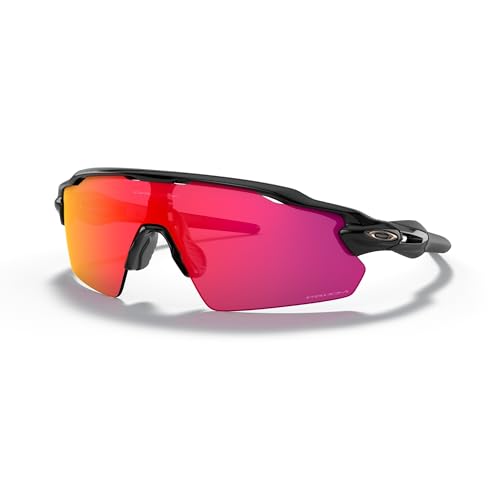 | Oakley Radar EV Pitch (Prizm Field Lens) | The on-field pro standard: Prizm Field is the lens tuned for tracking a baseball | ~$244 | View → |
 | SEKKAF Kids Youth Baseball Sunglasses | A first pair for a young ballplayer who will lose or break them | ~$10 | View → |
 | Under Armour Gametime Jr. Wrap Sunglasses (Youth) | The brand-name step-up for a youth player who's outgrown the multipack tier | ~$49 | View → |
 | DUCO Kids Polarized Baseball Sunglasses (Ages 8-16) | The polarized budget pick sized for ages 8-16 | ~$24 | View → |
 | Under Armour Playmaker Wrap Sunglasses | The adult mid-tier: real sports optics without Oakley money | ~$58 | View → |
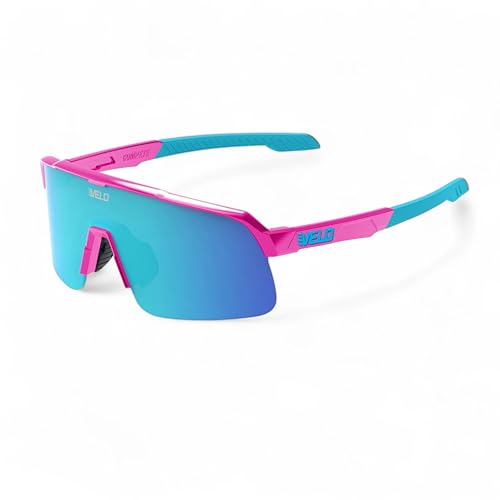 | VELO Slider Gen2 Baseball/Softball Sunglasses | A player who wants a frame designed specifically for ball | ~$68 | View → |
 | Oakley Sutro | A player who wants pro-level optics and the best lens clarity | ~$142 | View → |
*Prices at time of writing — they move; check the listing.
Lamicall Polarized Sports Sunglasses
~$22
If you want one affordable pair that covers baseball and everything else — cycling, running, fishing, mowing the yard — the Lamicall is the easy answer. It's a lightweight (the listing notes ~24g), wraparound sport frame with an adjustable nose pad and UV400 protection, which is the practical sweet spot for an adult or teen rec player who isn't chasing pro-level optics. At around $22 it's a genuine value.
One thing to know up front: these are polarized. For most uses — and for cutting glare off the infield dirt, a wet outfield, or a bright parking lot — that's a plus. For an outfielder who lives on tracking high flyballs, polarization is the part of the lens debate worth understanding (see below), and some players prefer a non-polarized tint for that job. As a do-everything sport pair at this price, though, the Lamicall is hard to beat.
- Lightweight wraparound with an adjustable nose pad for grip
- UV400 protection and polarized for strong glare control
- Genuinely versatile beyond baseball
- Excellent value at around $22
- Polarized lens isn't every fielder's preference for tracking flyballs
- General sport frame, not baseball-tuned
Oakley Radar EV Pitch (Prizm Field Lens)
~$244
This is the pair you see on actual big-league fielders, and the reason is the lens, not the logo. Prizm Field is Oakley's baseball-specific tint: it's engineered to amplify the contrast between a white ball, green grass, brown dirt, and a bright sky, which is precisely the job description of fielding sunglasses. Combined with the Radar EV's tall shield coverage and a frame built to stay planted through a full sprint, it's the most complete tracking package in the category.
At about $244 verified live, it's a serious-player purchase: a high-school or college fielder, a tournament-every-weekend adult, or the family splurge for a kid who's earned it. For everyone else, the Sutro and the mid-tier picks above cover the sun; this one covers the scholarship innings.
- Prizm Field lens is tuned specifically for baseball contrast
- Tall shield coverage for sky-tracking
- Frame grip built for full-speed play
- The pair pro fielders actually wear
- Premium price
- Overkill for casual and most youth players
SEKKAF Kids Youth Baseball Sunglasses
~$10
For a kid in coach-pitch or younger travel ball, the right first pair of baseball sunglasses is a cheap one — because they will get sat on, stepped on, or left in a dugout. The SEKKAF youth pair is built exactly for that reality: a small frame sized for boys and girls, sport styling so it stays on better than borrowed adult shades, and UV protection at a price (around $10) where losing them isn't a crisis.
This isn't a precision optical instrument, and that's fine — at this age the win is simply getting the sun out of a young hitter's eyes and protecting them from UV while they learn to track the ball. When your player gets serious and stops losing things, that's the moment to step up to a baseball-specific frame.
- Sized and styled for kids, not shrunken adult shades
- Cheapest pick here — easy to replace when lost
- UV protection at a kid-proof price
- Sport fit holds better than borrowed grown-up glasses
- Basic optics — not a high-contrast tracking lens
- Will be outgrown; budget build, not built to last
Under Armour Gametime Jr. Wrap Sunglasses (Youth)
~$49
The Gametime Jr. is the answer when a young player wants (or has earned) a real brand-name pair without adult-frame slippage. It's a wrap-style youth frame from Under Armour sized for kids' faces, so the coverage and grip actually work on a smaller head, which is exactly where hand-me-down adult pairs fail. For a travel-ball kid who lives outdoors all weekend, it's the durability-and-fit upgrade over the budget multipacks.
At about $49 it costs several budget pairs' worth, and that's the honest trade: you're paying for a legitimate sports frame, consistent lens quality, and the kind of fit a kid will actually keep on their face for six innings. If losing sunglasses is still a weekly event in your house, stay in the budget tier one more season.
- Real youth sizing from a major sports brand
- Wrap coverage that stays put on smaller faces
- Durable enough for full travel-ball weekends
- A gift-grade pair that still gets used
- Several times the multipack price
- Kids still lose sunglasses
DUCO Kids Polarized Baseball Sunglasses (Ages 8-16)
~$24
The DUCO fills the slot between the $10 multipack tier and the brand-name pairs: a single, polarized youth frame sized for roughly ages 8 to 16, at a price that doesn't sting when it inevitably rides a dugout bench home in someone else's bag. Polarization at this price is the pitch; for a kid bothered by glare off dirt, bleachers, and car glass, it's a genuine comfort upgrade over cheap tinted lenses.
Remember the polarized trade for fielders we cover below: some players find polarized lenses flatten a flyball against certain skies. For infielders, hitters, and general wear it's rarely an issue, and at about $24 the DUCO is an easy way to find out which camp your player is in before spending brand-name money.
- Polarized lens at a budget price
- Sized for the 8-16 range most youth teams actually are
- Cheap enough to survive being lost
- Good glare relief for bright dirt and bleachers
- Polarization can flatten flyballs against some skies
- Budget frame durability; keep the case
Under Armour Playmaker Wrap Sunglasses
~$58
The Playmaker is the adult answer to the same question the Gametime Jr. answers for kids: what does one real pair cost? It's Under Armour's wrap-style sports frame, built to grip through a sprint, with the kind of lens consistency the $20 tier can't hold batch to batch. For a rec-league player, a coach who lives at the field, or a parent working three tournaments a month, it's the sweet spot between disposable and premium.
What you give up against the Oakley tier below is the lens tech: no Prizm-style contrast engineering, just solid sport optics. If you play the outfield seriously and sky-tracking is your whole job, that lens tech is worth real money; for everyone else, the Playmaker at about $58 does the everyday job at a quarter of the price.
- Legitimate sports wrap from a major brand
- Stays put through sprints and dives
- Consistent lens quality over the budget tier
- A quarter of the premium-tier price
- No contrast-boosting lens tech like Prizm
- Style is function-first
VELO Slider Gen2 Baseball/Softball Sunglasses
~$68
The Slider Gen2 is the pick for a player who takes the game seriously and wants sunglasses actually built for baseball and softball, not a general sport frame that happens to work. It comes in a Small Adult/Youth size, which makes it a smart fit for a high-schooler or a smaller-faced player who finds adult frames slide around — exactly the group that's hardest to fit well.
At around $68 it sits between the bargain all-rounders and a true premium frame. If your player is past the lose-everything stage and wants a dedicated, properly fitting baseball pair without spending Oakley money, this is the one to look at.
- Designed specifically for baseball/softball play
- Small Adult/Youth size fits smaller faces and teens well
- Built to stay put through sprints and tracking flyballs
- A real step up from general sport frames
- Pricier than the all-around value picks
- Sizing skews smaller — check fit for a full-grown adult
Oakley Sutro
~$142
The Sutro is the splurge: a premium Oakley frame with the brand's Prizm lens technology, which is engineered to enhance contrast and make specific details — like a ball against the sky or grass — easier to pick up. This is the pair for the player who wants the clearest, most contrast-rich view and a frame that earns the price in optics and durability. Its large, single-shield style gives a wide, unobstructed field of view, which a fielder will appreciate when a ball is in the air.
At around $142 it's by far the most expensive pick here, and it's overkill for a kid who's still growing or a casual rec player. But for a committed high-school or adult competitor — or anyone who simply wants the best lens clarity money buys in this lineup — the Sutro is as good as it gets.
- Premium Prizm lens engineered to boost contrast and detail
- Large single-shield gives a wide, open field of view
- Top-tier build quality and durability
- The best optics in this lineup
- By far the most expensive here
- Overkill for kids and casual players
The polarized debate — why glare control can cost you the flyball
Polarized lenses cut reflected glare extremely well, but by filtering that light they can reduce the contrast that helps you pick a flyball out of a bright or hazy sky — which is exactly why many fielders prefer a non-polarized or high-contrast tinted lens for tracking. Polarization works by blocking horizontally reflected light, the kind that bounces off dirt, water, glass, and a wet outfield. For glare, that's a gift. For spotting a small white ball against a flat sky, that same filtering can flatten the scene and make the ball harder to separate from the background.
There's no single right answer — it depends on the player, the position, and even the local sky. An infielder who mostly wants the sun off the dirt may love a polarized lens. An outfielder whose whole job is judging high flyballs against glare and haze often does better with a non-polarized lens, or a contrast-boosting tint like amber or rose that makes the ball pop. The honest takeaway: polarized is excellent for general glare and everyday wear, but if your player keeps losing the ball in the air, a non-polarized or high-contrast lens is worth trying before you blame their eyes.
| Lens choice | Best at | Watch out for |
|---|---|---|
| Polarized | Glare off dirt, water, bright lots; everyday wear | Can flatten a flyball against certain skies |
| Non-polarized | Consistent view of the ball in the air | Less cutting of harsh surface glare |
| High-contrast tint (amber/rose/copper) | Making the ball pop vs. grass and sky | Tints the whole world; personal preference |
Lens tint — what color actually helps you see the ball
Lens tint changes the contrast and color of what you see, and for baseball the contrast-boosting tints — amber, rose, copper, brown — tend to make a white ball stand out best against grass and sky, while a very dark gray lens maximizes brightness reduction but can mute that helpful contrast. Gray lenses are "true to color" and great for raw sun, which is why they're the default in general sunglasses. But baseball isn't about seeing the world accurately — it's about separating one small object from a busy background, and that's where warmer, higher-contrast tints earn their keep.
Premium lenses like Oakley's Prizm are built around this idea: they're tuned to enhance the specific contrast that helps you pick up a ball, rather than just dimming everything evenly. You don't have to spend that much to benefit — even an affordable amber or rose tint can help an outfielder more than a darker gray lens. The practical rule: if the player's complaint is "I can't find the ball," try a higher-contrast tint before reaching for a darker one.
Fit and stay-put — the spec that matters most on the field
The most important quality in baseball sunglasses is that they stay locked in place during play — through a sprint, a dive, and the head-tilt of tracking a flyball — because a pair that slips gets pushed onto the brim and never comes back down. All the lens technology in the world is wasted if the frame is moving. This is why a baseball-specific frame like the VELO Slider, with sizing and grip tuned for the game, can outperform a fancier general frame that creeps down your nose.
Look for grippy, adjustable nose pads and temple tips, a wraparound shape that hugs the face, and — critically — the right size. An adult frame on a kid will slide off no matter how good it is; a too-small frame on an adult pinches and won't sit right. Lightweight helps too: the less the glasses weigh, the less they want to bounce loose. When in doubt, prioritize a pair that fits and grips over one with a flashier lens.
UV protection — non-negotiable, and not the same as a dark lens
Every pair you buy should block 100% of UVA and UVB rays (look for "UV400" or "100% UV protection"), and this is completely separate from how dark the lens looks — a dark lens with no UV rating actually does more harm than wearing nothing. Here's why: a dark lens makes your pupils open wider to let in more light, and if that lens isn't filtering UV, it's funneling more ultraviolet straight into a dilated eye. That's the worst case, and it's distressingly common in cheap, unrated novelty shades.
This matters most for kids, whose eyes are more vulnerable to cumulative UV exposure over a long playing career under the sun. The good news is that real UV protection is cheap — even our $10 youth pick is UV-protected, and the Lamicall is UV400. So the rule is simple: confirm the UV rating on any pair before you buy, and never let a kid wear a dark, unrated pair just because it "looks like sunglasses."
Buying by age and position
Match the pair to the player's age and position: a young, growing player needs a cheap, well-fitting, UV-protected pair; an outfielder benefits most from a non-polarized or high-contrast lens for tracking; and a committed older player can justify a baseball-specific or premium frame. There's no reason to put a $142 frame on a seven-year-old who'll outgrow it in a season — the SEKKAF youth pair does the real job (UV protection, sun out of the eyes, stays on) for a tenth of the price.
As a player gets serious, the calculus changes. A high-schooler who plays year-round and judges flyballs for a living gets real value from a frame built for the game (the VELO Slider) or a premium contrast lens (the Oakley Sutro). Position is a quieter factor: infielders dealing with dirt glare often love polarized lenses, while outfielders chasing balls in the sky frequently do better non-polarized. Buy for the player in front of you, not the catalog.
When to upgrade
Upgrade when the player outgrows a youth frame, when they're past the lose-everything stage and ready for a frame that won't slip, or when "I can't find the ball" becomes a recurring complaint that a better lens could fix. A young player's first job is simply keeping a cheap, UV-rated pair on their face; once they're consistently looking after their gear, a baseball-specific frame like the VELO Slider is the natural next step for fit and security.
The lens upgrade — to a high-contrast tint or a premium Prizm lens like the Sutro's — pays off specifically for a fielder who struggles to track the ball against glare or a flat sky. If that's the problem, spend there. If the player's happy and the glasses stay put, there's no rush: a $22 pair that fits and protects beats a $142 pair sliding down a kid's nose.
Also worth a look
 Rawlings | COOLFLO Batting Helmet | T-Ball (6 1/4" - 6 7/8") | NavyA batting helmet to pair with the kit$27.95 · View on Amazon →
 Easton | DUGOUT Backpack Equipment Bag | BlackA bag to keep the gear (and shades) together$54.99 · View on Amazon →
FAQ
What are the best youth baseball sunglasses?
For youth players the priorities flip: fit and retention beat lens tech. Look for youth-sized frames (adult sunglasses slide off mid-sprint), shatter-resistant polycarbonate lenses, and a strap or grippy temples for the outfield. The youth picks in this guide cover both baseball and softball - and yes, the same pairs work for fastpitch.
What are the best baseball sunglasses?
For most players, the Lamicall Sport (around $22) is the best all-around pick — lightweight, UV400, and versatile. The SEKKAF Youth (around $10) is the best budget pick for kids, the VELO Slider Gen2 (around $68) is the baseball-specific choice for serious players, and the Oakley Sutro (around $142) offers the best premium optics with its high-contrast Prizm lens.
Are polarized sunglasses good for baseball?
It depends. Polarized lenses are excellent at cutting glare off the infield dirt, water, and bright surfaces, but by filtering reflected light they can reduce the contrast that helps you pick a flyball out of a bright or hazy sky. Many outfielders prefer a non-polarized or high-contrast tinted lens for tracking flyballs, while infielders often like polarized for glare control.
What lens tint is best for tracking a baseball?
Contrast-boosting tints — amber, rose, copper, or brown — tend to make a white ball stand out best against grass and sky. A very dark gray lens reduces brightness well but can mute that helpful contrast. If a player keeps losing the ball in the air, try a higher-contrast tint before reaching for a darker one.
Does a darker lens mean more UV protection?
No — and this is a dangerous myth. Lens darkness and UV protection are completely separate. A dark lens with no UV rating makes your pupils open wider while letting UV through, which is worse than wearing nothing. Always confirm a pair is UV400 or 100% UVA/UVB protected, especially for kids.
What sunglasses should a youth player wear?
A young, still-growing player needs a small, properly sized, UV-protected pair that actually stays on their face — not a shrunken adult frame that slides off. Keep it cheap and replaceable, like the SEKKAF Youth pair (around $10), since youth gear gets lost and broken. Step up to a baseball-specific frame once they're serious and stop losing things.
How do I keep baseball sunglasses from sliding down during play?
Fit is everything. Look for grippy, adjustable nose pads and temple tips, a wraparound shape, the correct size for the player's face, and a lightweight frame. A baseball-specific frame like the VELO Slider is tuned to stay put through sprints and flyball tracking. Quick test: put them on, look straight up, and shake your head — if they slide, they're the wrong fit.
Are expensive baseball sunglasses worth it?
For a committed older player, yes — a premium lens like the Oakley Sutro's Prizm is engineered to boost the contrast that helps you pick up the ball, which a generic dark lens won't do. For a young, growing, or casual player, no — a $10–$22 UV-protected pair does the real job, and a $142 frame is overkill for someone who'll outgrow or lose it.
We're the team behind MAVTRAX — pitch-calling software used by baseball and softball teams from 9U travel ball up. We spend our days around dugouts, gear bags and tournament weekends. Picks are chosen on specs, durability for youth-sports abuse, real-world price, and owner feedback — not on who pays the highest commission. Full criteria on how we pick.